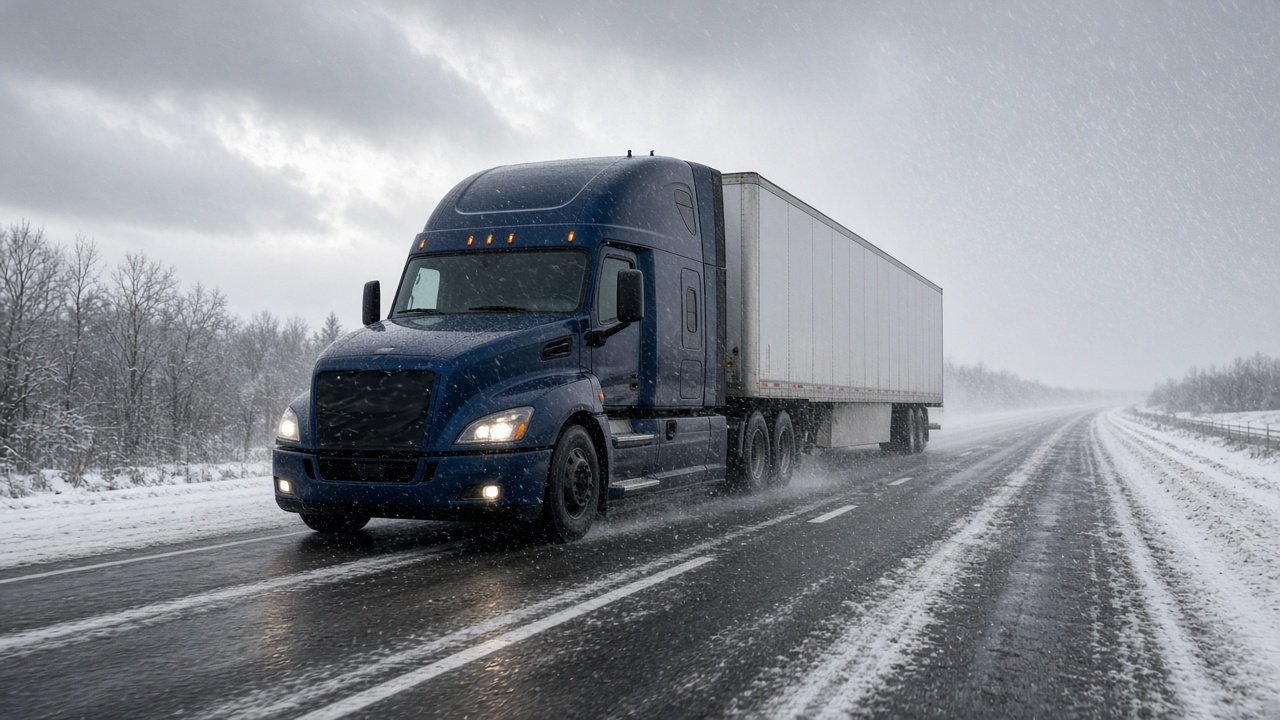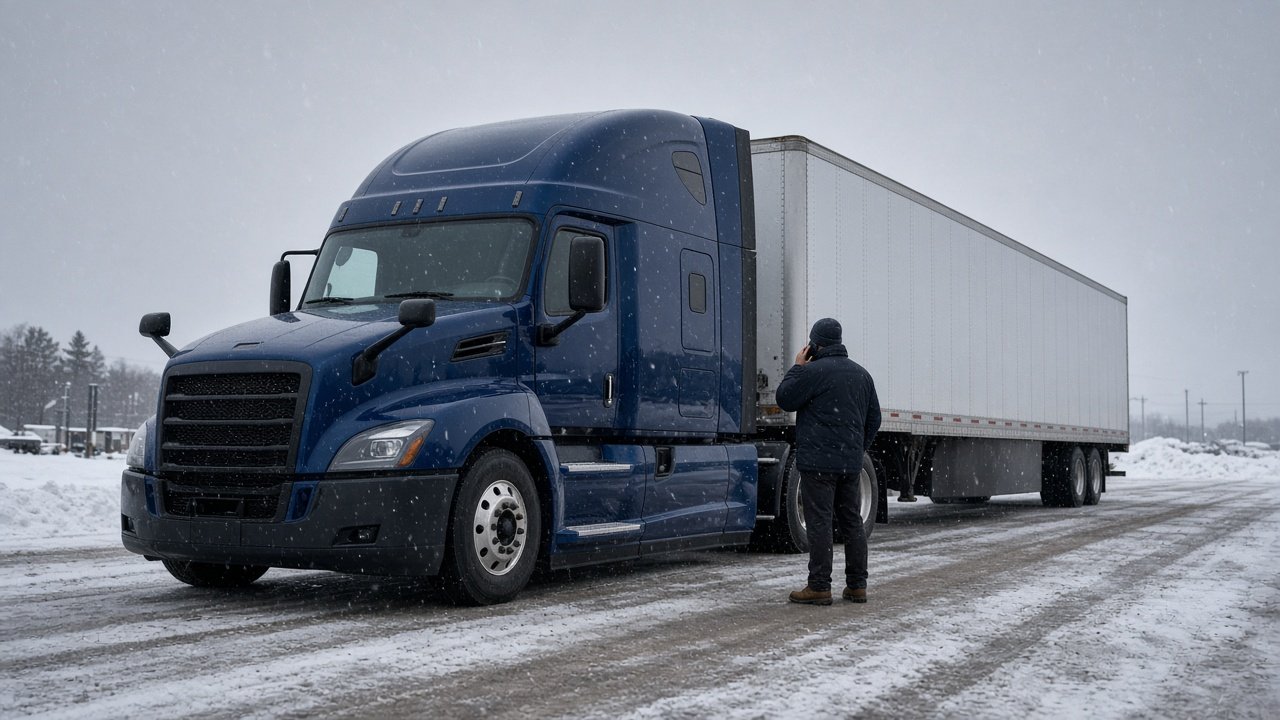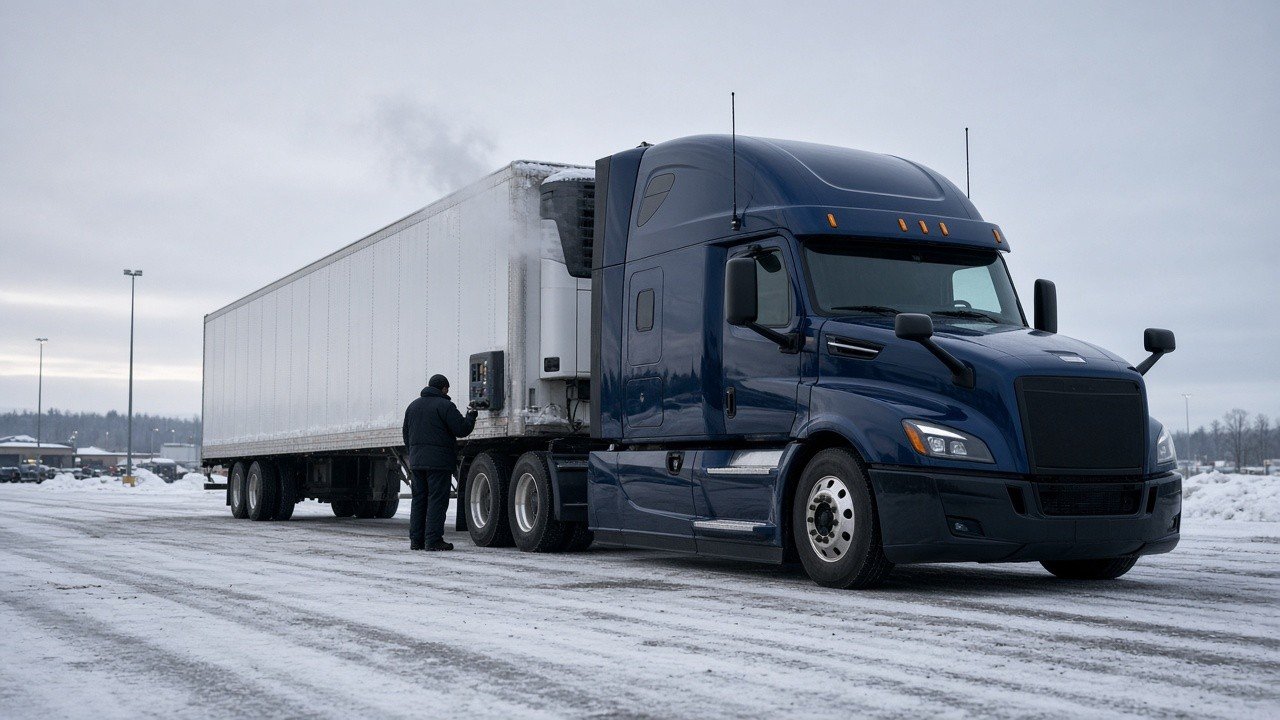
A protect from freeze (PFF) load is freight that is not normally refrigerated but will be ruined if it freezes, so in winter your reefer runs in heat mode instead of cooling. The short version: get the setpoint and run mode in writing, prewarm the empty trailer before you load, run continuous rather than start-stop in deep cold, keep the reefer fueled, and keep a temperature record. The USDA guide to protecting perishable foods during truck transport says plainly that trucks moving perishables through areas much colder than 32°F "may need to be warmed rather than refrigerated." This guide covers how that works on the road as of November 2026, when the first hard cold snaps hit the northern lanes.
What counts as a protect from freeze load?
PFF shows up on dry van and reefer freight alike once overnight lows drop near freezing. Common examples include bottled and canned beverages, canned foods in glass jars, latex paint, some adhesives and chemicals, certain pharmaceuticals, and fresh produce. On a dry van there is nothing you can do except keep moving and avoid long parked stops, which is why many shippers move PFF freight in reefers during winter.
Produce is the tricky one. The USDA guide notes that apples, celery and lettuce, which normally ship close to their freezing point, see the most freezing losses, and that products such as potatoes and tomatoes "are permanently injured by only one slight freezing." Some items, like bananas, also suffer chilling injury at temperatures above 32°F. For canned goods, the same guide says freezing usually does not hurt the food itself but can break glass containers or damage can integrity.
Who sets the temperature on a PFF load?
The shipper does, not you. For food that needs temperature control, federal sanitary transportation rules in 21 CFR 1.908 require the shipper to give the carrier a written operating temperature. If the receiver asks, the carrier must provide that temperature and, if asked, show it kept the load in range, for example with loading and unloading readings or time and temperature data from the trip. The same rule says that if anyone in the chain becomes aware of a possible temperature failure, the food is not to be sold unless a qualified person decides it is still safe. That is how a frozen load turns into a rejected load and a claim.
Practical takeaway: if a shipper tells you "it's PFF" but the bill of lading (BOL) and load paperwork say nothing about it, call dispatch and get the setpoint, the mode and the PFF note added before you pull out.
How do you run a reefer in heat mode?
Most trailer refrigeration units heat as well as cool. You enter the setpoint, and when the box is colder than the setpoint the unit adds heat to bring it up. You don't usually flip a separate "heat" switch; the controller decides. What you do choose is the run mode:
- Start-stop saves fuel by shutting the unit off near the setpoint and restarting when the box temperature drifts too far, the battery runs low, or a maximum off time passes. In single-digit weather, the box can cool down faster than you'd expect while the unit is off.
- Continuous keeps the unit running and the air moving the whole time. For PFF loads in hard cold, especially with multiple stops, continuous is the safer choice unless the shipper or your carrier says otherwise.
Airflow matters as much as temperature. The USDA guide says the most effective way to prevent freezing at floor level is to circulate warmed air under the load, and to use pallets or floor racks when the trailer floor doesn't allow airflow underneath. Freight jammed against the front wall or stacked to the ceiling blocks the air and creates cold spots.
Do you need to prewarm the trailer?
Yes. An empty trailer that sat overnight at 5°F has cold walls and a cold floor that will chill the bottom pallets long before the unit catches up. The USDA guide says that during extreme subfreezing weather you should run the unit on the heat cycle "far enough in advance of loading" for the trailer's air and body to settle at the transit temperature. It also warns to shut the unit off while loading from an open dock, because open doors with the unit running can ice up the coil and block airflow later.
Plan prewarm time into your trip just as you'd plan precooling for produce in July. If you're parking the night before a PFF pickup, check the truck parking map for a spot close to the shipper so you aren't burning your clock or the reefer's fuel on a long deadhead in the cold.
Worked example: will the reefer fuel last? (hypothetical)
This example is hypothetical. Check your own unit's fuel gauge and your carrier's numbers.
- The reefer tank shows 30 gallons when you pick up a PFF load.
- Suppose the unit burns about 0.8 gallons per hour on continuous in deep cold.
- 30 gallons ÷ 0.8 gallons per hour = about 37 hours of run time.
- Your trip is 20 hours of driving plus a 10-hour break, plus 2 hours of prewarm and dock time = 32 hours.
That leaves only about 5 hours of cushion, which disappears with one weather delay, a closed pass or a long wait at the receiver. Fuel the reefer before you leave. Reefer fuel can gel just like tractor fuel, so the steps in our diesel gelling prevention guide apply to the reefer tank too. Check current diesel prices and plan the stop at a truck stop that sells reefer fuel.
What should you check on a PFF load during the trip?
- At pickup: confirm the setpoint and mode on the paperwork match the controller, and note the product temperature if you're allowed to check it.
- At every stop and break: look at the controller for alarms, the return and discharge air readings, and the fuel level. Add the reefer to your cold-weather pre-trip routine.
- On multi-stop loads: keep door-open time short, and close the doors between pallets if there's a delay at the dock.
- Before delivery: pull or save the temperature download if your carrier uses one, before the doors open.
- If an alarm won't clear or the box drops toward 32°F: call dispatch right away. A freeze-sensitive load drifting down is an emergency, not something to fix at the next fuel stop.
Common mistakes
- Taking a verbal setpoint. If it isn't on the paperwork, you can't prove what you were told when a claim comes in.
- Loading into a cold box. Skipping the prewarm puts the bottom tier at risk from the cold floor.
- Leaving it on start-stop in subzero weather without checking that the shipper allows it.
- Running the reefer low on fuel or parking a loaded PFF trailer unpowered. A dead unit protects nothing.
- Overloading the nose or the ceiling, which blocks return air and creates freeze pockets.
- Not logging delays. Long dock waits in the cold drive up your reefer fuel burn and freeze risk. Note the times; they matter for claims and for detention pay.
Frequently asked questions
What temperature is a protect from freeze load usually set at?
It depends on the product. Use the shipper's written setpoint. Never guess or round down to save fuel.
Can a dry van carry PFF freight?
Yes, and many do in mild weather. In hard cold, a dry van has no heat, so long stops are the main risk. That's why shippers often switch PFF freight to reefers in winter.
Who pays if a PFF load freezes?
That depends on the contracts between the shipper, the carrier and any broker. Your job is to follow the written instructions and keep a record that shows you did.
Is reefer work steadier in winter?
PFF freight adds winter volume for reefer fleets. Our dry van vs reefer pay guide compares the trade-offs, and you can browse current CDL-A jobs or get matched with a carrier that fits how you like to run.
Know a CDL-A driver who's tired of babysitting freezing loads for a carrier that doesn't back them up? Refer them to us. It's free for drivers. Refer a driver here.
Free for CDL-A drivers: get our Job Offer Checklist — 23 questions to ask any carrier about pay, miles and home time before you sign. Download the free checklist →
Know a CDL-A driver looking for work? Refer them and earn $500 when they complete 30 days on the road. Refer a driver →
CDL Transportation Group | CDL-A OTR Driver Recruiting