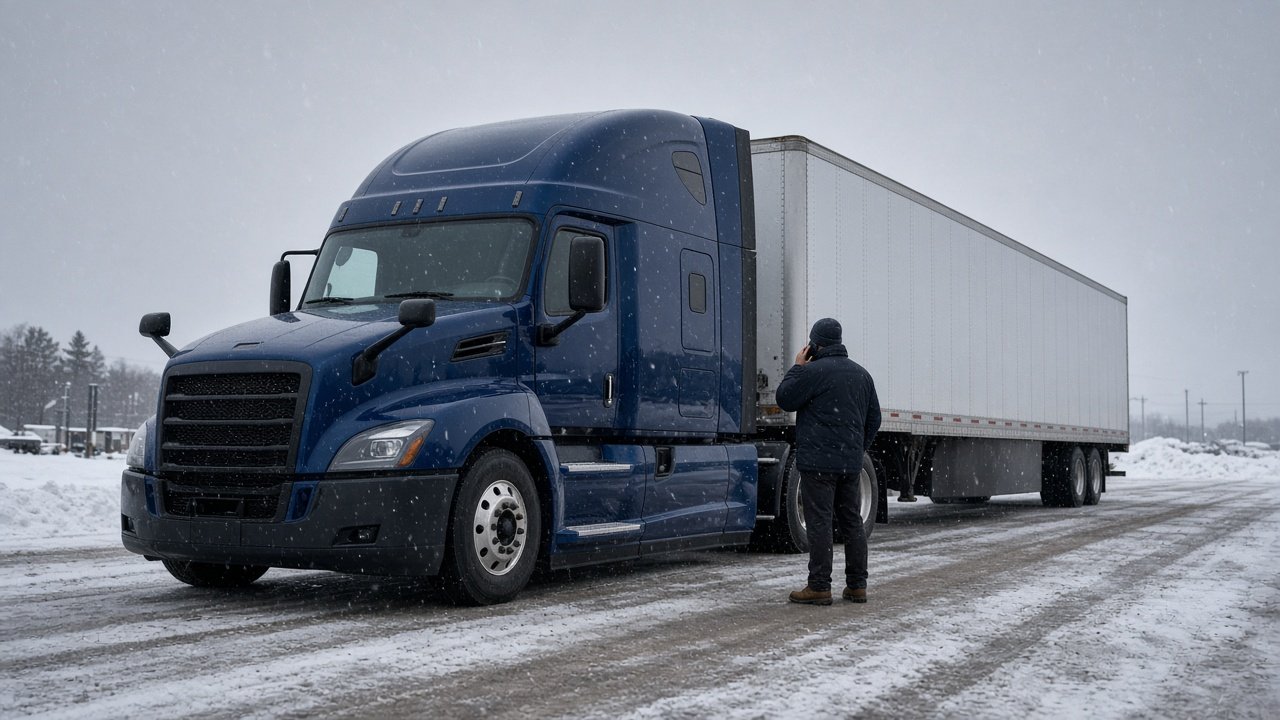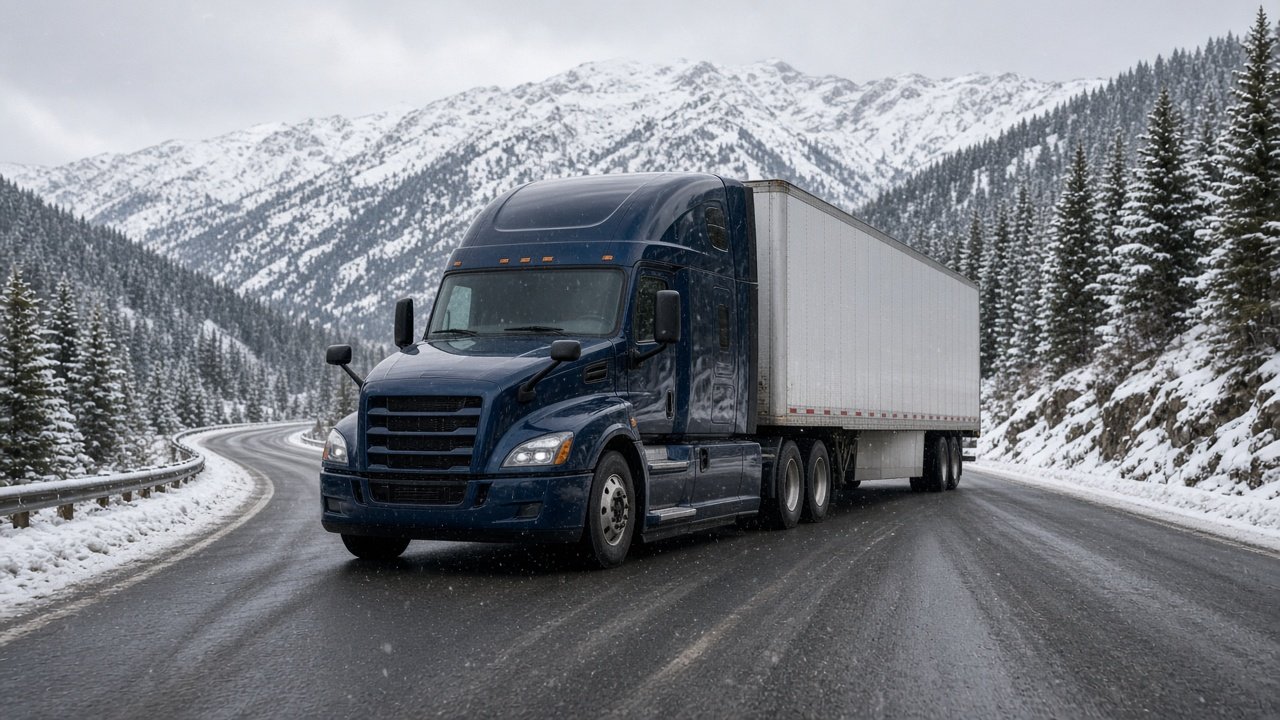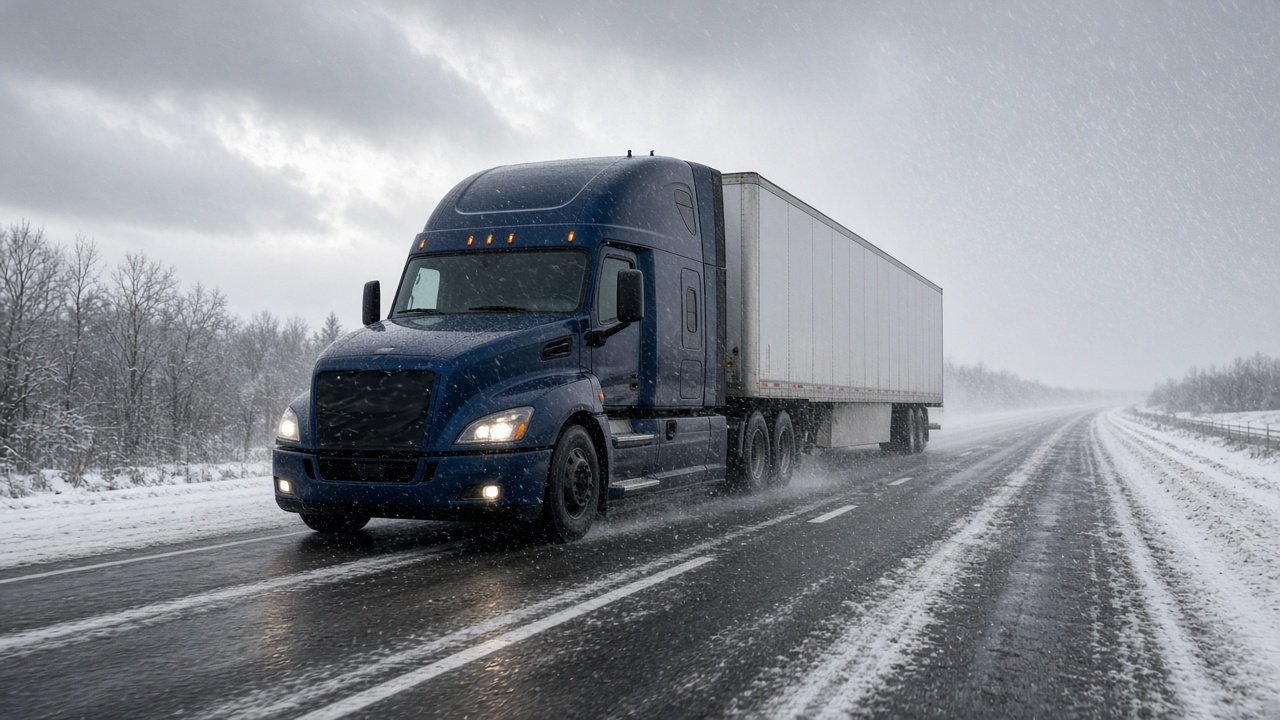
Lake-effect snow is the most sudden winter hazard on the Great Lakes corridors, and it starts in November. According to the National Weather Service, cold air crossing the open, still-warm water of the Great Lakes builds narrow snow bands that can drop 2 to 3 inches of snow per hour or more, while the sun shines a mile or two away. For CDL-A drivers on I-90, I-81, I-86, I-94 and I-196, that means you can go from dry pavement to a whiteout in minutes. It also means truck bans: New York and Pennsylvania routinely ban empty tractor-trailers and tandems during these events. Here's how lake-effect snow works, where it hits, how the bans work, and what to do when you're in it.
Why is lake-effect snow so dangerous for truckers?
Three things make it different from a normal winter storm:
- It's narrow and intense. NWS Gaylord describes lake-effect snow as discrete, narrow bands with intense snowfall and limited visibility, where "sunny skies at a particular location" can be "quickly replaced by blinding, wind-driven snowfall in a matter of minutes." NWS Albany's New York preparedness briefing notes that the strongest single bands have produced 6 to 7 inches per hour.
- It moves when the wind moves. A small shift in wind direction moves the band to a different stretch of interstate. A forecast that looked fine at your 30-minute break can be wrong an hour later.
- It peaks early in the season. The lakes are warmest relative to the air in late fall and early winter, which is why November and December are prime time. That overlaps with holiday peak freight, when you're under the most pressure to keep rolling.
Where does lake-effect snow hit the interstates?
Bands form on the downwind side of each lake, so with the usual west and northwest winds, the east and southeast shores get hit hardest. As of November 2026, these are the corridors CDL-A drivers should watch:
- I-90 from Cleveland through Erie, PA, to Buffalo and on to Syracuse. NWS Albany points to the I-90 corridor between Buffalo and Erie and to Buffalo itself with southwest winds off Lake Erie, and Rochester and Syracuse with west-northwest winds down Lake Ontario.
- I-81 north of Syracuse toward Watertown, downwind of Lake Ontario and the Tug Hill area.
- I-86 in New York's Southern Tier, which NWS also flags for terrain-enhanced snow near Jamestown.
- I-94, I-80/90 and I-196 near southern Lake Michigan in northwest Indiana and southwest Michigan.
- I-75 in northern Michigan, where NWS Gaylord tracks lake-effect bands off Lakes Michigan and Superior.
How do New York's empty and tandem truck bans work?
During heavy lake-effect events, the New York State Department of Transportation and the Thruway Authority issue bans on empty tractor-trailers and all tandem trailers. In one lake-effect event, the Governor's office announced a ban covering the Thruway (I-90) from Exit 46 to the Pennsylvania line, I-190, I-290, I-990, NY 400, U.S. 219, the Buffalo Skyway, the Kensington Expressway and I-86 in Chautauqua and Cattaraugus counties. In other storms, the bans have also covered I-84 and roads south of it, with all other commercial vehicles held to the right lane.
The routes change with each storm, so don't memorize a list. Check the Thruway's traveler page or 511NY before you head into western New York, and plan for the bans to stay "until further notice."
What do Pennsylvania's tier restrictions mean for my truck?
PennDOT uses a five-tier winter event vehicle-restriction plan, which PennDOT applies road by road as storms develop. Recent announcements have covered I-80, I-81, I-84 and I-380, among others. As of November 2026:
- Tier 1: no bobtail tractors, and no tractors pulling empty or lightly loaded enclosed, open or tank trailers, or empty or lightly loaded tandem trailers.
- Tier 2: Tier 1, plus loaded tandem trailers are banned unless you carry chains or an approved alternate traction device.
- Tier 3: no commercial vehicles except loaded single trailers with chains or an approved alternate traction device on board.
- Tier 4: no commercial vehicles at all.
- Tier 5: no vehicles except emergency responders.
PennDOT can also drop speed limits to 45 mph and order trucks to the right lane, on their own or along with a tier. If you run empty a lot in winter, Tier 1 is the one that will catch you. For chain requirements in other states, see our truck chain laws by state guide.
How do I check for lake-effect snow before I roll?
- Read the NWS forecast for your route, not just your destination. Look for Lake Effect Snow Warnings, Winter Storm Warnings and Snow Squall Warnings along the corridor.
- Check the state 511 system (511NY, 511PA, OHGO in Ohio, Mi Drive in Michigan, 511 Indiana) for bans, closures and cameras.
- Look at the cameras. Because the bands are so narrow, a live camera 20 miles ahead tells you more than a regional forecast.
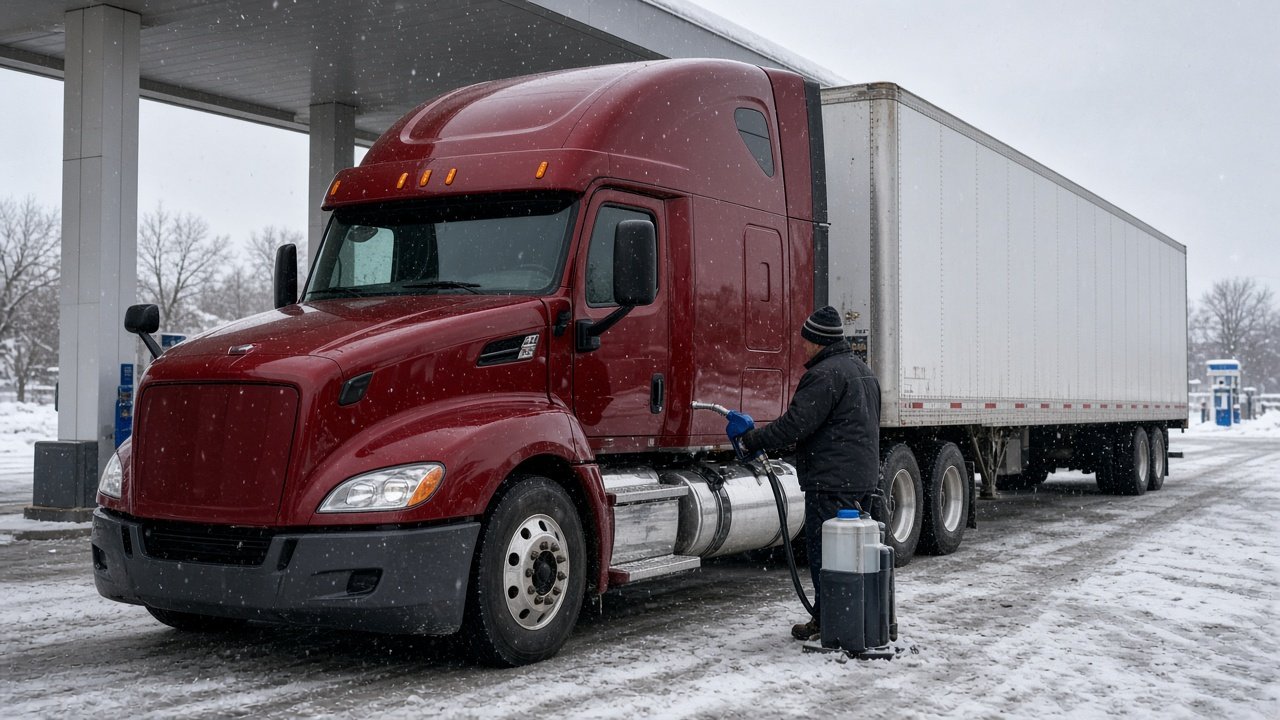
- Plan a safe stop before the band. Use our truck parking map and truck stop finder to pick a place to wait it out, and top off on fuel using our diesel price tracker before you get into the snow belt.
What should I do if I drive into a snow band?
The NWS snow squall guidance is blunt: "There truly is no safe place on the highway during a snow squall." If a warning is out, delay travel until it passes. If you're already in it and can't get off the road:
- Slow down early and gradually. NWS warns against slamming the brakes, which on slick roads can cause loss of control or a chain-reaction crash.
- Turn on your headlights and hazard lights and open up your following distance.
- Stay off the engine brake on slick pavement unless you're confident of traction.
- Don't stop in a travel lane. Get to an exit, a rest area or a truck stop if you can.
Federal rules back you up. 49 CFR 392.14 requires extreme caution in snow and ice and says you must stop driving when conditions become sufficiently dangerous. If dispatch pushes back, our guide to the FMCSA Complaint Center explains how to report coercion.
Worked example (hypothetical)
Say you're westbound on I-90 east of Erie, and the NWS shows a lake-effect band 10 miles wide over the road ahead, putting down 3 inches of snow an hour. If you slow to 30 mph, crossing 10 miles takes 20 minutes. At 3 inches an hour, about an inch of fresh snow falls on the road while you're inside it, on top of whatever is already there, with visibility that may drop near zero. Now compare that with exiting and waiting. Bands often shift or weaken within hours, so a one- to two-hour stop at a truck stop before the band can cost less time than crawling through it, and far less than a crash or a closure that strands you for the night.
Common mistakes
- Trusting clear skies. Sun at your truck stop says nothing about the next 20 miles in a lake-effect pattern.
- Running empty into a ban zone. An empty or tandem trailer in western New York or a Tier 1 Pennsylvania zone can leave you parked on the shoulder or ticketed. Check the ban list before you deadhead.
- Waiting too long to fuel and park. Truck stops along I-90 fill fast when bans go up. See our holiday peak season guide for the parking crunch.
- Skipping the snow on your roof. Several states can fine you for flying snow and ice. Our trailer roof snow laws guide has the details.
- No winter kit. Lake-effect closures can strand you for hours. Pack a winter emergency kit before the first band hits.
Frequently asked questions
When is lake-effect snow season?
Late fall through winter, according to the NWS. It's often strongest in November and December, while the lakes are still open and relatively warm. Once a lake freezes over, lake-effect snow from that lake drops off.
Does a ban on "tandems" mean my tandem-axle trailer?
Generally no. In these storm bans, "tandem trailers" refers to doubles, a tractor pulling two trailers, not the tandem axle under a single 53-foot trailer. A single trailer can still be banned if it's empty or lightly loaded. When in doubt, call the state's 511 line or the Thruway before you enter the zone.
What counts as "lightly loaded" in Pennsylvania?
PennDOT's plan doesn't set a weight on its restriction page. If you're unsure whether your load counts, treat it as restricted, or call ahead before you enter the zone.
How do I find a lake-effect warning?
Check weather.gov for your route, and turn on weather alerts in your phone or truck app. Snow Squall Warnings are short and very local, like a tornado warning.
Know a CDL-A driver who's tired of being pushed through snowstorms? Refer them to us. It's free for drivers. Refer a driver here.
Free for CDL-A drivers: get our Job Offer Checklist — 23 questions to ask any carrier about pay, miles and home time before you sign. Download the free checklist →
Know a CDL-A driver looking for work? Refer them and earn $500 when they complete 30 days on the road. Refer a driver →
CDL Transportation Group | CDL-A OTR Driver Recruiting