Detention, layover and breakdown pay are not set by federal law for most CDL-A drivers. They come from your carrier's pay policy, so what you get is whatever is written in your offer or driver handbook. The usual pattern: detention pays by the hour after a free window (often two hours), layover pays a flat daily amount when you are held over 24 hours or more, and breakdown pay depends heavily on whether the carrier or the driver caused the stop. Here is what each one means and what to get in writing as of October 2026.
Why isn't detention and layover pay guaranteed by law?
Most over-the-road drivers fall under the Motor Carrier Act exemption to federal overtime rules, which the U.S. Department of Labor explains in its motor carrier exemption fact sheet. In practice, many drivers are paid by the mile, so waiting time pays only if the carrier's policy or your contract says so. State law can differ, so check your state labor rules. This is general information, so ask a qualified professional about your situation.
Detention has also been hard to measure. The DOT Office of Inspector General found in 2018 that accurate industrywide detention data did not exist, and an older FMCSA study found drivers were detained at roughly 10 percent of stops, by an average of about 1.4 hours beyond a two-hour loading window. FMCSA has proposed a newer study, but we could not confirm published results. Treat those numbers as dated.
What is detention pay and when does it start?
Detention pay compensates you when a shipper or receiver keeps you waiting longer than the free time. Policies vary, so ask about these points:
- Free time: commonly two hours from your appointment or arrival. Ask whether the clock starts at arrival or at your appointment time.
- Rate: usually a flat hourly amount. Ask for the number in writing.
- Cap: some carriers cap the hours paid per stop or per day.
- Proof: many carriers require an in and out time stamped on the paperwork or a message sent through the app or ELD.
- Who pays: some carriers pay you only if they collect from the customer.
That last point matters. If your pay depends on the carrier being paid, a customer dispute can leave you unpaid for time you really spent waiting.
What is layover pay?
Layover pay is typically a flat daily amount when your load is delayed and you are held at least a set time, often 24 hours, and you are not dispatched. Ask how many hours trigger it, whether it pays for the first day, and whether it pays when you sit due to hours of service rather than a dispatch delay. Also ask whether you must be out of your home terminal area to qualify.
What is breakdown pay?
Breakdown pay covers time lost when the truck is down. Many carriers pay little or nothing for short repairs and something per day for long ones, but practices vary a great deal. Questions to ask:
- Is it paid for mechanical failure only, or also for tire and DOT shutdown events?
- Does the carrier cover lodging when the truck is in the shop?
- Is there a minimum number of hours before pay begins?
- Do you still receive pay if you are sent home or reassigned to another truck?
An out of service order after a roadside inspection is a gray area at many carriers, so ask about it by name. Our post on how to read a CDL-A job offer covers where these terms usually hide.
Does waiting time count against your hours of service?
Often yes. Under 49 CFR 395.2, time waiting to be dispatched or at a facility generally counts as on-duty not driving unless you are relieved of all responsibility for the truck and cargo and free to leave. That means detention can burn your 14-hour window even though you are not moving. If you want to protect your clock, plan ahead using the driver tools and keep fuel and parking in view with truck parking and diesel prices.
A worked example (hypothetical)
Suppose a carrier's policy gives two hours free and pays $25 per hour after that, with a four-hour cap per stop. You arrive at 8:00 for an 8:00 appointment and are loaded and released at 12:30.
- Total wait: 4.5 hours
- Free time: 2 hours
- Payable: 2.5 hours at $25 = $62.50
Now suppose the policy only starts the clock at check-in and the guard logs you in at 8:45. Payable time falls to 1.75 hours, or $43.75. That is a $18.75 difference from a single time stamp, which is why documenting your arrival matters. These numbers are made up for illustration and are not a rate any carrier offers.
Common mistakes with detention, layover and breakdown pay
- Assuming it exists. Some carriers pay none of the three. Ask before you sign.
- Not recording arrival. Send a message on arrival and keep a photo of the stamped paperwork.
- Missing the notice window. Some carriers require you to report detention before you leave the facility.
- Ignoring the cap. A cap of two paid hours does not help on an eight hour wait.
- Not reading the pay stub. Check that accessorials show up as separate line items and dispute errors within the carrier's time limit.
- Getting promises verbally. If a recruiter tells you it is covered, ask to see it in the handbook or offer letter. Browse current CDL-A jobs and compare these terms side by side, or use the job match quiz.
Frequently asked questions
Is detention pay required by law?
There is no federal rule requiring a trucking company to pay detention to drivers. It comes from your carrier's policy or contract, and some state laws may apply.
How long do I have to wait before detention pay starts?
Two hours is common, but each carrier sets its own free time. Get the number in writing.
Does layover pay apply if I run out of hours?
It depends on the policy. Many carriers pay layover only for dispatch or customer delays, not for a driver reaching a limit, so ask.
Can I be paid for a breakdown if I stay in the truck?
Policies differ. Some carriers pay a daily amount after a certain number of hours, and others pay nothing, so confirm before accepting a job.
Who should I ask if the pay is missing?
Start with your driver manager or payroll, using your time stamps. For legal questions, talk to a qualified professional.
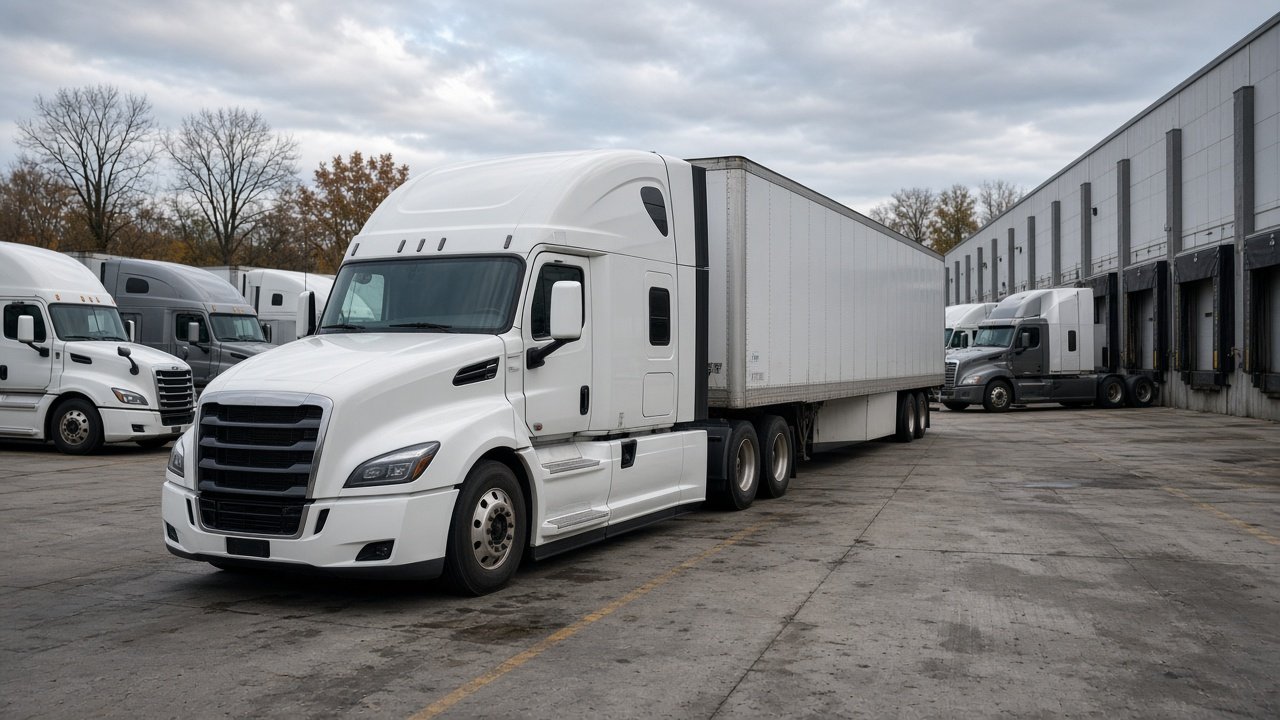
Photo: David E. Lucas, Public domain, via Wikimedia Commons.
Free for CDL-A drivers: get our Job Offer Checklist — 23 questions to ask any carrier about pay, miles and home time before you sign. Download the free checklist →
Know a CDL-A driver looking for work? Refer them and earn $500 when they complete 30 days on the road. Refer a driver →
CDL Transportation Group | CDL-A OTR Driver Recruiting