A cold-weather pre-trip inspection for CDL-A drivers is the same federal equipment check under 49 CFR 392.7 and 49 CFR 396.13, plus a winter overlay: drain air tanks, confirm the air dryer is heating, check tire pressures cold, verify DEF and coolant freeze protection, clear ice from lights and glass, and test heat and defrost before you leave. As of November 2026, FMCSA does not publish a separate "winter pre-trip" rule — but frozen air, underinflated tires and iced-over lights are how drivers get put out of service once temps drop.
If you already do a solid summer walk-around, add about ten focused minutes for cold-weather failure modes. That overlay is what this guide covers.
What does federal law require before you drive?
Before you move the truck, you must be satisfied it is in safe operating condition, review the last driver vehicle inspection report when one is required, and sign to acknowledge repairs were certified. Section 392.7 lists the parts you personally confirm:
- Service brakes, including trailer brake connections
- Parking brake
- Steering mechanism
- Lighting devices and reflectors
- Tires
- Horn
- Windshield wipers
- Mirrors
- Coupling devices
- Wheels and rims
- Emergency equipment
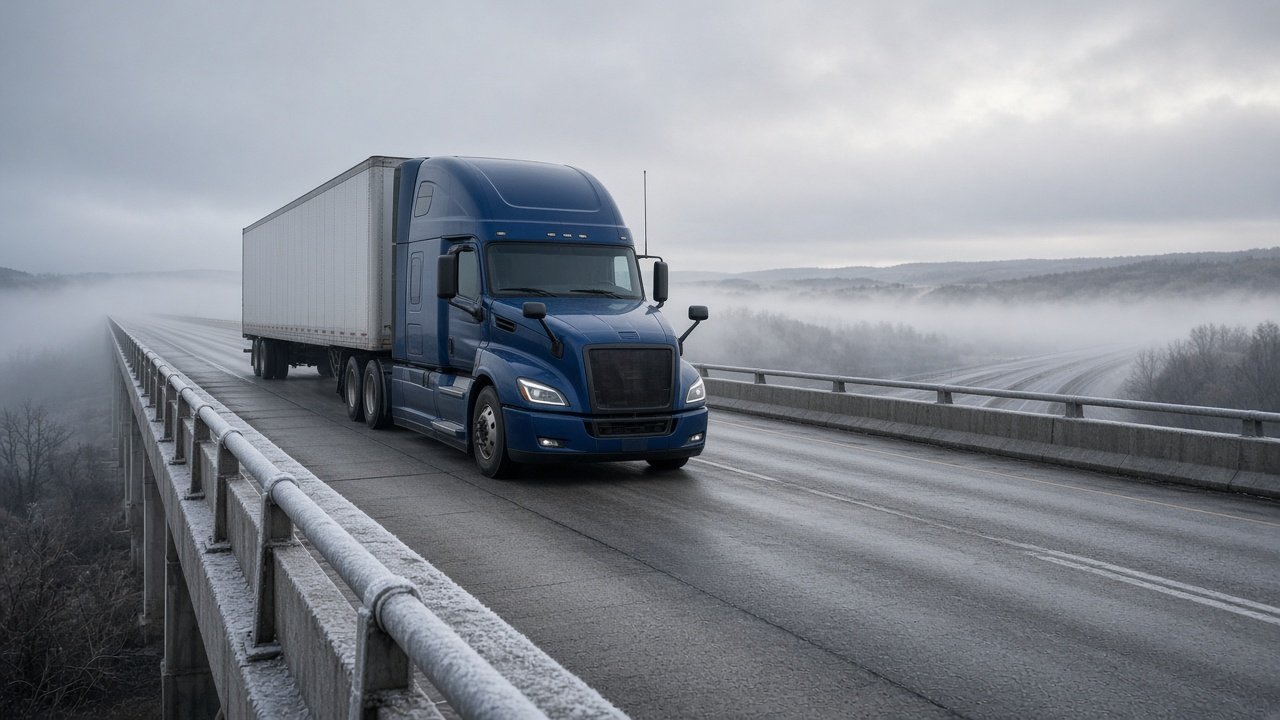
Winter does not replace that list. It makes each item fail faster. 49 CFR 392.14 also requires extreme caution in snow, ice, sleet or fog, and says you must stop driving if conditions become sufficiently dangerous — a cold pre-trip is how you avoid rolling into that situation with a known defect.
What should you check first on a freezing morning?
Start with the systems that strand trucks overnight: air, tires, fuel/DEF, visibility and heat.
Air brakes and air dryer
Moisture left in the air system freezes valves and lines. On every cold morning:
- Drain the wet tank first, then the service tanks, until you hear dry air instead of water spit.
- With the engine running, feel for warmth at the air dryer base — a cold dryer often means a failed heater element.
- Listen for the dryer purge at compressor cut-out.
- Cycle the parking brake apply/release and walk the gladhands for frost, cracked seals or audible leaks.
If brakes are already frozen to the drum or caliper, warm the truck in a shop or heated bay and drain water after thaw. Do not drag frozen brakes down the ramp. For a deeper dive on freeze-ups, see our frozen air brakes winter guide.
Tires: pressure, tread and ice
Under 49 CFR 393.75, steer tires need at least 4/32 inch tread in a major groove, other tires at least 2/32 inch, and you may not run a tire below the cold inflation pressure required for the load. Cold air shrinks pressure: a common rule of thumb used across the industry (and noted in NHTSA tire-pressure materials) is about 1 psi for every 10°F of temperature change.
Worked example (hypothetical): You set duals to 100 psi cold in a 60°F yard in Tennessee. Overnight the air temp drops to 20°F at a Missouri truck stop — a 40°F drop. Expect roughly 4 psi less if nothing else changed, so a morning gauge reading near 96 psi. Check pressures cold before you leave, not after the tires have warmed on the road. Clear ice chunks from duals and mud flaps so they do not fly off at highway speed.
DEF, coolant and diesel
- DEF freezes around 12°F (−11°C). Freezing does not ruin on-spec DEF; modern SCR systems use tank and line heaters once the engine runs. Confirm DEF level, leave a little expansion room, and flag persistent cold-weather DEF fault codes for shop work. Do not add additives to "unfreeze" DEF.
- Coolant needs verified freeze protection for the coldest forecast on your route — not an assumed 50/50 mix from last spring.
- Diesel can cloud and gel in a cold snap. Confirm you have winter blend or anti-gel where your route needs it, and carry a spare fuel filter. Details are in our diesel gelling prevention guide. Check current pump prices on our diesel prices page before you plan fuel stops.
Lights, glass, heat and wipers
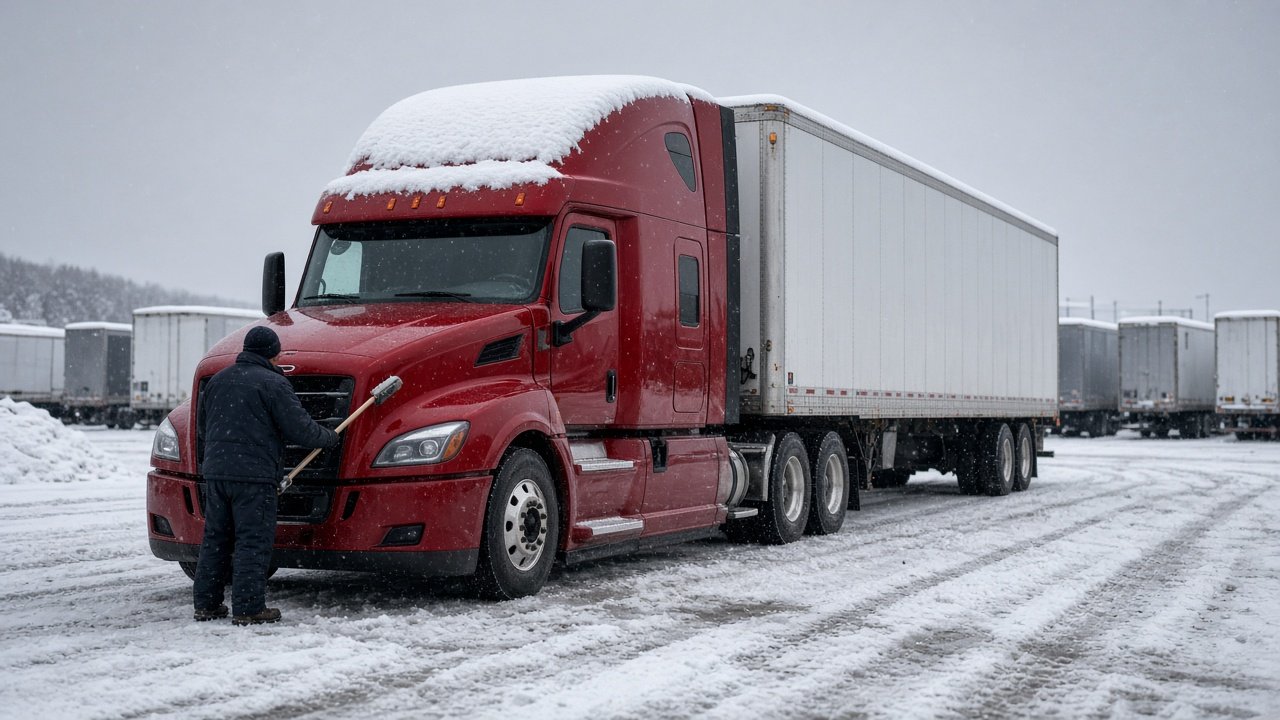
- Clear snow and ice from headlights, markers, brake lights, conspicuity tape, mirrors and the windshield. Iced-over lights are a fast ticket and a visibility problem.
- Confirm winter-grade washer fluid, working wipers and a defroster that clears the glass before you leave the lot.
- Test cab heat. If you rely on a bunk heater or APU overnight, confirm it fires and that exhaust paths are clear of snow — carbon monoxide risk is real. See also truck idling laws in winter.
How do you walk a cold-weather pre-trip without freezing in place?
Use a fixed order so cold does not make you skip items:
- Inside cab: review yesterday's DVIR, start engine, build air, check gauges, heat/defrost, wipers, washer, horn, mirrors, marker and ABS lights.
- Air system: drain tanks, verify dryer warmth and purge, parking brake cycle.
- Engine bay glance: coolant level/freeze protection, oil, belts/hoses for cold cracks, battery terminals tight and free of heavy corrosion.
- Walk-around: lights and reflectors clear, tires and rims, mud flaps, gladhands and pogo, fifth wheel lock and landing gear, trailer doors/seal, emergency triangles and extinguisher reachable.
- Winter extras: chains accessible and sized for the tractor-trailer if your route needs them, ice scraper, and a stocked cab kit — see our winter emergency kit guide.
If you are heading into Colorado, Washington, Oregon or California chain corridors, confirm current chain rules before you climb. Start with our truck chain laws by state guide and the state DOT condition pages for that morning.
Common mistakes on cold mornings
- Rushing the walk-around because it is cold. That is exactly when air moisture, tire pressure and iced lights fail.
- Checking tire pressure after you have been rolling. Heat masks underinflation. Set and verify cold.
- Skipping the wet-tank drain because the truck has an automatic ejector. Automatic valves stick; verify by draining.
- Assuming DEF heaters always work. Repeated cold DEF faults mean shop time before a derate on a mountain grade.
- Leaving snow packed on lights, steps and sensor areas. You need other drivers to see you, and you need to see them.
- Not staging chains before a pass. Chaining on a dark shoulder in traffic is how drivers get hurt.
Frequently asked questions
Is there a separate FMCSA winter pre-trip form?
No. As of November 2026, you still follow 49 CFR 392.7 and 396.13. Winter items are how you apply those rules when cold creates new failure modes.
How often should I drain air tanks in winter?
Many drivers drain at the end of every shift and again on the morning pre-trip in freezing weather. If you see water, keep draining until only air comes out and get the dryer serviced if water returns quickly.
Can I drive with frozen DEF in the tank?
Modern SCR systems are designed to start with frozen DEF and thaw it with coolant/electric heaters. Do not add additives. If the truck shows heater or dosing faults that will not clear after warmup, get it diagnosed.
What tread depth do I need for winter?
Federal minimums remain 4/32 on steers and 2/32 on other tires under 393.75. For packed snow and ice, many drivers replace steers well above the legal floor because the legal minimum is not a traction target.
Where should I park if a cold front is coming overnight?
Plan a spot with power or a reliable bunk heater before your hours run out. Use our truck parking and truck stops tools, and read where to park a semi overnight.
A cold-weather pre-trip will not make black ice disappear, but it keeps you from adding equipment failures to weather risk. Take the extra minutes before you release the brakes.
Looking for a better CDL-A seat this winter? Browse open CDL-A jobs or try our driver match tool. For more road-life guides, start at our drivers hub.
Know a CDL-A driver who wants a better winter seat? Refer them to us — it's free for drivers. Refer a driver here.
Free for CDL-A drivers: get our Job Offer Checklist — 23 questions to ask any carrier about pay, miles and home time before you sign. Download the free checklist →
Know a CDL-A driver looking for work? Refer them and earn $500 when they complete 30 days on the road. Refer a driver →
CDL Transportation Group | CDL-A OTR Driver Recruiting