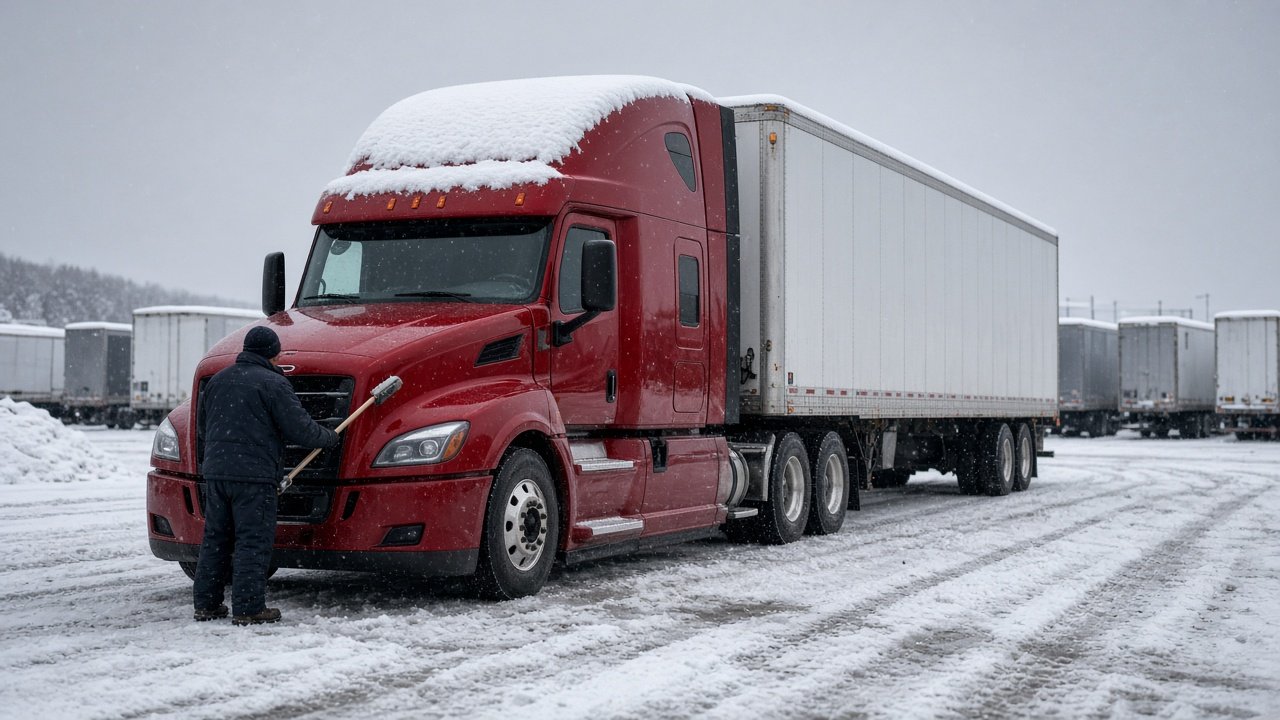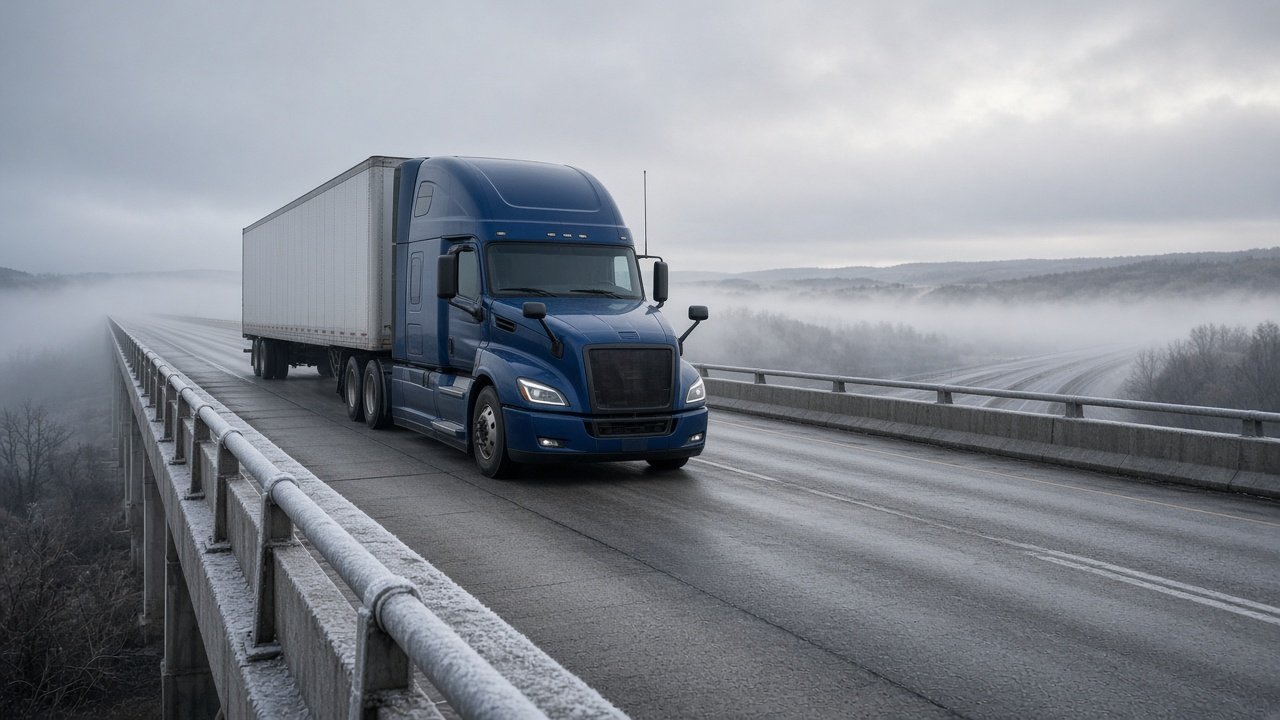
Black ice on bridges is thin, clear ice that makes pavement look merely wet — and bridge decks form it before the approach road does. For CDL-A drivers, the playbook as of November 2026 is simple: when temps are near freezing and the road looks wet, treat bridges and overpasses as ice, cut speed hard, and avoid sudden brake, steer or retarder inputs. The NY CDL Manual Section 2.6.2 (standard AAMVA wording used nationwide) says bridges freeze before the road, especially near 32°F, and that on ice you reduce speed to a crawl and stop driving as soon as you can safely do so.
Early November is when the first freezes hit the Upper Midwest, Great Lakes and Northeast. Pavement that looked fine at the last exit can be glass on the next overpass. This guide is for experienced CDL-A drivers who need a bridge-and-black-ice checklist for this week.
Why do bridges freeze before the road?
A normal roadbed sits on ground that holds heat. A bridge or overpass is exposed to cold air above and below. The FHWA Road Weather Management brief on icy bridges notes that bridge decks often freeze before the adjacent roadway, so drivers can move from clear pavement onto an icy deck with almost no visual warning. USDOT research on weather and CMV safety makes the same point: bridge and ramp surfaces cool faster than surrounding roadbeds.
For you in the seat, the "Bridge May Ice" sign is not decoration. Even when the approach is wet or dry, assume the deck can be ice when air temps are near freezing, humidity is high, fog is down, or light rain or sleet is falling.
What is black ice, and how do you spot it from a semi?
Per the CDL manual, black ice is a thin layer clear enough that you can see the road underneath. It makes the pavement look wet. Any time the temperature is below freezing and the road looks wet, watch for it. Other cues from Sections 2.6.2 and 2.13.2:
- Bridges and overpasses freeze first when temps drop, especially near 32°F.
- Shaded stretches stay icy after open pavement has melted.
- Wet ice (slight melting) is more slippery than dry ice.
- No tire spray from vehicles ahead when you expect spray often means the surface has iced.
- Ice on mirror arms, antenna or wipers — if those are icing, the road probably is too.
At night and in fog, black ice is almost invisible. In early November, dawn and dusk on elevated structures are the highest-risk windows.
How much should a CDL-A driver slow down for ice?
The CDL manual's slippery-surface guidance:
- Wet road: reduce speed by about one-third (example: 55 mph → about 35 mph).
- Packed snow: reduce by half or more.
- Icy surface: reduce to a crawl, and stop driving as soon as you can safely do so.
Wet roads can roughly double stopping distance. Empty trailers need even more room because they have less traction — a real problem when you roll onto a bridge light on the drives and hit ice. 49 CFR 392.14 also requires CMV drivers to use extreme caution in rain, sleet, snow or ice, and to discontinue operation if conditions become sufficiently dangerous.
Hypothetical example: approach speed into a freezing bridge
Hypothetical example. You are on a dry rural interstate at 62 mph posted, air temp 33°F, light mist, and you see an overpass a half-mile ahead. The approach looks damp. You treat the deck as ice.
- Target crawl for the deck: about 25–30 mph (ice is worse than a wet-road one-third cut).
- Bleed speed early with light service-brake applications on the approach so you are already slow before the expansion joints.
- Stretch following distance so you can react without hard braking.
- If the steer axle lightens or the trailer shoves, ease off the throttle, keep the wheel steady, and do not stab the brake or grab the engine brake.
That early, smooth speed cut is the whole game. Most bridge-ice crashes happen because the driver was still at highway speed when the steer tires hit glass.
What should you do if you hit black ice in a semi?
- Ease off the accelerator. Do not slam the brake.
- Keep the steer tires pointed where you want to go. Small corrections only.
- Leave the engine brake / retarder off. The CDL manual warns that engine brakes and speed retarders can skid the drive wheels on slippery surfaces.
- If you must brake, use gentle, steady pressure and let ABS work.
- Do not pass or change lanes on the deck unless you have to avoid a collision.
- Once clear, get speed under control before the next elevated structure.
If you cannot keep the combination under control, get off at the next safe exit or truck stop and shut down. Use our truck parking map and truck stop finder before the next freeze window. A stocked cab helps if you have to sit — see our winter emergency kit guide.
How should you plan a winter trip around bridge ice?
- Watch pavement and air temps, not just the radar. Preferential icing can happen with no snow in the forecast when temps slide through the low 30s with moisture.
- Note elevated structures on your route: river bridges, freeway flyovers, rural interstate overpasses and shaded valley bridges.
- Fuel and HOS with weather in mind. Check diesel prices and leave margin so you are not forced through a sketchy bridge stretch just to make a window.
- Carry and use chains where required. See our truck chain laws by state guide.
- Keep tires and air brakes winter-ready. Federal inspection standards use 4/32 inch tread on steers and 2/32 on others as a floor. See our frozen air brakes guide.
If you are weighing a different seat for winter, browse open CDL-A jobs, use carrier match, or read more for working drivers — none of that replaces slowing down for ice.
Common mistakes
- Trusting the approach pavement. Clear or wet approaches are exactly when bridge decks surprise you.
- Holding highway speed to "get through it quick." On ice the manual says crawl, not cruise.
- Using the Jake or retarder on ice. That can break drive-wheel traction and start a skid.
- Hard steering corrections. On ice, big wheel inputs are how a trailer comes around.
- Ignoring empty-trailer traction. Light on the drives means less grip when the deck goes to glass.
- Skipping the vehicle-icing check. Ice on mirrors and wipers is free information — use it.
Frequently asked questions
Can black ice form above 32°F air temperature?
Air temp and pavement temp are not the same. Bridge decks can sit colder than the reported air temperature, especially overnight and in wind. If the deck is at or below freezing and moisture is present, ice can form even when your dash reads a degree or two above 32°F.
Is bridge ice only a northern problem?
No. Southern and mid-Atlantic drivers see it on elevated interstates during short freeze events. Preferential icing is about the structure, not the state line.
Do empty trucks handle black ice better or worse?
Worse for traction. The CDL manual notes empty trucks need greater stopping distance because there is less weight on the tires. Be extra conservative with bobtails and light returns.
What if dispatch pushes me to keep rolling?
49 CFR 392.14 puts the duty on the driver to use extreme caution and to stop when conditions are dangerous enough. Document the conditions, communicate with dispatch, and do not drive a combination you cannot control. This is general information — ask a qualified professional about a specific compliance question.
How is this different from general winter driving tips?
General winter posts cover kits, chaining, fuel gelling and broad technique. This one is narrowly about black ice and preferential icing on bridges and overpasses — the spot where many experienced drivers still get caught in early-season freezes.
Know a CDL-A driver who could use a safer winter seat? Refer them to us. It's free for drivers. Refer a driver here.
Free for CDL-A drivers: get our Job Offer Checklist — 23 questions to ask any carrier about pay, miles and home time before you sign. Download the free checklist →
Know a CDL-A driver looking for work? Refer them and earn $500 when they complete 30 days on the road. Refer a driver →
CDL Transportation Group | CDL-A OTR Driver Recruiting