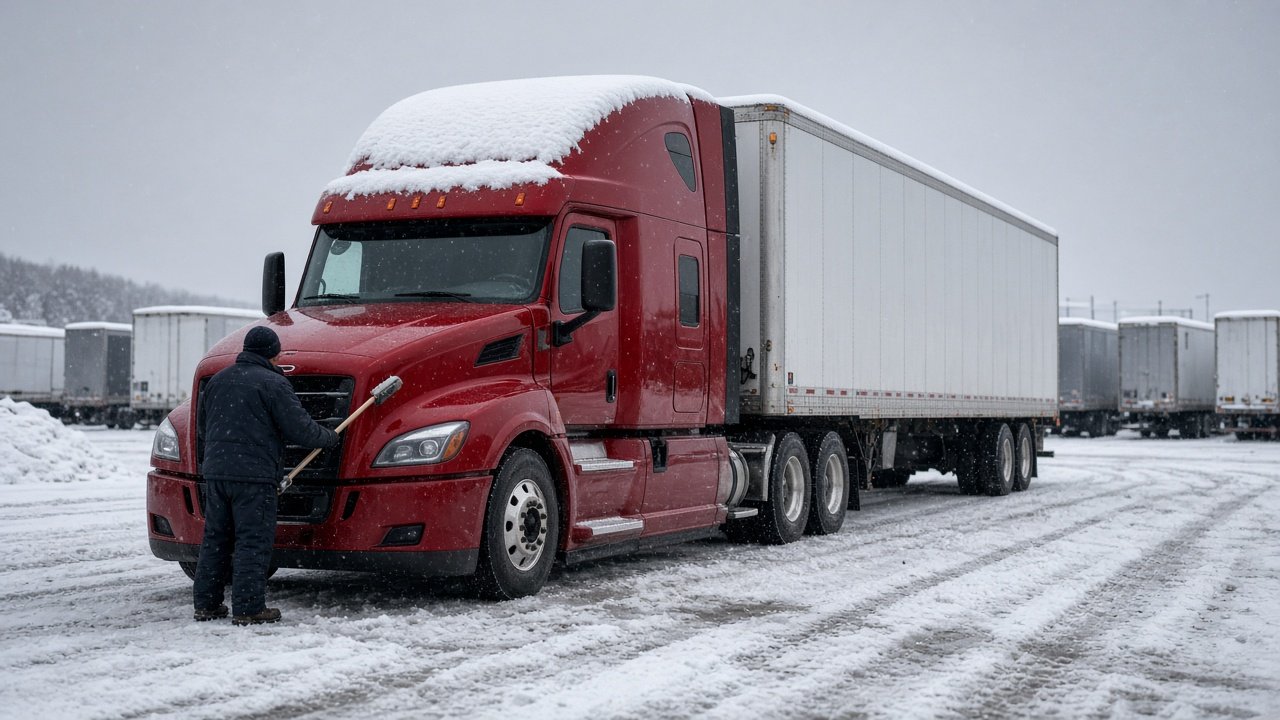
Frozen air brakes on a semi almost always come down to one thing: water in the air system or on the brakes that freezes once the truck sits. To prevent a freeze-up this winter, drain your air tanks (daily if they're manual), keep the air dryer serviced, put dummy couplers on your glad hands, and don't set the trailer parking brakes when the brakes are soaking wet in freezing weather; chock the wheels instead. If something does freeze, the safe fix is heat from a warm building, not a torch or a splash of alcohol down the glad hands.
Here's how frozen air lines, frozen valves and frozen-down brake shoes happen, what to check on your cold-weather pre-trip, and what to do when the trailer won't release at 5 a.m. in a truck stop lot.
Why do air brakes freeze in winter?
Compressed air carries moisture and a little compressor oil. The CDL manual's air brake section says plainly that this water collects in the bottom of the tanks and "can freeze in cold weather and cause brake failure." The air dryer is supposed to strip most of that moisture out before it reaches the tanks, but a dryer with a worn-out cartridge or a sticking purge valve lets wet air through. Freeze-thaw cycles (warm afternoon, cold night) make it worse because moisture condenses inside lines and valves, then turns to ice once you shut down.
There are really three different problems drivers lump together as "frozen brakes":
- Ice inside the air system. A frozen line, relay valve or tank drain means air can't get where it needs to go. You may not build pressure, or the trailer won't release or won't apply properly.
- Brakes frozen to the drum. You drove through slush, parked, set the brakes, and the wet shoes froze to the drums overnight. The air side works fine, but the wheels won't turn.
- Frozen glad hands or couplings. Snow and water packed into an open glad hand freezes the seal or blocks the line.
How do I prevent air brake freeze-ups?
Drain the air tanks
If your tanks have manual drains, the CDL manual says to drain them at the end of each working day to remove moisture and oil. Open each drain fully until no more water or oil comes out. Automatic drains are available with electric heaters to keep the drain itself from freezing, but they can still fail; crack the manual pull on cold mornings and see what comes out. Air brake manufacturers recommend draining manually when the weather first turns cold to clear out moisture left from the warm months.
What you see matters. Milky water or a lot of oil when you drain is a sign the dryer isn't doing its job. Write it up on your DVIR so the shop changes the cartridge before it becomes a road call.
Get the air dryer serviced before deep cold
Manufacturer winter guidance calls the dryer "your first line of defense" and recommends replacing the cartridge and purge valve before winter, especially if you find moisture when draining or the compressor seems to be cycling more than usual. Listen for the dryer's purge (the short burst of air when the governor cuts out). No purge, or a constant hiss from the dryer, is worth reporting.
Use dummy couplers and watch drooping lines
When you bobtail or drop a trailer, put the glad hands on the dummy couplers (or use covers) so snow and road spray can't pack into them. Cold-weather guidance from air brake makers also says to check for drooping air lines, because a sagging loop becomes a water trap that freezes first.
Park smart when the brakes are wet
The CDL manual is specific here: don't use the parking brakes if the brakes are "very wet in freezing temperatures," because they can freeze so the vehicle cannot move. Use wheel chocks on level ground instead. Before you park after a day of slush, drag the brakes lightly in a low gear for the last mile or so to heat and dry them. When you're choosing a spot, a level space matters more in winter; our truck parking finder and truck stop directory can help you plan where you'll shut down.
Know what's on your truck
Some older systems have an alcohol evaporator; if yours does, the CDL manual says to check and fill it every day in cold weather. But don't improvise. Air brake manufacturers discourage adding alcohol to the air system as a freeze fix, because it strips lubrication from valves and can damage seals, and they say alcohol is not a substitute for proper drying capacity. Follow your carrier's shop policy for your specific equipment.
What should I check on a cold-weather pre-trip?
Federal rules require you to be satisfied that the service brakes, trailer brake connections and parking brake are in good working order before you drive, and that the truck is in safe operating condition. On a cold morning, add these to your usual pre-trip inspection:
- Build air and watch how long it takes. A slow build compared with your truck's normal time can mean ice in a line or valve.
- Drain the tanks and look at what comes out.
- Check the glad hand seals for cracks and ice, and knock off packed snow before coupling.
- Do your air brake checks (leak-down, low-air warning, spring brake activation) as usual. Ice can make a valve sluggish, so pay attention to slow responses.
- Release the brakes and gently test that every axle actually rolls. Walk back and look at the trailer tandems if you're not sure.
What do I do if my trailer brakes are frozen?
First figure out which problem you have. If you have full air pressure and the trailer supply is pushed in but the wheels still drag or slide, the shoes are probably frozen to the drums. If air won't build or the trailer won't charge, the ice is likely inside the system.
- Frozen to the drum: Some drivers try rocking gently forward and back at very low speed to break the shoes loose. Don't power through with locked wheels; you can flat-spot tires or damage brake parts. If it won't free up gently, call your shop or road service.
- Ice in the air system: Manufacturer guidance says the only thawing method that won't damage the system is placing the vehicle in a warm building. After thawing, don't park it outside right away; condensation forms and refreezes, so put the truck back into operation once it goes outdoors.
- Never use open flame on air lines or valves. It can melt lines, damage valves and start a fire. Don't pour fluids into air lines or glad hands either.
If the low-air warning comes on while driving, the CDL manual says to stop and park safely as soon as possible; spring brakes come on somewhere between 20 and 45 psi, and on slick roads that can put you in a skid.
Worked example: how much time does a freeze-up cost? (hypothetical)
Hypothetical: you park at 10 p.m. after running through slush, set the trailer brakes, and it drops to 12°F overnight. At 5 a.m. the trailer won't roll. Road service quotes a 2-hour wait, and freeing the brakes takes another 45 minutes. That's 2 hours 45 minutes gone. On an 11-hour driving day at an average of 50 mph, that's about 2.75 × 50 = 137 miles you won't run that day, plus a likely missed appointment. Dragging the brakes dry and chocking the wheels instead would have taken about five minutes.
Common mistakes
- Skipping tank drains because the truck "has automatic drains." Heated drains still freeze or stick.
- Setting trailer brakes on soaked shoes in single-digit temps.
- Leaving glad hands hanging open while bobtailing in snow.
- Using a torch, a lighter or a heat gun held too close on air lines.
- Pouring alcohol or de-icer down the glad hands as a habit.
- Ignoring oily or milky water in the tanks instead of writing up the dryer.
Air system trouble isn't the only cold-weather headache. See our guides on preventing diesel gelling and winter driving tips for truckers, and check current diesel prices before you plan your fuel stops.
Frequently asked questions
How often should I drain my air tanks in winter?
With manual drains, at the end of each working day, per the CDL manual. With automatic drains, still drain manually now and then and after the first cold snap.
Is it OK to use alcohol to prevent frozen air lines?
Air brake manufacturers discourage it because it removes lubrication and can harm seals. If your truck has an alcohol evaporator, use only what it's designed for and follow your shop's policy.
Should I set the parking brake in freezing weather?
Normally yes, but not when the brakes are very wet in freezing temperatures. Dry them by braking lightly in a low gear and use wheel chocks on level ground.
Can I drive with a frozen trailer brake?
No. If the wheels won't turn freely, don't drag the trailer. Free it gently or call road service.
Know a CDL-A driver who wants a carrier that keeps their equipment winter-ready? Refer them to us; it's free for drivers. Refer a driver here.
Free for CDL-A drivers: get our Job Offer Checklist — 23 questions to ask any carrier about pay, miles and home time before you sign. Download the free checklist →
Know a CDL-A driver looking for work? Refer them and earn $500 when they complete 30 days on the road. Refer a driver →
CDL Transportation Group | CDL-A OTR Driver Recruiting