If you're asking where to park a semi truck overnight, the legal, safe options come down to five places: private truck stops (free or paid reserved spots), public rest areas that allow overnight truck parking, your shipper's or receiver's lot when they allow it, carrier terminals and drop yards, and some big-box or retail lots where the store and the city both allow it. Highway shoulders and on-ramps are an emergency-only option, not a parking plan. As of November 2026, the problem is supply: FHWA's Jason's Law survey counted roughly 313,000 truck parking spaces nationwide, about 273,000 at private truck stops and 40,000 at public rest areas. That's why experienced CDL-A drivers plan their spot before they plan their last two hours of driving.
Use our truck parking finder and truck stop directory alongside this guide.
Where can you legally park a semi truck overnight?
Private truck stops
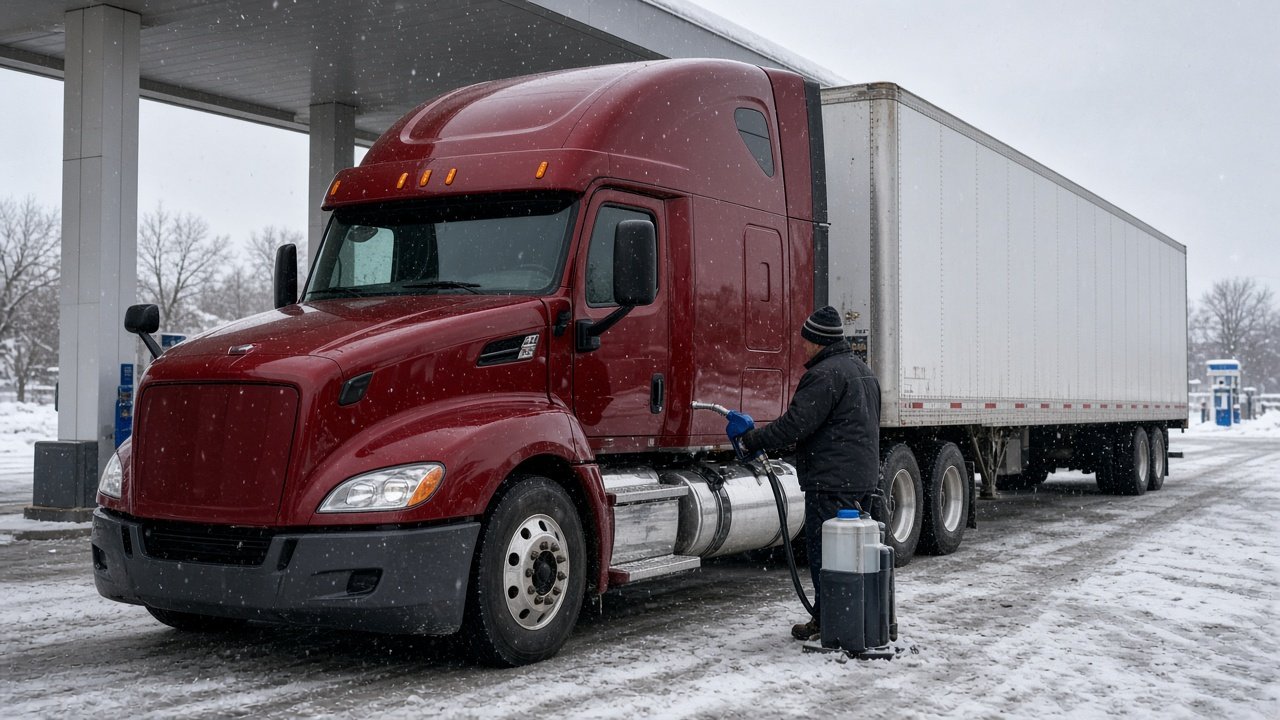
Truck stops hold most of the country's truck parking. Most spots are first-come, first-served and free for drivers who are customers, and many large stops now sell reserved spots for a nightly fee. Fees vary by location and demand, so check the price before you book. Truck stops also give you fuel, showers, food and scales in one stop, which makes them the default for OTR drivers.
Public rest areas and welcome centers
State rest areas are free but small, and many fill early in the evening. Each state sets its own rules, and some post a time limit on how long you can stay. Read the signs at the entrance; a posted limit applies to you even if your 10-hour break runs longer. In some states, weigh stations or inspection sites also allow parking when they're closed, but only where signs say so.
Shippers, receivers and drop yards
Some facilities let you park on site before an early appointment or after you're loaded. Many don't. Ask at check-in rather than assuming, and get the answer from someone with authority. Your own carrier's terminals and drop yards are usually the most secure option if one is on your route.
Retail and big-box lots
Some large stores allow trucks overnight, many don't, and local ordinances can ban it even when the store doesn't care. Look for posted "No Truck Parking" signs, ask the manager if you can, and park on the far edge of the lot so you don't block customers or deliveries.
Where are you not allowed to park a semi?
- On-ramps, off-ramps and shoulders for anything other than an emergency.
- Residential streets, where most cities ban commercial vehicles overnight.
- Lots posted "No Truck Parking" or "Customers Only" when you aren't one.
- Abandoned lots and unlit industrial areas, which may not be illegal but are a cargo-theft and personal safety risk.
If you ever must stop on the shoulder, federal rules apply. Under 49 CFR 392.22, you turn on your hazard flashers immediately and place your warning devices within 10 minutes: one about 10 feet back on the traffic side, one about 100 feet behind and one about 100 feet ahead in the lane or shoulder you're in (different placement rules apply near curves and hills).
What if your hours run out before you find parking?
This is the question every driver hits sooner or later. Three federal provisions matter, and none of them is a blank check:
- Adverse driving conditions. If weather or unusual road conditions you couldn't have known about at dispatch slow you down, 49 CFR 395.1(b) allows up to two extra hours of driving to finish the run or reach a safe place. Normal rush-hour traffic doesn't count.
- Personal conveyance after loading or unloading. FMCSA's personal conveyance guidance says that if you're done at a shipper or receiver, even out of hours, you may drive off duty to the first reasonably available safe place to rest. If that place is full, you can go on to the next one, and FMCSA recommends you note why in your log.
- Personal conveyance can't extend your day otherwise. FMCSA's personal conveyance FAQ is clear that running out of hours on the highway isn't a reason to use PC, and passing open spots to get closer to your next load doesn't qualify.
Your carrier may have stricter PC rules than the federal guidance, so know your company's policy before you need it. For the full clock rules, see our hours of service guide for CDL-A drivers.
How do you plan overnight truck parking around your HOS clock?
The fix is to choose parking by time, not by distance. Pick a primary spot and two backups before you start your last driving stretch, all within your remaining hours with room to spare.
Worked example (hypothetical): You start driving at 6:00 a.m. With 11 hours of driving inside a 14-hour window, your window closes at 8:00 p.m. You lost 1.5 hours at a shipper and took your 30-minute break, so by 3:00 p.m. you've driven 6.5 hours and have 4.5 hours of driving left but only 5 hours left in your window.
- Primary: a truck stop about 3.5 hours away, arriving around 6:30 p.m.
- Backup 1: a rest area about 3 hours away, arriving around 6:00 p.m.
- Backup 2: a truck stop about 2.5 hours away, arriving around 5:30 p.m.
Because truck stops near big metro areas often fill by early evening, you check availability when you reach Backup 2. If your primary looks full and you can't reserve it, you stop there. You give up an hour of driving but keep a legal, safe spot and an hour of cushion, instead of rolling up to a full lot at 7:55 p.m.
How can you find open truck parking faster?
- Arrive earlier. Spots are easier to find in the afternoon than after dark at most busy stops.
- Use real-time parking signs, which several states post on interstates to show open spaces at upcoming rest areas.
- Pay for a reserved spot on nights when you're running near a big city or the end of your clock. Compare the fee with the cost of a log violation or an unsafe spot.
- Fuel and park in one stop so you don't burn hours on an extra exit. Check current diesel prices along your route when picking the stop.
- Ask your next shipper or receiver about overnight parking when you book or call ahead.
How do you stay safe when you park overnight?
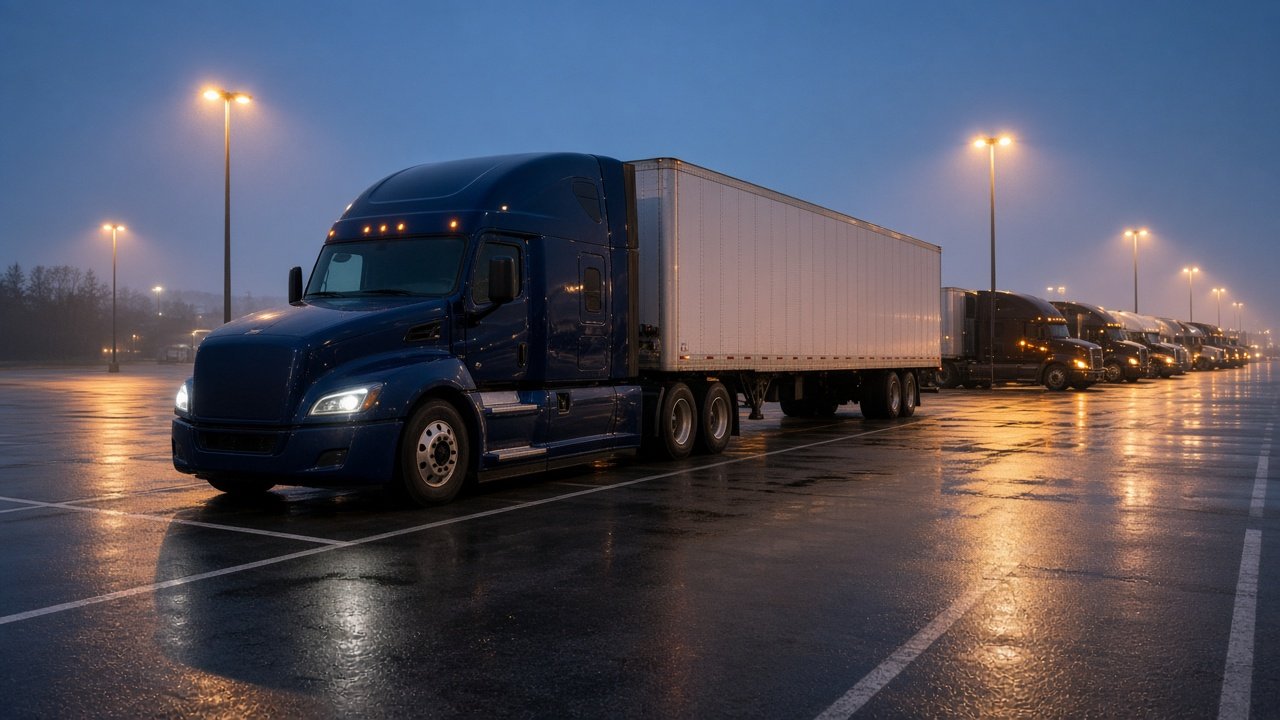
- Park in well-lit areas with other trucks around, and back in where you can.
- Lock your doors, close curtains and keep valuables out of sight.
- Use a trailer or kingpin lock if you drop or carry high-value freight, and follow your carrier's security rules.
- Walk around the truck before you pull out: check for tampered seals, low tires and anything left under the trailer.
For making the cab comfortable for real sleep, see our guide to living in a sleeper cab, and for picking stops, our truck stop rankings.
Common mistakes when looking for overnight truck parking
- Waiting until the last hour. That's how drivers end up on ramps or forced into a violation.
- Having just one option. Always have two backups inside your remaining hours.
- Assuming a shipper allows overnight parking. Ask; getting moved at midnight costs you rest and hours.
- Misusing personal conveyance. PC is for reaching the first reasonable safe spot after loading or unloading, not for gaining miles.
- Ignoring posted time limits at rest areas or local no-truck ordinances.
- Parking in isolated spots to avoid crowds, which raises theft risk.
Frequently asked questions
Is it legal to park a semi truck at a rest area overnight?
In many states, yes, but each state sets its own rules and some post time limits. Always follow the signs at the entrance.
Can I park my semi on the shoulder if I'm out of hours?
Shoulders are for emergencies. If you stop there, you must use flashers and place warning devices within 10 minutes under 49 CFR 392.22, and many states ban non-emergency shoulder parking outright.
How much does a reserved truck parking spot cost?
It depends on the location and demand, and prices change, so check the current rate when you book. Many spots at truck stops are still free on a first-come basis.
Can I use personal conveyance to find parking?
After loading or unloading, FMCSA guidance lets you drive off duty to the first reasonably available safe spot, even if you're out of hours. It can't be used to extend your day on the highway, and your carrier may be stricter.
Does the type of job affect how hard parking is?
Yes. Regional and dedicated jobs with set routes or home terminals usually make parking easier than irregular OTR. You can compare options on our CDL-A jobs page or get matched through driver job match.
Free for CDL-A drivers: get our Job Offer Checklist — 23 questions to ask any carrier about pay, miles and home time before you sign. Download the free checklist →
Know a CDL-A driver looking for work? Refer them and earn $500 when they complete 30 days on the road. Refer a driver →
CDL Transportation Group | CDL-A OTR Driver Recruiting