Diesel exhaust fluid (DEF) starts to freeze at 12°F (-11°C), and freezing does not ruin it. Your truck's SCR system has heaters that thaw the tank and lines after you start the engine, and thawed DEF works the same as before. What actually causes winter DEF trouble is usually something else: overfilled tanks that crack as DEF expands, spare jugs that froze in a side box, contaminated fluid, or a heater or sensor fault that triggers a warning and, on many trucks, a derate. Here is what CDL-A drivers should know about DEF freezing and what to do this winter.
At what temperature does DEF freeze?
DEF is 32.5% high-purity urea and 67.5% deionized water. That mix was chosen on purpose: it has the lowest freezing point of any urea and water blend, about 12°F. A DEF supplier's technical paper on DEF heating and cooling explains that at this ratio the fluid freezes and thaws evenly, like water and ice, and leaves no solid urea behind when it thaws. It also states that repeated freeze and thaw cycles have no effect on DEF quality.
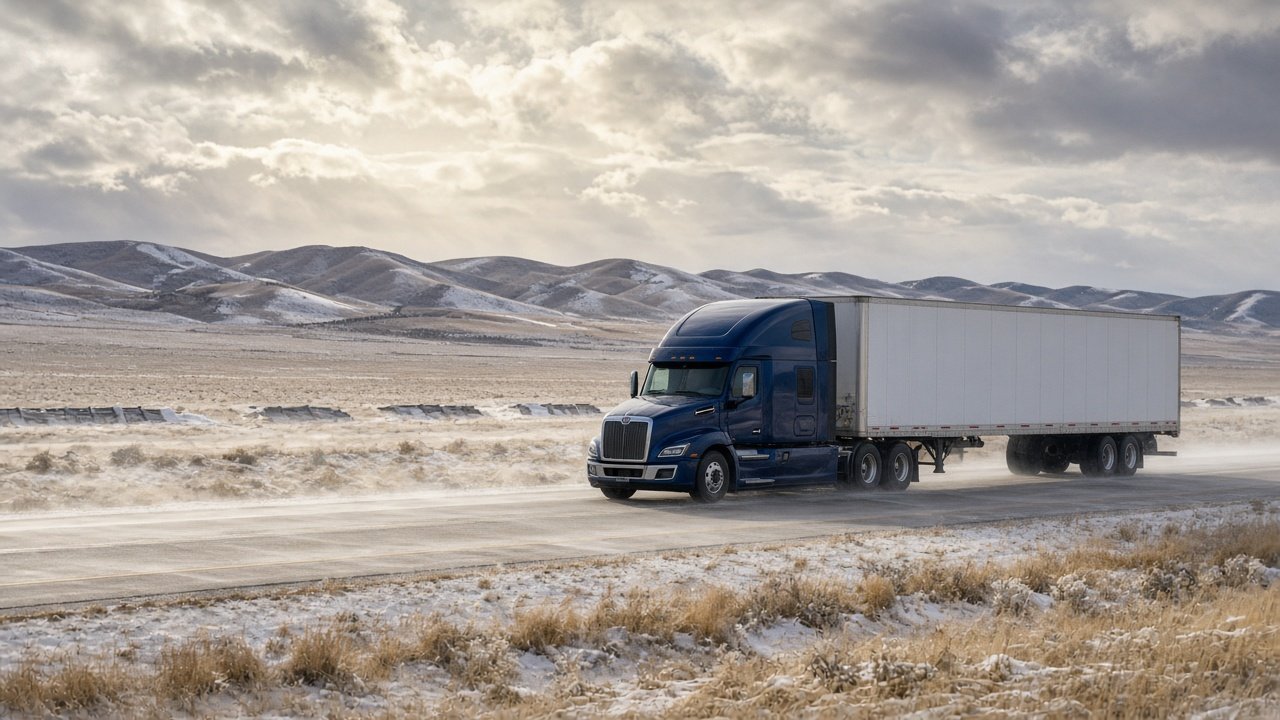
So if you run through Montana, the Dakotas, Minnesota or the Rockies this month, expect the DEF in your tank to freeze some nights. That alone is not a problem.
What happens when DEF freezes in the truck?
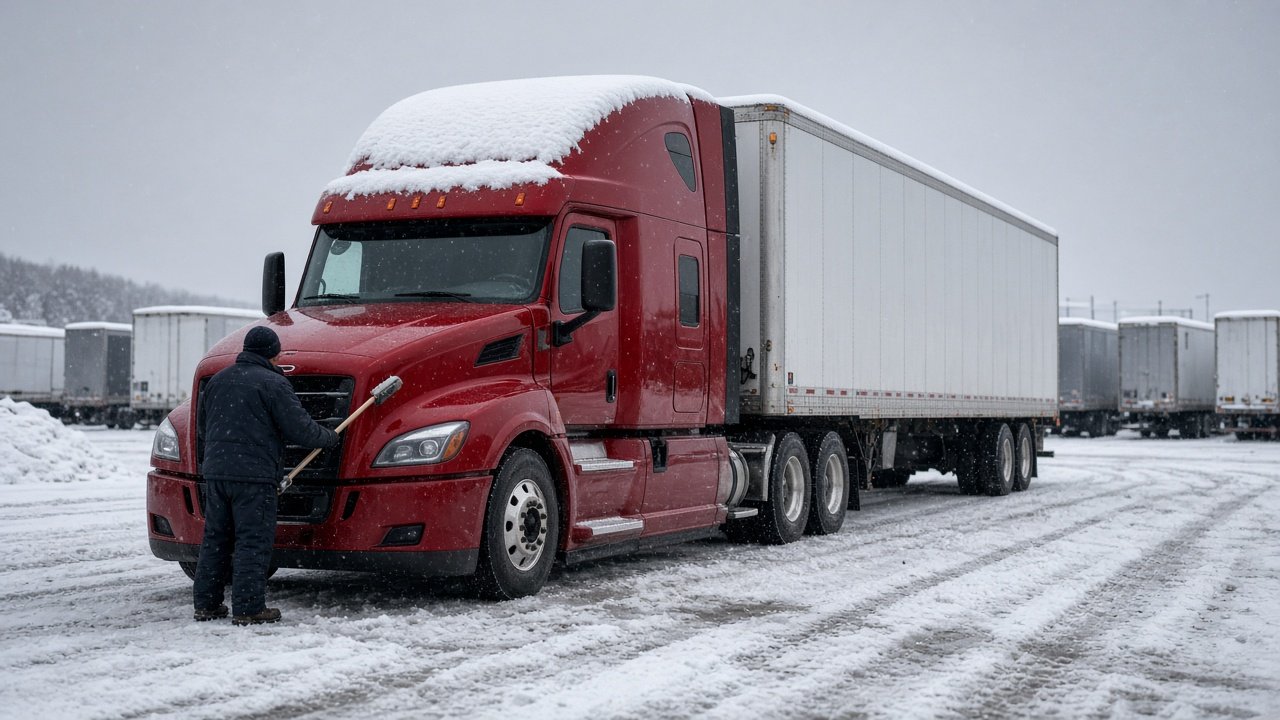
SCR-equipped trucks are designed for it. The tank and supply lines are heated, so after a cold start the system melts enough DEF to start dosing. Partially frozen DEF is fine to use: the liquid part has the correct urea concentration. Modern engines are built to run normally while the DEF thaws, so you can usually start and drive as normal.
Where drivers get caught is when the heating system itself has a problem. A failed tank heater, heater relay, coolant valve or DEF line heater can keep the fluid frozen, and the truck reads that as a DEF system fault. That is when you get a warning lamp, a countdown and possibly a derate.
Will a frozen DEF tank put my truck in derate?
Frozen DEF by itself should not. A DEF system fault can. As of November 2026, derate rules have not changed for trucks on the road. The EPA proposed in July 2026 to replace DEF-related derates on future engines with warning alerts, but that rule is still a proposal, and software updates that soften derates on existing trucks depend on the engine maker. We covered the background in our post on the EPA's DEF derate proposal. If your truck has not had its emissions software updated, ask your shop or fleet maintenance whether an update is available for your engine.
If a DEF warning comes on in cold weather, do not ignore the countdown. Note the fault code, call your breakdown line, and get to a shop or a safe place to park while you still have full power.
How full should I fill the DEF tank in winter?
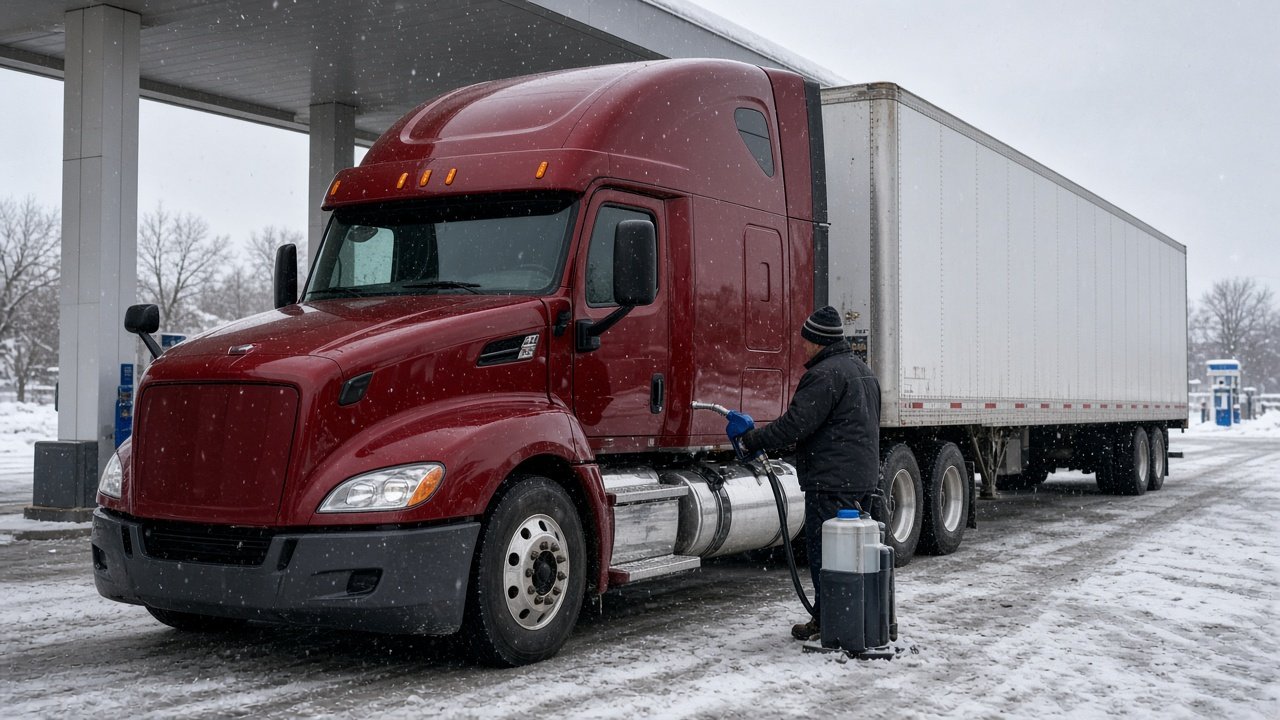
DEF expands by up to 7% when it freezes, according to the American Petroleum Institute DEF fact sheet. Truck tanks are designed with room for that, but topping off to the very neck and then parking overnight below 12°F puts stress on the tank, cap and sender.
Worked example (hypothetical)
Say your truck has a DEF tank that holds 20 gallons of fluid, and you fill it right to the top before a night in a lot at -5°F.
- Expansion if it freezes solid: 20 gallons x 7% = 1.4 gallons more volume.
- That 1.4 gallons has to go somewhere. If the tank is filled past its normal full mark, it pushes on the tank walls, cap and level sensor.
- Stopping at the pump's automatic shutoff, or the full mark on the gauge, leaves the headroom the tank was built with.
Bottom line: fill to the normal full point and stop. Don't keep squeezing the nozzle to round off the dollar amount.
Can I keep a spare jug of DEF in the truck?
Yes, and many drivers do. Just know how it behaves in the cold:
- A jug in a side box will freeze when it's below 12°F. It is still good after it thaws, but a solid jug won't help you on a cold morning at a shipper.
- Store it in the cab or sleeper if you want it usable. Keep it upright in a tray so a leak doesn't stain the floor.
- Watch the age. DEF shelf life depends on storage temperature. The API sheet lists about 36 months at or below 50°F, 18 months at or below 77°F, and 12 months at or below 86°F. Use your spare and replace it rather than letting it ride for years.
- Thaw it naturally. Don't put a jug on a bunk heater vent, near an open flame, or in hot water to speed things up.
Common mistakes with DEF in cold weather
- Adding anything to DEF. No windshield washer fluid, no antifreeze, no water, no "DEF anti-gel." The API fact sheet says not to add aftermarket additives, because they can damage the SCR system and may void the warranty. Diesel anti-gel goes in the fuel tank, never the DEF tank. See our diesel gelling guide for the fuel side.
- Putting DEF in the diesel tank (or diesel in the DEF tank). In the dark, with gloves on and snow blowing, it happens. The DEF cap is usually blue and the filler is smaller. Check before you pump. If you mix them up, don't start the engine; call for service.
- Using a dirty funnel. A funnel that has touched oil or coolant contaminates DEF. Use a dedicated, clean DEF spout or pour straight from the jug.
- Buying uncertified fluid. Look for DEF that meets ISO 22241, ideally with the API certification mark on the container.
- Idling for hours to "keep the DEF warm." It isn't needed, and long idling can break idling laws in some states. See our winter idling guide.
- Driving through a DEF countdown. Once a derate kicks in on a mountain grade or a busy interstate, you have far fewer options.
A quick cold-weather DEF checklist for your pre-trip
- Check the DEF gauge and the dash for any SCR or DEF warnings after startup.
- Look at the DEF cap and tank for cracks, white crusty residue or leaks around fittings. White crystals mean DEF has leaked and dried.
- Make sure the cap is tight so snow, slush and road salt can't get in.
- If DEF is cloudy or off-color once it is fully thawed and warm, it may be contaminated. Don't add more until it is checked.
Add these to the rest of your cold-weather pre-trip.
Where can I buy DEF on the road in winter?
Most major truck stops sell DEF from the pump at the diesel island, which in winter is usually the better choice than jugs that sat outside. Use our truck stop finder to plan fuel and DEF stops, check current diesel prices along your route, and line up a safe place to park ahead of a cold front so you're not hunting for a spot with a warning light on.
Frequently asked questions
Is frozen DEF ruined?
No. DEF that freezes and thaws keeps its quality, no matter how many times it happens, as long as it wasn't contaminated.
How long does it take for DEF to thaw after startup?
It depends on the truck, the outside temperature and how solid the tank froze. The engine is designed to keep running normally while the heaters work. If you get a DEF fault that doesn't clear after a normal warm-up and drive, have the heater circuit checked.
Can I use a heat gun or hot water on a frozen DEF line?
Don't. High heat can damage lines, sensors and the fluid. Let the truck's heaters do the work, and call a shop if they aren't.
Does cold weather make DEF go bad faster?
No. Heat shortens DEF shelf life. Cold storage actually helps it last longer.
Know a CDL-A driver who's tired of fighting a broken-down truck? Refer them to us. It's free for drivers. Refer a driver here.
Free for CDL-A drivers: get our Job Offer Checklist — 23 questions to ask any carrier about pay, miles and home time before you sign. Download the free checklist →
Know a CDL-A driver looking for work? Refer them and earn $500 when they complete 30 days on the road. Refer a driver →
CDL Transportation Group | CDL-A OTR Driver Recruiting