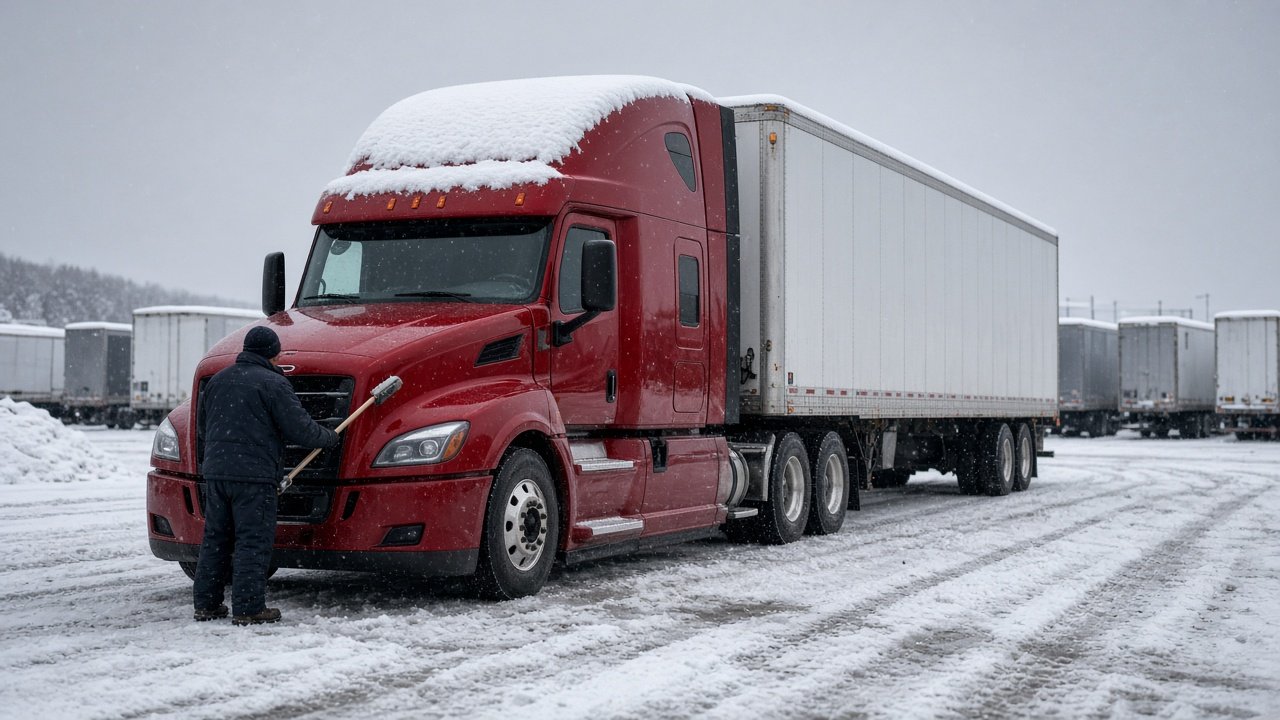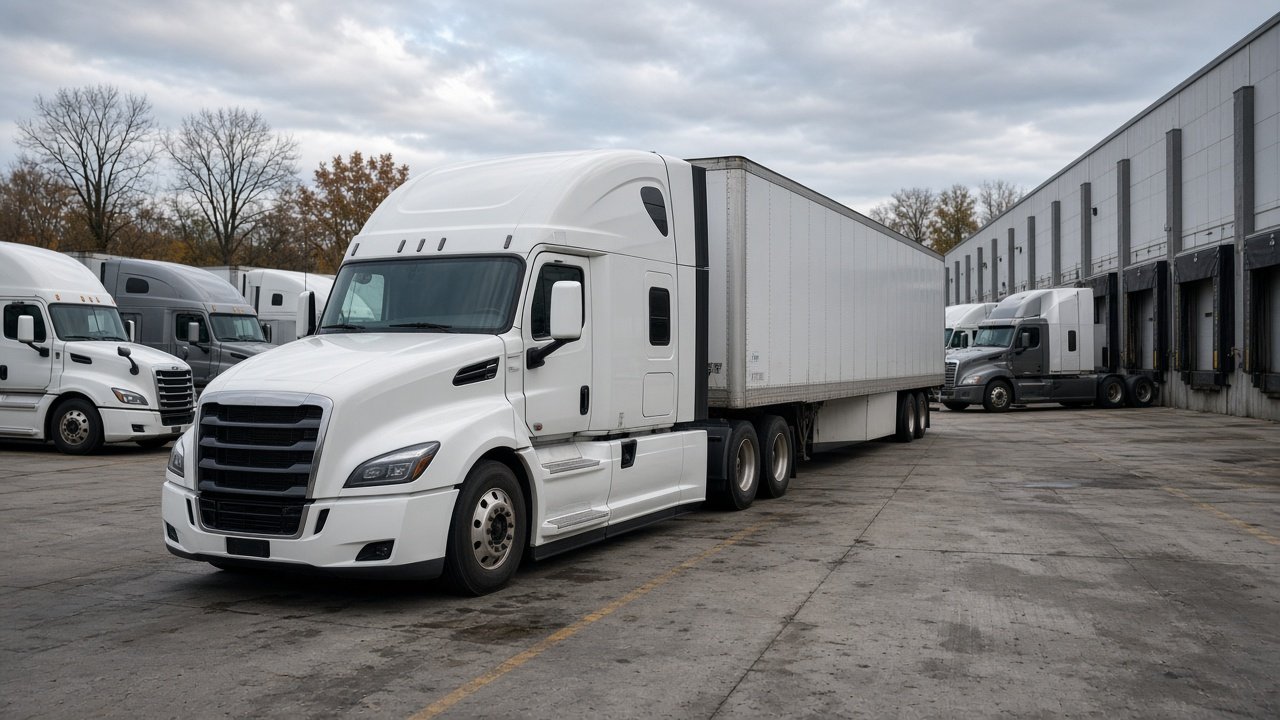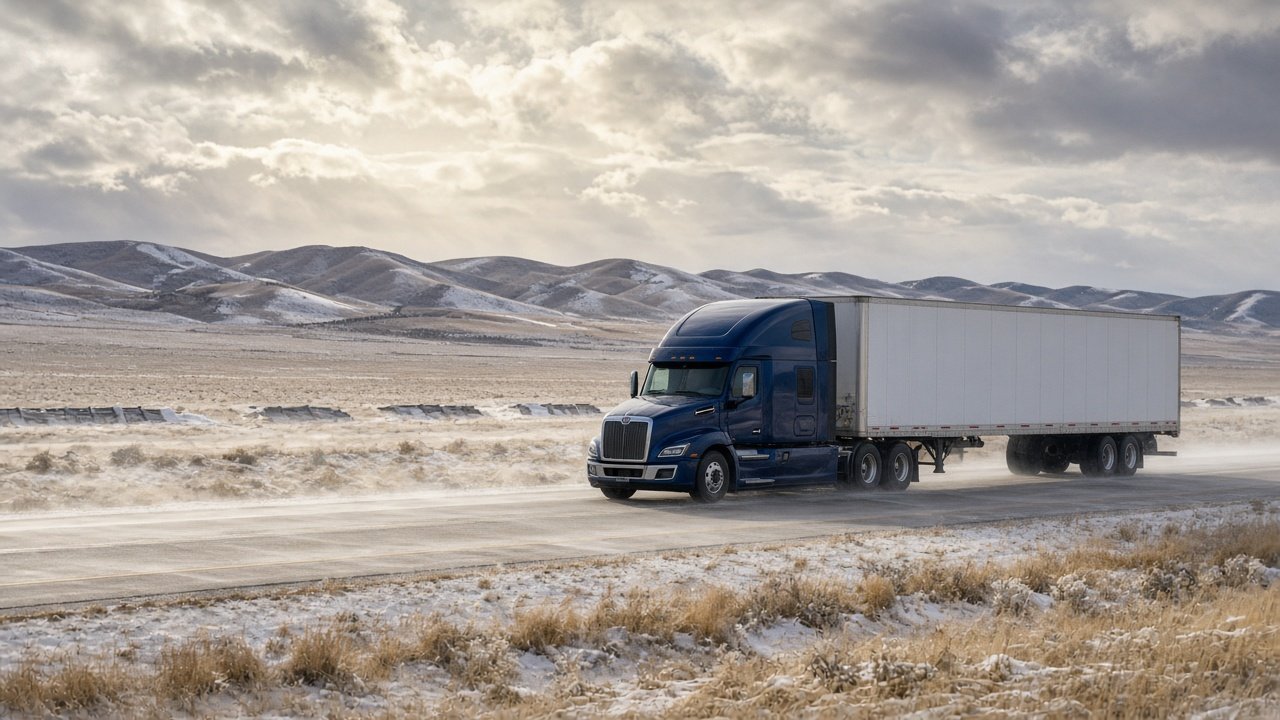
High wind truck driving is most dangerous when you're empty or light in a 53-foot van or reefer, and the safest move is usually to park before the gusts hit, not after. In Wyoming, highway crews start preparing for closures when gusts of about 60 mph are forecast, and closed segments can list a minimum gross vehicle weight (GVW) on the sign. If you're under it, you wait. Federal rules back that up: 49 CFR 392.14 says that when conditions get dangerous enough, you must stop driving until the truck can be operated safely. November through February is the peak season for blowovers, so this is the month to get your plan straight.
When are blowovers most likely?
According to a Wyoming DOT safety report covering 2016 to 2020, the state averaged about 114 reported blowover crashes a year. February had the most (26%), followed by December (20%), November (16%) and January (12%). Heavy trucks over 26,000 pounds made up 45% of the vehicles involved.
The same report lists the historical hot spots: Wyoming Hill (I-25, mile markers 3-5), Bordeaux (I-25, MP 60-80), Arlington (I-80, MP 272-274), Cooper Cove-Strouss Hill (I-80, MP 278-284) and Casper's Outer Drive near I-25. If your route crosses southern Wyoming on I-80 or runs I-25 between Cheyenne and northern Colorado, assume wind is part of your trip plan this winter.
One detail surprises a lot of drivers: Transport Topics, citing WYDOT data, reported that 73% of blowover crashes happened on dry pavement. Wind alone can do it. You don't need snow on the road for a trailer to go over.
Which trucks are at the highest risk in high wind?
WYDOT's wind FAQ is blunt about it: enclosed trailers with a big flat side, like 53-foot dry vans, reefers and doubles, are the most likely to blow over. Cattle haulers and box trucks are included too. Unloaded tankers and flatbeds without a high-profile load are lower risk and are typically not included in the weight-based restrictions.
- Highest risk: empty or lightly loaded dry van, reefer or doubles; empty livestock trailers.
- Still risky: a loaded van in gusts at speed, especially on ice where the tires can't grip.
- Lower risk: loaded tankers, flatbeds without tall freight. Lower risk is not no risk.
For doubles, WYDOT counts the total weight of the tractor and both trailers, and warns that a full front trailer with an empty rear one is very dangerous.
How do Wyoming's weight-based wind closures work?
Since 2023, Wyoming has used weight-based wind closures. Instead of only "closed to light, high-profile vehicles," the message signs can list a weight. Per WYDOT, that number is gross vehicle weight: tractor, trailer, freight, fuel and everyone in the cab. If you're under the listed weight in an at-risk vehicle, the road is closed to you.
A few other terms you'll see on the WYDOT 511 definitions page:
- Extreme Blow Over Risk: issued where gusts are 60 mph or more and there's no closure signage, or on very icy roads with lower gusts. It targets lightly loaded commercial vehicles, RVs and trailers.
- No Unnecessary Travel: the road is open, but travel isn't recommended.
- Rolling Closure: when a town fills up during a long closure, the closure point moves back to the next town so drivers don't get stranded without services.
WYDOT says roads aren't closed until the gusts actually happen, but warning messages like expected crosswinds or expected closures can go up a day or so ahead. Treat those warnings as your cue to plan parking.
Do I have to stop if I'm just over the weight on the sign?
No, you're allowed to continue if you're above the posted weight. But WYDOT warns that drivers within 5,000 to 10,000 pounds of the listed weight can still be at risk, partly because the wind sensors may not be where the gusts are strongest. Its advice is simple: if wind makes it hard to control the truck, regardless of weight, pull into a rest area, parking area or town and wait it out.
Worked example (hypothetical)
This is a hypothetical example with round numbers, not real scale weights. Check your own scale ticket.
- Tractor with fuel and driver: about 18,000 lb
- Empty 53-foot dry van: about 15,000 lb
- Freight: 9,000 lb of light, bulky product
- GVW: 18,000 + 15,000 + 9,000 = 42,000 lb
Say the sign ahead lists a closure for enclosed trailers under 40,000 lb. You're 2,000 lb over, so you may legally keep going. But you're well inside the 5,000 to 10,000 lb range WYDOT says can still be risky, gusts are forecast to keep building, and the next 30 miles are an open stretch. The professional call here is to park at the next safe spot and roll when the wind drops.
Does high wind give me extra hours of service?
Sometimes. The adverse driving conditions exception in 49 CFR 395.1(b) lets you extend the 11-hour driving limit and the 14-hour window by up to 2 hours. The catch is in the definition in 395.2: the conditions must not have been known, or reasonably knowable, before you started your duty day (or before you started driving after a qualifying break or sleeper period), or to your carrier before dispatch. A wind event that was forecast and posted the day before may not qualify. Annotate your ELD if you use it. For the basics, see our guide to hours of service rules for OTR drivers.
How should I drive in strong crosswinds?
- Slow down early. Less speed gives you more time to correct when a gust hits.
- Keep both hands on the wheel and expect gusts at gaps: overpasses, cuts in hills, bridges and the end of snow fences.
- Watch the trailer in your mirror. If it's walking toward the shoulder or the wheels feel light, get off at the next safe exit.
- Give other high-profile vehicles room. RVs and pickups pulling campers get pushed around too.
- Watch for ice plus wind. On a slick surface, even a moderate gust can slide the trailer. Our guide to black ice on bridges covers the warning signs.
- Never stop on the shoulder in a closure zone unless you have no choice. Use a rest area, truck stop or town.
How do I plan a winter trip through wind country?
- Check the state 511 site the night before and again before you roll. In Wyoming that's wyoroad.info.
- Know your GVW. If you're empty or light, ask dispatch now whether to wait, reroute or take freight that adds weight.
- Find parking before the closure point. Lots in towns like Laramie, Rawlins and Cheyenne fill fast when I-80 closes. Use our truck parking finder and truck stop directory.
- Fuel up and stock the cab. A wind closure can last hours. Our winter emergency kit list covers what to carry, and current diesel prices help you pick the fuel stop.
- If chains are also required, check our chain laws by state guide.
Common mistakes
- Thinking dry pavement means it's safe. Most Wyoming blowovers happened on dry roads.
- Guessing your weight instead of checking the scale ticket or bill of lading.
- Pushing on because you're "just over" the posted weight.
- Waiting until the closure is posted to look for parking.
- Assuming the adverse conditions exception covers a wind event that was already forecast.
- Letting a tight appointment override safety. A late load can be rescheduled; a rollover can't be undone.
Frequently asked questions
What wind speed is dangerous for an empty semi?
There's no single number, since it depends on trailer type, weight, road direction and surface. WYDOT starts preparing for closures when gusts of about 60 mph are forecast, and its 511 site notes winter winds often hit 30 to 40 mph with gusts of 50 to 60 mph. An empty van can be in trouble well below the closure level.
Can I get a ticket for driving through a wind closure?
Wyoming law lets WYDOT close or restrict highways, and WYDOT says its weight-based signs don't change existing fine amounts. Check the posted restriction and follow it.
Is a loaded reefer safe in high wind?
It's safer than an empty one, but WYDOT still lists reefers among the enclosed trailers most likely to blow over. Heavy weight helps; it doesn't make you immune.
Can my carrier make me drive through high winds?
Under 49 CFR 392.14, you must stop when conditions are too dangerous to drive safely. If a carrier keeps pushing you to run through closures, that's worth weighing when you look at other CDL-A jobs or use our driver matching tool.
Know a CDL-A driver tired of being pushed to run in bad weather? Refer them to us. It's free for drivers. Refer a driver here.
Free for CDL-A drivers: get our Job Offer Checklist — 23 questions to ask any carrier about pay, miles and home time before you sign. Download the free checklist →
Know a CDL-A driver looking for work? Refer them and earn $500 when they complete 30 days on the road. Refer a driver →
CDL Transportation Group | CDL-A OTR Driver Recruiting