ELDT stands for Entry-Level Driver Training. It is a federal requirement that you complete training from a provider listed on the FMCSA Training Provider Registry before you take your CDL skills test for the first time, upgrade from Class B to Class A, or get a passenger, school bus, or hazmat endorsement for the first time. It applies to anyone who got a commercial learner's permit (CLP) on or after February 7, 2022. There is no minimum number of hours. You have to pass the theory assessment and show you can do the driving skills.
Here is how it works, who is exempt, and what to ask before you pay a school. This is current as of October 2026.
What does ELDT require?
Under 49 CFR 380.603, the training rules apply to entry-level drivers who plan to operate commercial motor vehicles in interstate or intrastate commerce. The training has two parts:
- Theory (classroom or online): knowledge instruction on operating a commercial vehicle, delivered by lectures, demonstrations, computer-based or online instruction, and similar methods.
- Behind-the-wheel (BTW): time when you have actual control of the truck, either on a closed range or on public roads. Time spent only watching someone else drive does not count.
Under 49 CFR 380.715, the provider must give you a written theory assessment, and you need an overall score of at least 80 percent. Your instructor must also evaluate and document your proficiency in each BTW skill in the curriculum.
Is there a minimum number of ELDT hours?
No. ELDT is proficiency-based. The federal rules do not set a minimum number of classroom or driving hours. The provider reports the total clock hours you spent on BTW training, but the rule does not set a floor. A school can still set its own program length, so a short program and a long program can both be legal. What matters is that you meet the curriculum standards. If you want the bigger picture on timing, see our guide on how long it takes to become a truck driver.
Who has to complete ELDT?
You are an "entry-level driver" if you must take the CDL skills test to do any of these:
- Get your first Class A or Class B CDL.
- Upgrade from Class B to Class A.
- Get a passenger (P), school bus (S), or hazardous materials (H) endorsement for the first time.
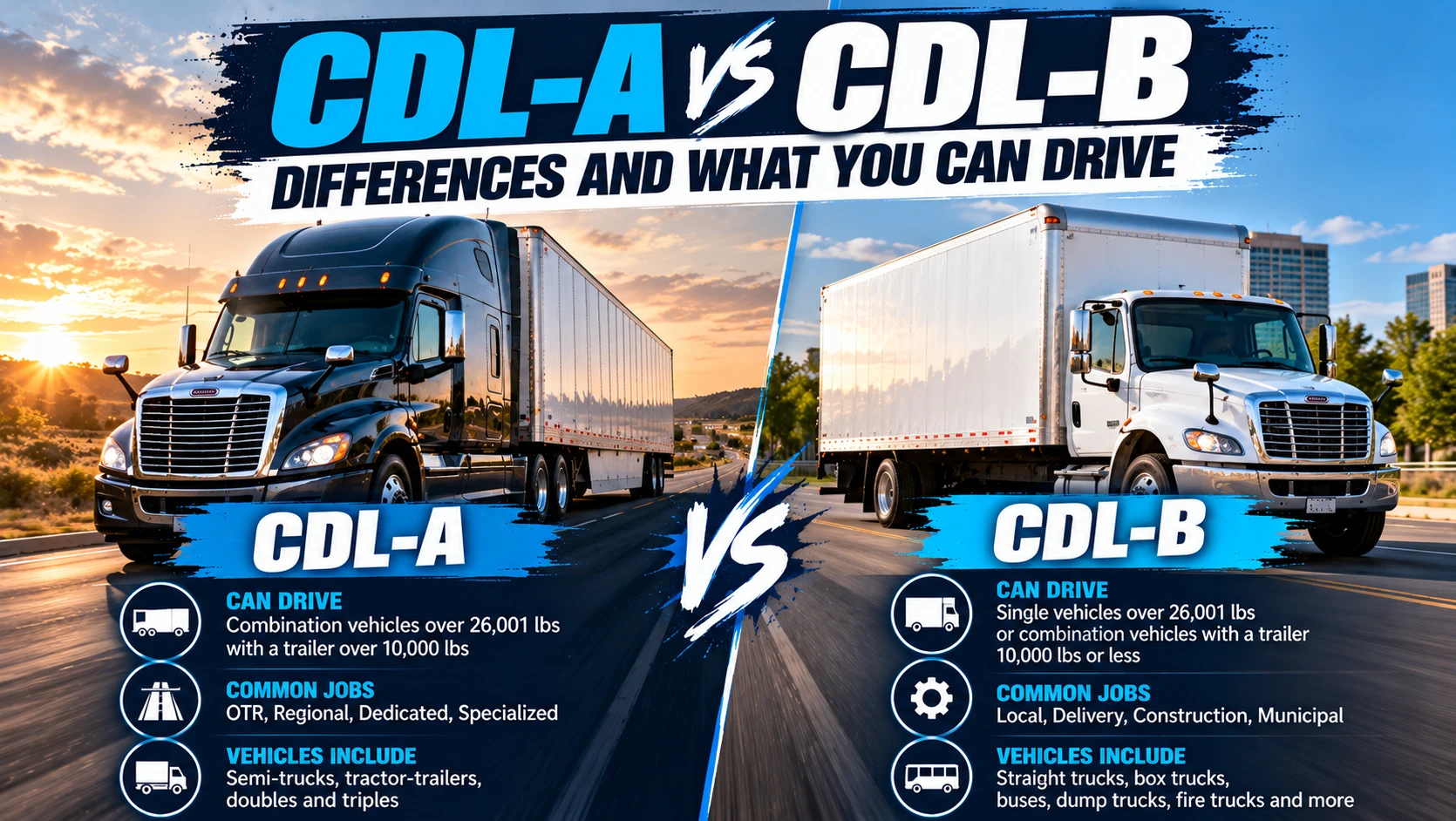
The hazmat endorsement needs theory training only, and the one-year completion window below does not apply when hazmat is the only thing you are adding. Other endorsements such as tanker (N), doubles/triples (T), and combination tank/hazmat (X) are not part of ELDT. See our overview of CDL-A vs CDL-B to see what each class lets you drive.
Who is exempt from ELDT?
Per 380.603, these groups do not have to complete ELDT:
- Drivers who got a Class A or B CDL, or a P, S, or H endorsement, before February 7, 2022, for those credentials.
- Drivers who got a CLP before February 7, 2022 and earn their CDL before that permit expires.
- Drivers who are exempt from CDL requirements under the specified regulations.
- Drivers applying for a restricted CDL, or seeking removal of a restriction.
- Certain military personnel who meet the conditions in the rule.
If you are not sure whether you qualify, ask your state driver licensing agency before you pay for training.
How long do you have to finish ELDT?
You must complete both the theory and the behind-the-wheel portions within one year of finishing the first portion. Hazmat-only applicants are the exception. Plan around your CLP too, because the permit has its own validity period set by your state. Our guide to current driving jobs can help you plan what comes after training.
What is the Training Provider Registry?
The Training Provider Registry (TPR) is the FMCSA's list of approved ELDT providers. Under 380.609, a provider must be listed on it to deliver this training. Providers include schools, motor carriers, governments, and individuals. Training from a provider that is not on the registry does not count.
Providers also have rules to follow. 380.711 says the training vehicle must be in the same group and type you plan to use on your skills test, and 380.713 says instructors must meet the definitions in the rule, including holding the right CDL credentials and having at least two years of relevant experience.
FMCSA has been removing providers that fail to meet the standards, and trade press reports thousands of listings removed in recent years. Exact counts vary by source and date, so check the registry yourself before enrolling.
How does the state find out you finished?
You do not turn in a certificate. Under 49 CFR 380.717, the provider must electronically submit your training certification through the TPR website by midnight of the second business day after you finish. The record includes your name, your license or permit number and state, the CDL class or endorsement, whether the training was theory, BTW, or both, the total BTW clock hours, the provider's name and TPR ID, and the completion dates. Your state licensing agency checks that record before it will schedule your skills test.
Worked example (hypothetical)
Say a new driver gets a CLP in March and wants a Class A CDL. This is a made-up timeline to show how the pieces fit:
- Week 1: they pick a provider and confirm it is listed on the TPR.
- Weeks 1 to 3: they finish the theory units and score 85 percent on the written assessment. Since 85 is above the 80 percent minimum, they pass.
- Weeks 3 to 6: they log range and road time with a qualified instructor, who documents each skill.
- Two business days after completion: the provider uploads the record to the TPR.
- Next: they schedule the state skills test.
The one-year clock started when the first portion was completed, so this driver is well inside the window.
Common mistakes with ELDT
- Not checking the registry. If the provider is not listed, the training does not count.
- Assuming a set number of hours. The rule is proficiency-based, so do not pay extra just because a program says it is "required hours."
- Letting the one-year window run out. Finish both parts in time, or you may have to start over.
- Training in the wrong vehicle. BTW training has to be in the same group and type you will test in.
- Skipping the follow-up. Confirm with your provider that your record was submitted before you book a skills test.
- Thinking tanker or doubles/triples need ELDT. They do not.
Frequently asked questions
Do I need ELDT if I already have a CDL?
Not for credentials you held before February 7, 2022. You would need it if you now upgrade classes or add a P, S, or H endorsement for the first time.
Can I do ELDT theory online?
Yes. The rule defines theory instruction to include online and computer-based training, as long as the provider is listed on the TPR. Behind-the-wheel training must be done in a real truck with an instructor.
What score do I need on the theory test?
At least 80 percent overall on the provider's written assessment.
How much does ELDT cost?
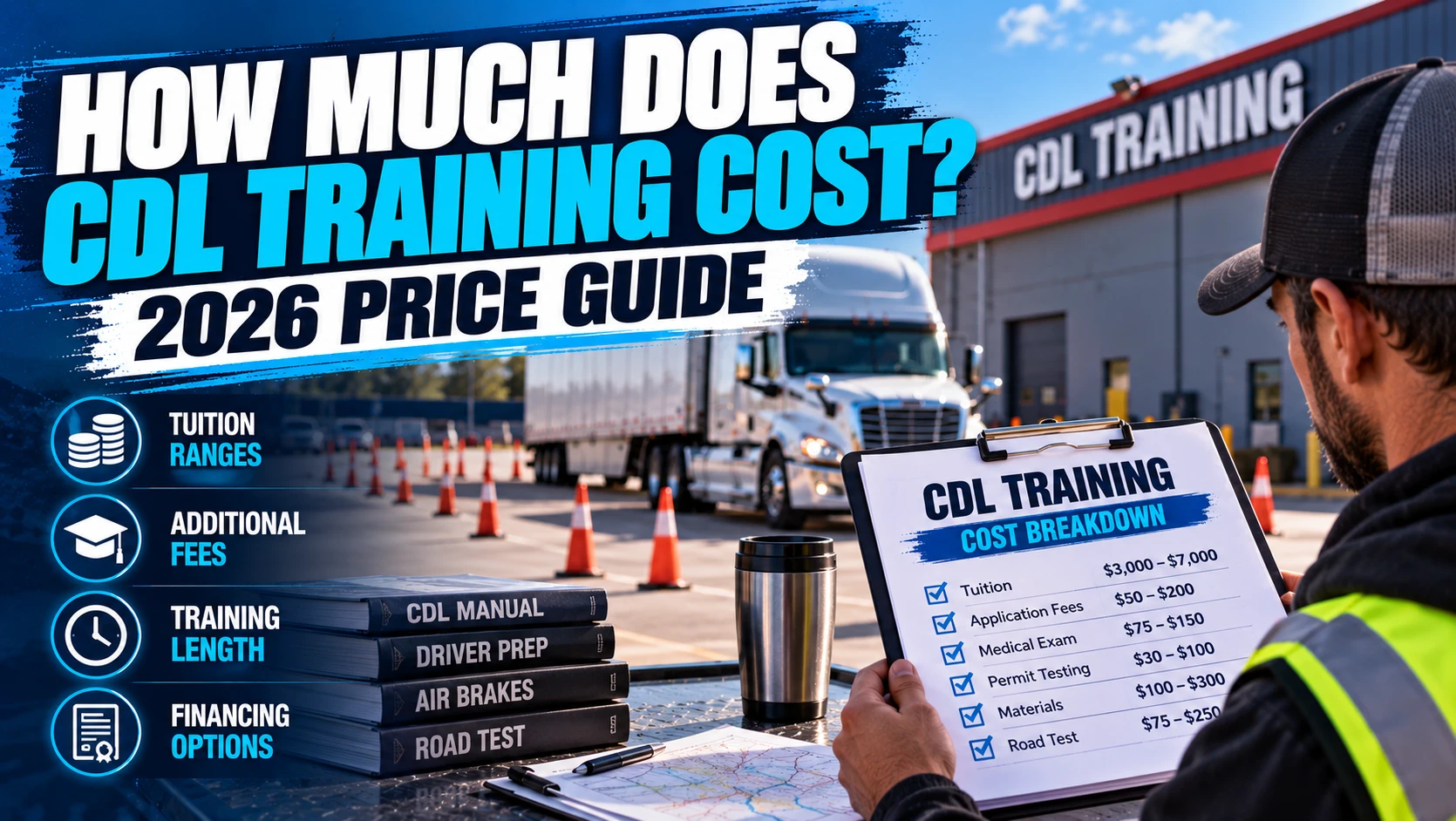
The rule does not set prices. Costs vary by provider. See our CDL training cost guide for typical ranges.
Does ELDT replace the skills test?
No. ELDT is required before you take the CDL skills test. You still have to pass the state knowledge and skills tests.
This is general information. Rules can change, so check FMCSA and your state licensing agency for your situation. When you are ready to look at what is next, browse open driver jobs, take the carrier match quiz, and see the driver resources.
Free for CDL-A drivers: get our Job Offer Checklist — 23 questions to ask any carrier about pay, miles and home time before you sign. Download the free checklist →
Know a CDL-A driver looking for work? Refer them and earn $500 when they complete 30 days on the road. Refer a driver →
CDL Transportation Group | CDL-A OTR Driver Recruiting