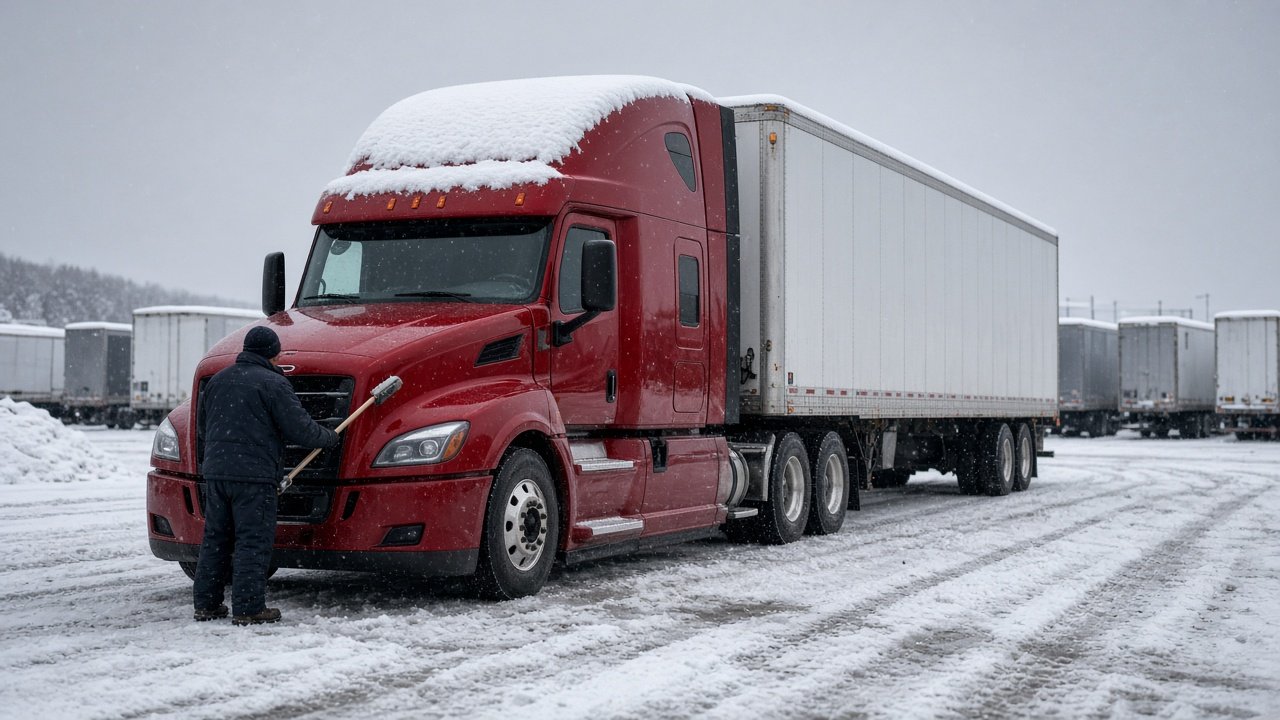
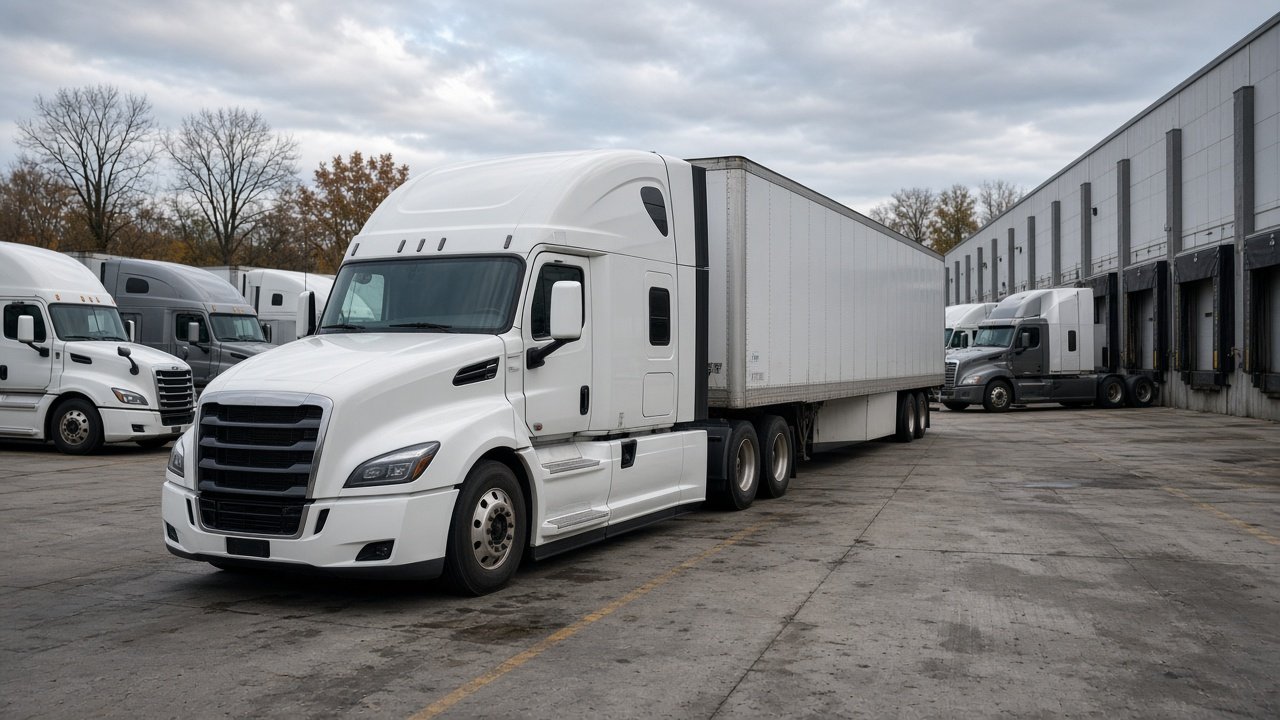
If you drive a loaded CDL-A tractor-trailer, you must pull into every open weigh station on your route unless your bypass device gives you a green light. When a station says closed, you stay on the highway. On the Interstate system the federal weight limits are 80,000 pounds gross, 20,000 pounds on a single axle, 34,000 pounds on a tandem, and whatever the Bridge Formula allows for each axle group (FHWA, as of October 2026). Each state decides which trucks have to stop and what it charges for running past a scale, so the safe habit is simple: when in doubt, pull in.
Do CDL-A drivers have to stop at every weigh station?
Basically yes. Federal law sets the weight limits, but the FHWA says the states decide which vehicles must stop. Some states require every commercial motor vehicle to stop. Others only require vehicles above a certain weight. A loaded or empty Class A combination is over the threshold almost everywhere, so treat every open scale as yours.
- Open sign or flashing lights: pull in unless you have a valid bypass signal.
- Closed sign: stay on the mainline. The Alaska DOT transponder FAQ says this applies even if your transponder shows red.
- Bypass signal (green): you may keep going. Some states still require certain loads to pull in even with a green light.
- Red signal or "pull in unless closed": pull in.
The penalty for skipping an open scale is set by each state, and it can include a citation and an officer following you down the road. That is a much bigger delay than the scale itself would have been.
What happens when you pull into a weigh station?
Most stations work in stages:
- Weigh-in-motion (WIM) sensors on the ramp or mainline take a first read of axle weights, axle spacing, speed and sometimes height.
- The static scale. You roll slowly across or stop on the platform at the speed posted on the signs, usually just a few miles per hour. Watch the signal board or listen for the speaker.
- Bypass back to the highway if everything looks right, or a "report to the scale house" or "park and bring papers" signal if something needs a closer look.
If you're told to park and come in, expect to show your CDL, medical card, registration (cab card), proof of insurance, shipping papers and ELD records. The stop can also turn into a roadside inspection. Our guide to DOT inspection levels explains what each level covers, and a good pre-trip inspection habit is the best way to roll through clean.
How do weigh station bypass systems work?
Electronic screening lets a qualified truck skip an open station at highway speed. According to Washington State DOT, roadside equipment about half a mile before the station reads a windshield transponder. In-road weigh-in-motion scales measure weight and axle spacing, and software checks the carrier's safety rating, the truck's registration, weight and height. A green light means no problems were found. A red light means you report to the station.
Some states also accept smartphone, tablet or ELD-based bypass services that use GPS instead of a transponder. Caltrans lists the approved bypass providers for California on its weigh station bypass page. Your carrier normally chooses and pays for the service. As a company driver, you just need to know which one is in your truck and how its signals look.
Some rules of thumb from the states:
- A green light is not guaranteed. You can be pulled in at random, or because you're close to a weight limit, your credentials aren't current, or the carrier's safety data is weak (Alaska DOT).
- If the in-cab signal and the roadside signs disagree, WSDOT tells drivers to follow the in-cab signal. If the transponder shows no light, follow the signs. Other states have their own rules, and some tell you to obey the roadside signs instead, so learn the rule for each state you run.
- With more than one bypass device, any red light means pull in.
- Restricted loads such as some oversize, permitted or hazmat cargo may have to pull in even with a green light, depending on the state.
What are the federal truck weight limits?
On the Interstate system, 23 U.S.C. 127 and 23 CFR 658 set these limits (as of October 2026):
- Gross vehicle weight: 80,000 lb, unless the Bridge Formula allows less.
- Single axle: 20,000 lb (axles 40 inches or less apart count as one).
- Tandem axle: 34,000 lb (axles more than 40 and up to 96 inches apart).
- Bridge Formula: W = 500 × (LN ÷ (N−1) + 12N + 36). W is the maximum weight on a group of axles, L is the distance in feet between the outer axles of the group, and N is the number of axles in the group.
The tandem exception matters for a standard five-axle rig. Your drive tandem and trailer tandem can each carry 34,000 lb if the first drive axle and the last trailer axle are at least 36 feet apart. Some states have higher "grandfathered" limits, and non-Interstate roads can have different limits, so check the state's rules for anything other than a normal 80,000-lb run. The FHWA also says states may not give tolerances on Interstate weight limits unless they're grandfathered, so 34,100 lb on your drives is a violation.
Worked example: a legal gross weight that still fails the scale (hypothetical)
Here's a hypothetical five-axle dry van load:
- Steer axle: 11,500 lb
- Drive tandem: 35,000 lb
- Trailer tandem: 32,500 lb
- Gross: 79,000 lb
The gross weight is 1,000 lb under the 80,000-lb limit, but the drives are 1,000 lb over the 34,000-lb tandem limit. That is still an overweight axle. The fix is to slide the trailer tandems, which moves weight between the drives and the trailer axles. In this case you'd slide them forward (toward the tractor) to move weight off the drives and onto the trailer tandem, then reweigh. If the steer axle also needs adjusting, slide the fifth wheel. Re-weighing after every adjustment is the only way to know.
Before you slide anything, check the Bridge Formula and the state's kingpin-to-rear-axle length limit. Our hypothetical drives-plus-trailer group needs those 36 feet between the outer axles to carry 34,000 + 34,000 = 68,000 lb. Find problems on a certified scale near the shipper, not at the state line. Our truck stop finder can help you find a stop with a scale on your route.
What gets drivers in trouble at the scale?
Overweight axles are the obvious one, but scale houses also catch:
- Expired or missing registration, insurance or medical card.
- Hours-of-service problems. See our hours-of-service guide.
- Equipment defects officers can spot from the booth: lights, tires, mud flaps, air leaks.
- Over-height or over-length loads without a permit.
- Missing or wrong shipping papers.
If you believe a violation written at a weigh station is wrong, you can challenge it through FMCSA's DataQs system. Our post on the DataQs changes explains how.
Common mistakes
- Trusting the bill of lading weight. Shipper weights are often wrong, and the scale is what counts. Scale the load before you get far from the shipper.
- Checking only gross weight. A 78,000-lb truck can still have an overweight tandem or fail the Bridge Formula.
- Treating a green light as a guarantee. A green light only means that station screened you. It doesn't make an overweight axle legal.
- Running a closed-looking station. Some stations open without warning. Read the sign every time.
- Ignoring fuel weight. A full fill-up adds weight over the drives and steer. Scale with the fuel you'll actually be carrying.
Plan your stops so a forced reweigh or slide doesn't wreck your clock. Our truck parking finder and diesel price tracker help you plan fuel and parking around the scales.
Frequently asked questions
Do I have to stop at a weigh station if my truck is empty?
Usually yes. Most states set the stop requirement by vehicle type or registered or gross weight, not by whether you're loaded. An empty Class A combination still meets most states' thresholds. Check the state's posted signs.
Is there any weight tolerance at the scale?
Not on the Interstate system, unless a state has grandfathered rights. The FHWA treats a minimum-penalty scheme as a tolerance and doesn't allow it. Plan to be at or under every limit.
Can I bypass a weigh station without a transponder?
Only with a state-approved bypass service in the truck that gives you a bypass signal. Otherwise you must pull into every open station.
What if my bypass device shows red but the station is closed?
If the station sign says closed, stay on the highway. That's the rule in states like Alaska and California.
Does a weigh station stop go on my record?
Crossing the scale doesn't. A violation found during an inspection can show up in FMCSA data tied to you and your carrier. Inspections with no violations are recorded too.
When you compare carriers, it's fair to ask how they handle overweight loads and scale tickets. You can see how different CDL-A jobs describe their freight, or use the driver match tool to compare options.
Free for CDL-A drivers: get our Job Offer Checklist — 23 questions to ask any carrier about pay, miles and home time before you sign. Download the free checklist →
Know a CDL-A driver looking for work? Refer them and earn $500 when they complete 30 days on the road. Refer a driver →
CDL Transportation Group | CDL-A OTR Driver Recruiting