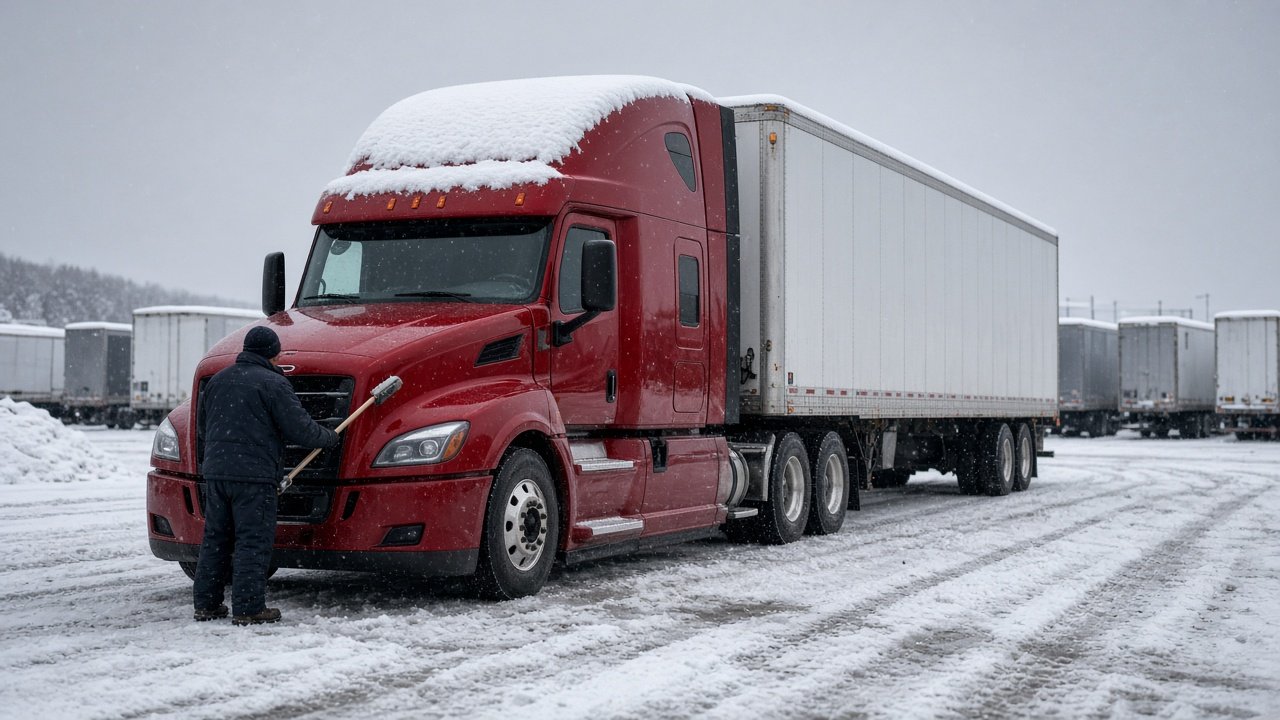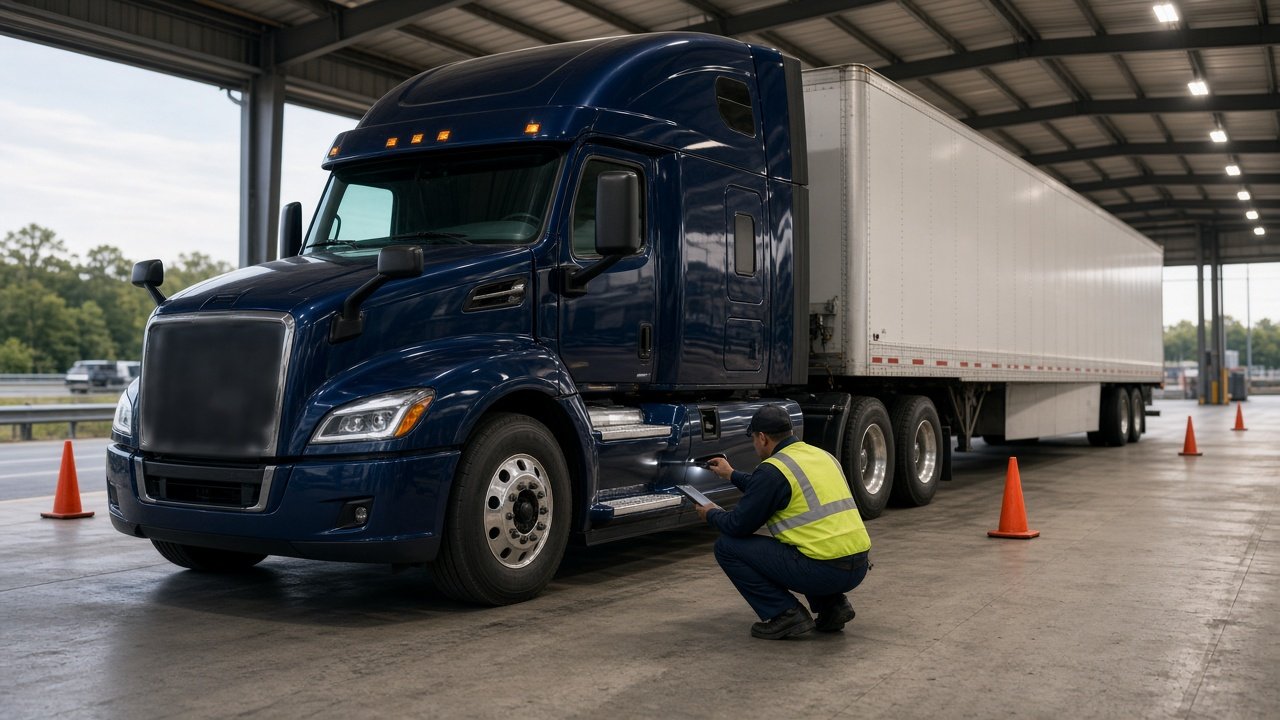
There are nine DOT inspection levels for commercial vehicles, as defined by the Commercial Vehicle Safety Alliance (CVSA) as of October 2026. As a CDL-A driver you will mostly see three: Level I (the full driver-and-vehicle inspection, including under the truck), Level II (a walk-around without going under the vehicle) and Level III (paperwork only: license, medical certification, logs, hours of service). The best way to prepare for a roadside inspection is a real pre-trip, clean logs, and documents you can hand over in under a minute.
What are the DOT inspection levels?
Here is each level in plain English, based on CVSA's definitions:
- Level I – North American Standard Inspection. The most thorough one. The officer checks you (license, medical certificate, alcohol and drugs, record of duty status, hours of service, seat belt) and the vehicle: brakes, cargo securement, coupling devices, driveline, exhaust, frame, fuel system, lights, steering, suspension, tires, trailer body, wheels and rims, and wipers. Expect them under the truck measuring pushrod travel.
- Level II – Walk-Around Driver/Vehicle Inspection. The same list of items, but only what can be checked without getting under the vehicle.
- Level III – Driver/Credential/Administrative Inspection. Paperwork and you: license, medical certificate, logs, hours of service, seat belt, inspection reports, and carrier identification and status. No mechanical violations go on a Level III.
- Level IV – Special Inspection. A one-time check of a single item, usually for a study or to verify a suspected trend.
- Level V – Vehicle-Only Inspection. The Level I vehicle items with no driver present, for example at a terminal or yard.
- Level VI and VII. Level VI is an enhanced Level I for certain radioactive shipments; Level VII covers state programs that fit no other level (school buses, limos and similar).
- Level VIII – Electronic Inspection. Done wirelessly while you're moving, with no officer contact. It checks data such as license status, medical certification, hours of service, USDOT number, registration, operating authority and out-of-service orders.
- Level IX – Post-Crash Inspection. Done after a crash with a fatality, serious injury, a high-profile crash, or when a jurisdiction requires it. It covers all accessible Level I items.
Which inspection level will I most likely get?
At a scale house or a roadside pull-in, it is usually a Level I, II or III. An obvious defect such as a dead marker lamp, a flat tire or a leaking hub gives an officer a reason to look deeper. Level VIII can happen without you knowing it, so your ELD and records need to be right every day.
What documents should I have ready for a DOT inspection?
Keep these where you can reach them from the driver's seat:
- Your CDL. Since June 23, 2025, CDL holders with a current medical certificate generally no longer need to carry the paper medical card, because it goes on your state driving record electronically. Carry any medical variance or SPE certificate you have, though.
- Your logs. Today plus the previous 7 days on your ELD, plus the ELD instruction sheet, the malfunction sheet and blank paper logs (see our guide to what to do when your ELD malfunctions).
- Cab card / registration for the tractor and trailer, and proof of insurance as your carrier requires.
- Proof of the annual inspection. Under 49 CFR 396.17, each vehicle in the combination must have passed a periodic inspection in the last 12 months, and the report or a sticker or decal must be on the vehicle. That includes the trailer.
- Shipping papers (bill of lading, plus hazmat papers if placarded).
How do I prepare my truck for a roadside inspection?
Most out-of-service problems are things a careful pre-trip catches. Check the items inspectors check:
- Brakes: air leaks, chamber and hose condition, slack adjusters, and any warning lights.
- Tires and wheels: tread depth, sidewall cuts and bulges, inflation, loose or missing lug nuts, rust trails around lugs, and leaking hub seals.
- Lights: headlamps, brake lamps, turn signals, clearance and marker lamps, and reflective tape.
- Coupling: fifth-wheel locking jaws, kingpin, mounting bolts, and the glad hands and air lines.
- Cargo securement: enough tiedowns with the right working load limit, no damaged straps, and the doors sealed or latched.
- The cab: seat belt, windshield, wipers, fire extinguisher and warning triangles.
Our article on why the pre-trip inspection protects your career goes deeper on building that habit.
What happens if I'm placed out of service?
If a vehicle's condition or load "would likely cause an accident or a breakdown," the officer marks it out of service, and nobody may drive it until the repairs are done (49 CFR 396.9). If you're over your hours, you're out of service until you can legally drive again (49 CFR 395.13). If you don't have logs current for today and the prior 7 days, you're out of service too. The one exception: if only today and yesterday are missing and the previous 6 days are complete, you get a chance to bring your log up to date.
After any inspection you get a report. You must give a copy to your carrier at the next terminal, or send it within 24 hours if you won't be at a terminal that soon. The carrier must certify the repairs within 15 days. Inspection results go into FMCSA's data. Your PSP record, which carriers check when you apply, shows 3 years of roadside inspections and 5 years of crashes.
Hypothetical example: how one brake becomes an out-of-service order
This is a made-up example to show the math. You're pulling a standard 5-axle tractor-trailer: 10 brakes in total. At a Level I, the officer finds one brake out of adjustment. That's a violation on your report, but 1 of 10 is 10%, below the 20% defective-brake threshold in the out-of-service criteria, so you keep rolling after you've written it up. If the officer finds a second bad brake, 2 of 10 = 20%, and the whole combination is out of service until it's repaired. One brake check at your fuel stop can be the difference between a write-up and a tow bill.
What is a CVSA decal and does it help?
If your vehicle passes a Level I or Level V inspection with no critical violations, the inspector can put on a CVSA decal. It's valid for up to three consecutive months, and vehicles with a valid decal generally aren't re-inspected, though an officer still can. The decal is about the vehicle, not you: you can be placed out of service for hours while the truck still earns a decal.
Common mistakes during DOT inspections
- Not knowing how to show your logs on the ELD. Practice the transfer and display steps before you need them.
- Arguing at the roadside. Be polite and factual. If a violation is wrong, challenge it later through DataQs. See our article on how to challenge an inspection violation.
- Losing the inspection report. You have to deliver it to your carrier, and a clean report is proof of a good inspection.
- Assuming the trailer is someone else's problem. Check the annual inspection sticker, lights and tires on every trailer you hook.
- Forgetting the English proficiency check. Officers can check it during an inspection; see our English proficiency guide for truck drivers.
Planning stops where you can do a proper walk-around helps too: use our truck stop finder and truck parking map. And if your carrier keeps sending you out in equipment that fails inspections, compare CDL-A jobs or try our job match tool.
This is general information, not legal advice. Your carrier's safety department can answer questions about your specific situation.
Frequently asked questions
What is a Level 1 DOT inspection?
The most complete roadside inspection: your documents, hours and condition plus a full check of the vehicle, including under the truck.
Can I refuse a DOT inspection?
No. Federal and state inspectors are authorized to inspect commercial vehicles in operation (49 CFR 396.9).
How long does a DOT inspection stay on my record?
Your PSP report, which carriers can see when you apply, shows 3 years of roadside inspection history.
Does a clean inspection help me?
Yes. A Level I or V pass with no critical violations can earn the vehicle a CVSA decal good for up to three months.
Free for CDL-A drivers: get our Job Offer Checklist — 23 questions to ask any carrier about pay, miles and home time before you sign. Download the free checklist →
Know a CDL-A driver looking for work? Refer them and earn $500 when they complete 30 days on the road. Refer a driver →
CDL Transportation Group | CDL-A OTR Driver Recruiting