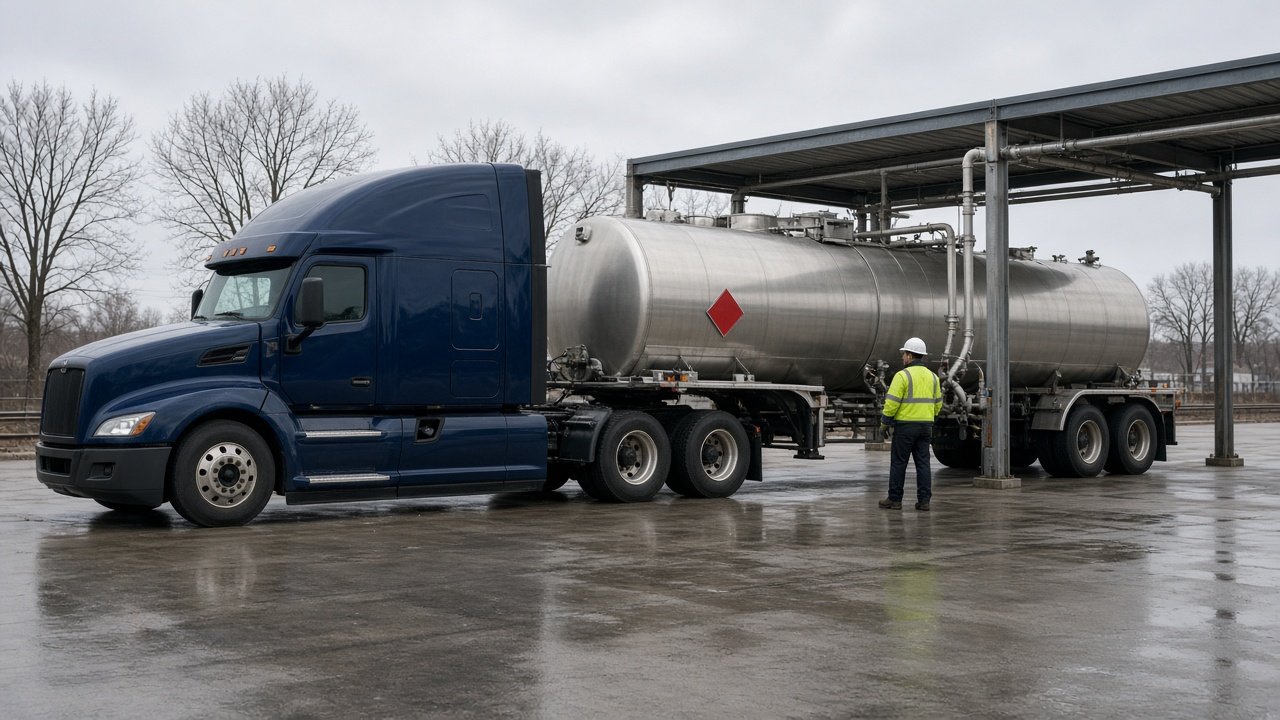
TONU stands for "truck ordered not used." In trucking, it is a flat fee paid to the carrier when a load is booked and the truck is dispatched, but the load is canceled or isn't there when you arrive. As of November 2026, industry rate guides put a typical dry van TONU at about $150 to $300, with reefer and flatbed often higher. No federal rule sets the amount. It only gets paid if it's written into the rate confirmation or your pay agreement, and only part of it reaches a company driver, often as "dry run" pay. Here's how TONU works, who pays it, and how to make sure you actually collect.
What does TONU mean in trucking?
A shipper or broker orders a truck. You deadhead to the pickup, maybe wait at the gate, and then the load is canceled, rolled to another day, given to another truck, or simply not ready. The truck was ordered and not used. TONU is the fee meant to cover the time, fuel and lost revenue from that wasted trip.
You'll also hear these terms:
- Dry run: the word many carriers use in company driver pay sheets for the same situation.
- Cancellation fee: a broader term some rate confirmations use instead of TONU.
- Accessorial: the category TONU falls in, alongside detention, layover and breakdown pay.
How much is a TONU fee in 2026?
TONU is negotiated load by load, so there is no official rate. As of 2026, trade rate guides such as O Trucking's TONU rate guide list roughly:
- Dry van: about $150 to $300, with around $250 often treated as a benchmark
- Reefer: about $200 to $400
- Flatbed: about $250 to $500
- Heavy haul and oversize: often $400 and up
Some carriers write TONU as a flat fee or a percentage of the line haul, whichever is higher. Treat these numbers as ranges from industry sources, not a promise. What you get is whatever the paperwork says.
Who pays TONU: shipper, broker or carrier?
The broker or shipper that booked the truck usually pays the carrier, and then may try to recover it from whoever caused the cancellation. If the load came off a broker, the TONU is between the broker and your carrier (or your own authority, if you're an owner-operator). Federal broker rules in 49 CFR 371.3 require brokers to keep a record of each transaction, including the compensation they received and the freight charges paid to the carrier, and give each party to the transaction the right to review that record. That matters when a TONU disappears or gets cut.
If you're the reason the load fell through, such as showing up hours late or with the wrong equipment, don't expect a TONU. It is meant for cancellations that aren't the carrier's fault.
Do company drivers get TONU pay?
Sometimes, but not automatically. The TONU fee goes to the carrier. Whether you see any of it depends on your carrier's pay policy. Many fleets pay company drivers a flat dry run or "truck ordered not used" amount, some pay nothing, and some pay only if you reached the shipper. Ask before you sign on, and get the amount in writing along with your other accessorials. Our guide to reading a CDL-A job offer covers what else to pin down.
What about leased owner-operators?
If you're leased on, 49 CFR 376.12 requires your compensation to be clearly stated in the lease or an attached addendum. If you're paid a percentage of gross revenue, the lease must give you a copy of the rated freight bill (or equivalent document) at or before settlement, and it must let you examine the documents the carrier uses to compute rates and charges. In plain terms: if a broker paid your carrier a TONU on a load you were dispatched on, the paperwork should show it. Check how your lease handles TONU and other accessorials before you lease on. Our owner-operator lease agreement guide walks through the rest.
Does a dry run count against your hours?
Yes. A canceled load still burns your clock. Under 49 CFR 395.2, on-duty time includes driving time and all time at a shipper's or carrier's property waiting to be dispatched, unless you've been relieved from duty. So the deadhead to the shipper is driving time, and sitting at the gate waiting for an answer is on-duty time. A TONU of $150 doesn't give those hours back, which is why it pays to get a fast decision and a new load lined up.
Worked example: is the TONU worth it? (hypothetical)
This example is hypothetical, with simple numbers.
- An owner-operator deadheads 60 miles to a dry van pickup. The rate confirmation says "TONU $250 if canceled after dispatch."
- Fuel: 60 miles ÷ 6.5 mpg = about 9.2 gallons. At $3.80 a gallon, that's about $35.
- Time: 1.5 hours driving plus 1 hour waiting = 2.5 hours of on-duty time gone.
- TONU $250 − $35 fuel = about $215 left to cover truck costs and those 2.5 hours.
If the rate confirmation had said nothing about TONU, that same trip would likely have paid $0 unless the broker agreed to pay after the fact. Check current diesel prices before plugging in your own fuel cost.
How do you get TONU paid?
- Get it on the rate confirmation before you roll. The amount, when it applies (for example, "canceled after dispatch" or "load not ready on arrival") and any extra pay for deadhead miles.
- Document the trip. Note dispatch time, arrival time, who canceled and when. ELD records, gate check-in times and photos at the facility help.
- Get the cancellation in writing. A text or email from the broker beats a phone call.
- Bill it fast. Send the TONU invoice with the rate confirmation number and your timeline right away, or tell your dispatcher the same day so it goes on settlement. If you use a factoring company, ask how they handle TONU invoices; our factoring guide explains the basics.
- Check your settlement. Company drivers should see dry run pay on the next check if the carrier's policy covers it.
Common mistakes
- Taking a verbal "we'll take care of you." If TONU isn't in writing, it's easy to deny later.
- Leaving the shipper without a written cancellation. Without proof of who canceled and when, a broker can claim you no-showed.
- Waiting days to invoice. Late TONU bills get disputed or forgotten.
- Not asking about dry run pay when you hire on. Company drivers often learn the policy only after the first canceled load.
- Not logging the time correctly. Time waiting at the shipper is on-duty time. Logging it wrong to save hours puts your record at risk.
Frequently asked questions
What does TONU mean on a rate confirmation?
It's the truck ordered not used fee: the amount the carrier gets if the load is canceled or unavailable after the truck is dispatched.
Is TONU required by law?
No. It's a contract term. If it isn't in the rate confirmation or your pay agreement, there may be nothing to collect. This is general information, not legal advice; ask a qualified professional about a specific dispute.
Can you get detention and TONU on the same load?
Some rate confirmations allow detention for the time you waited before the cancellation, plus the TONU. It depends entirely on the written terms.
How can I avoid dry runs?
You can't avoid them completely, but confirming appointment times, the pickup number and that the load is ready before you deadhead cuts them down. Using the truck stop and parking maps to stage close to the shipper limits the miles you lose if it falls through.
If your carrier's answer to canceled loads is always "that's just trucking," browse current CDL-A jobs or get matched with a carrier that pays for your time.
Know a CDL-A driver who's tired of dry runs that pay nothing? Refer them to us and earn $500. Refer a driver here.
Free for CDL-A drivers: get our Job Offer Checklist — 23 questions to ask any carrier about pay, miles and home time before you sign. Download the free checklist →
Know a CDL-A driver looking for work? Refer them and earn $500 when they complete 30 days on the road. Refer a driver →
CDL Transportation Group | CDL-A OTR Driver Recruiting