Cargo theft prevention for CDL-A drivers comes down to a few habits: don't stop in the first few hours after pickup, never leave a loaded trailer unattended in an open lot if you can avoid it, lock the doors, kingpin and glad hands, check your seal at every stop, and verify any "change" to a pickup or delivery by calling a number you already trust. Those habits matter most right now. Thanksgiving falls on November 26, 2026, and holiday weeks are historically some of the busiest for thieves, with receivers closed and loaded trailers sitting for days.
How big is the cargo theft problem as of November 2026?
According to Verisk CargoNet's Q3 2026 report (released November 4, 2026), reported thefts in the US and Canada fell 33% year over year to 547 incidents in July through September, but estimated losses rose 12% to $230.1 million. Through September, losses totaled $718.9 million, up 39%, and the average value of a stolen load jumped about 72%, to roughly $448,000. In plain terms: fewer hits, bigger loads.
Other points from that report that matter to you as a driver:
- Fictitious pickups (someone posing as a legitimate carrier to collect a load) made up about one in four incidents, up from 18% a year earlier.
- Food and beverage was still the most targeted category, followed by metals (especially copper), household goods and electronics.
- California, New Jersey, Illinois and Texas accounted for 57% of incidents in the quarter, with California alone at about one-third.
CargoNet's Thanksgiving 2025 alert counted 79 thefts during the 2024 Thanksgiving analysis period, up from 48 the year before and 29 in 2021, and said theft activity typically builds through the fourth quarter and peaks in December.
What types of cargo theft should truck drivers watch for?
The FBI's cargo theft page breaks it into a few types:
- Straight theft: the trailer, tractor or freight is physically taken, usually at truck stops, parking lots, roadside parking and drop lots where a load sits unattended.
- Strategic theft: fraud tricks a shipper, broker or carrier into handing the load to the wrong truck. This includes identity theft, fictitious pickups, account takeovers and double brokering.
- Cyber cargo theft: phishing and malware used to steal shipping paperwork and data, which then feeds fake pickups.
- Pilferage: small amounts taken off a load, sometimes with an altered bill of lading.
As a company driver you mostly face straight theft and pilferage. But strategic theft can still land on you: a "dispatcher" texting a new delivery address, or a "receiver" calling to redirect you to a different yard.
What is the red zone rule for truckers?
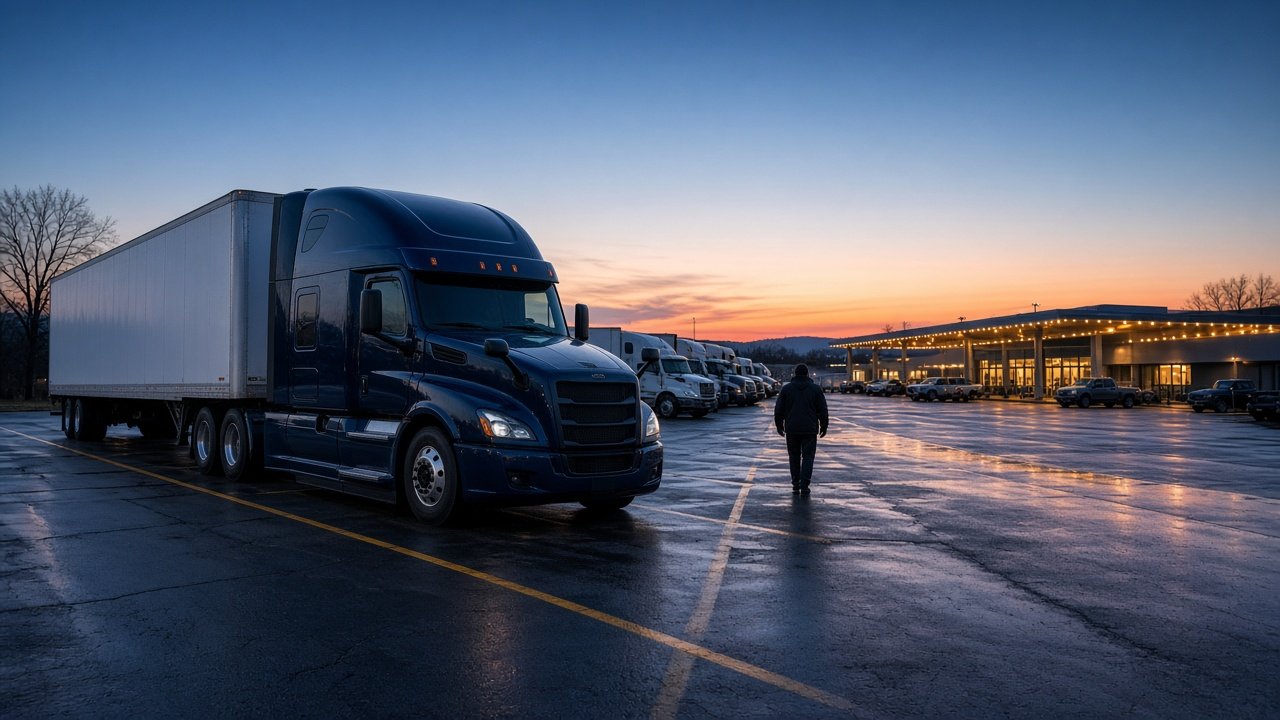
The "red zone" is a long-standing security tip in trucking: thieves often watch shippers and follow a freshly loaded truck to its first stop, so don't stop within roughly the first 250 miles after pickup. Fuel up, eat, use the restroom and take your break before you load, then drive straight through that first stretch. Check diesel prices and plan your fuel stop on the way in, not on the way out.
Worked example: fitting the red zone into your hours (hypothetical)
Say you've driven 3 hours to reach a shipper and you'll leave loaded at 2:00 p.m. Under 49 CFR 395.3, you need a 30-minute break after 8 cumulative hours of driving, and that break can be any 30 consecutive minutes off duty, in the sleeper or on duty not driving.
- 250 miles at an average of about 60 mph is roughly 4 hours 10 minutes.
- 3 hours already driven + 4 hours 10 minutes = 7 hours 10 minutes. That is under 8, so you could run the red zone without a required break.
- If loading takes 30 consecutive minutes or more while you're not driving, that time can count as your break and reset the 8-hour driving count, giving you even more room.
- If you had already driven 6 hours before pickup, you'd hit 8 hours about 2 hours out. In that case take the break at the shipper (or let a 30-minute-plus loading period cover it) instead of stopping at the first exit.
Your 11-hour and 14-hour limits still apply, so build this into your trip plan for fuel, parking and HOS.
How do you protect a loaded trailer when you have to park?
You can't always avoid parking loaded, especially over a holiday weekend. When you do:
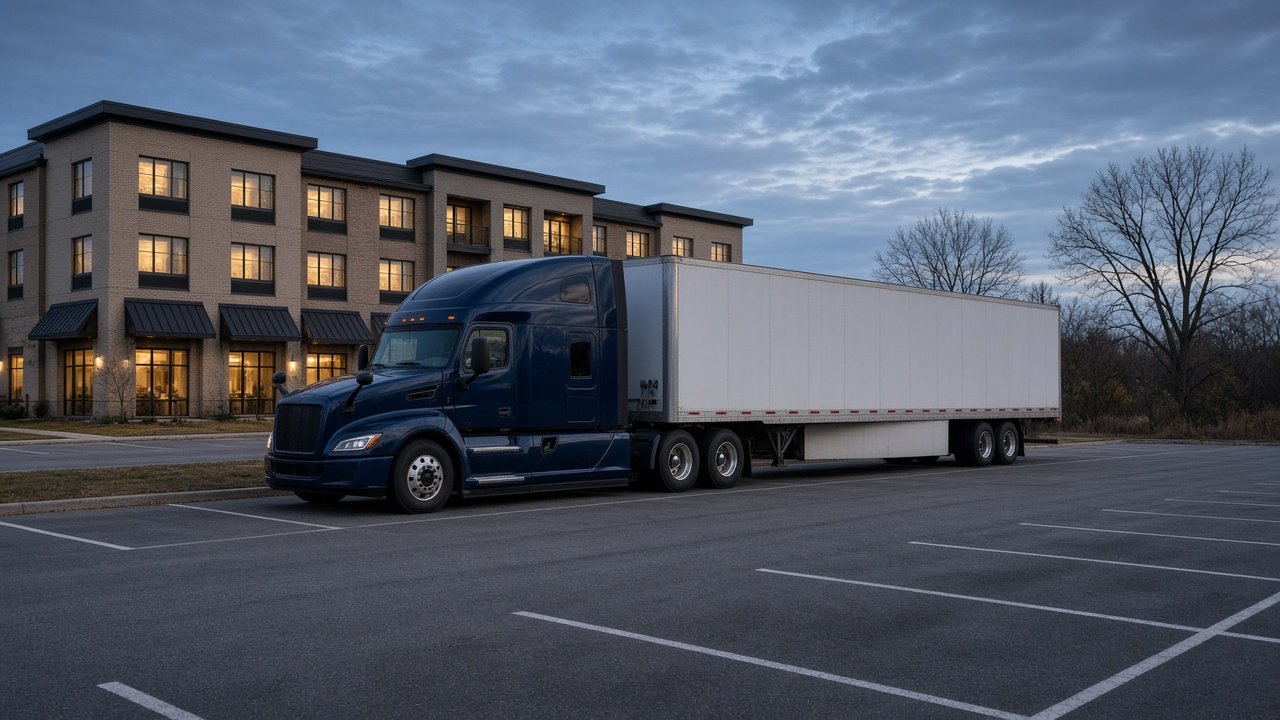
- Pick secure parking. Well-lit, busy and ideally fenced, gated or watched. Use the truck parking finder and truck stop directory to plan before your clock runs low. Our guide on where to park a semi overnight covers the options.
- Back the trailer doors against a wall, fence or another trailer where you can, so the doors can't be opened.
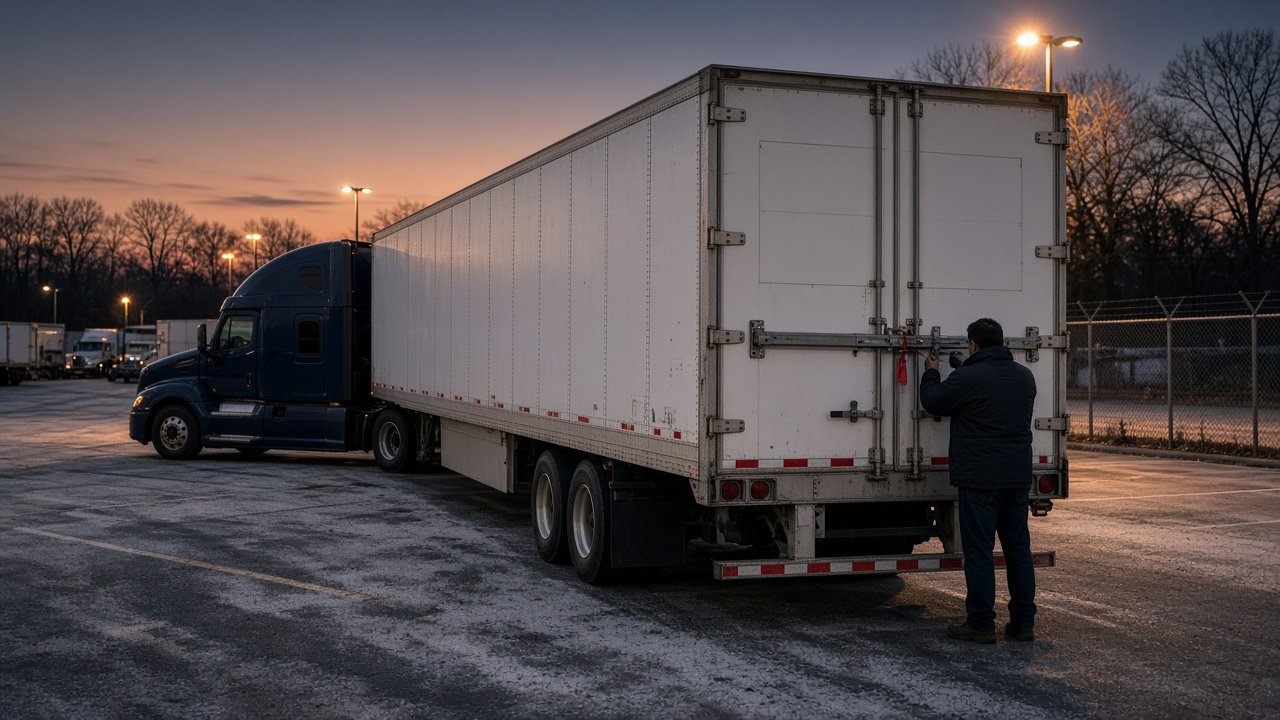
- Use the locks your carrier provides. The FBI recommends high-security rear door locks and air cuff (glad hand) locks, and landing gear locks if you must drop a loaded trailer. Kingpin locks keep someone from hooking up and driving off.
- Lock the cab and take the keys every time, even for a five-minute stop.
- Keep the load quiet. Don't talk about what you're hauling or where it's going at the fuel desk, on the CB or on social media.
How do you spot a fake pickup or redirected load?
- Verify every change by calling back on a number you already have, such as your dispatch line or the number on the rate confirmation, not the number in the new text or email.
- Be suspicious of urgency. "Receiver moved, go to this other yard now, don't call the office" is a classic setup.
- Check that the paperwork matches: shipper, consignee, PO, pickup number and seal number on the bill of lading.
- Write down and photograph your seal number at pickup, and check it at every stop and at delivery.
What should you do if your load is stolen?
- Get safe. If a theft is in progress or anyone is threatened, call 911. Don't chase or confront anyone.
- File a police report where it happened, with the tractor and trailer numbers, plates, VIN, seal number, bill of lading and commodity.
- Call your dispatcher and safety department right away so they can alert the shipper, broker and insurer.
- Pull your last known location from the ELD or fleet portal for police.
- The FBI also takes cargo theft reports at 1-800-CALL-FBI (1-800-225-5324), ic3.gov or tips.fbi.gov.
Carrier procedures vary, so ask your safety department now what they want you to do. Knowing that before you need it saves time when it counts.
Common mistakes
- Stopping for fuel or food right after loading, often at the truck stop nearest the shipper.
- Leaving a loaded trailer in an unlit lot or on a ramp over the holiday weekend because the receiver is closed.
- Accepting a new delivery address by text without calling dispatch on a known number.
- Not recording the seal number, so you can't prove when tampering happened.
- Leaving the truck running and unlocked "just for a minute."
- Posting your load, route or location on social media.
Holiday weeks also bring tight parking and longer dock waits; see our holiday peak season guide for planning around them.
Frequently asked questions
When is cargo theft highest around Thanksgiving?
Risk runs from the days before the holiday through the weekend after, when receivers close and loaded trailers sit. CargoNet says theft typically climbs through the fourth quarter and peaks in December.
What freight do thieves target most?
In CargoNet's Q3 2026 data, food and beverage led, followed by metals like copper, household goods and electronics. Holiday freight such as electronics, beverages and tires is also a common target.
Does my ELD track my trailer?
Usually not. ELD location data follows the tractor. A dropped or swapped trailer needs its own tracker, so ask your carrier what trailer tracking it uses.
Am I responsible if my load is stolen?
That depends on your carrier's policies and what happened. Follow company security procedures, document everything, and report the theft right away. This is general information; ask your carrier or a qualified professional about your situation.
Know a CDL-A driver who'd like a carrier that takes safety seriously? Refer them to us and earn $500. Refer a driver here.
Free for CDL-A drivers: get our Job Offer Checklist — 23 questions to ask any carrier about pay, miles and home time before you sign. Download the free checklist →
Know a CDL-A driver looking for work? Refer them and earn $500 when they complete 30 days on the road. Refer a driver →
CDL Transportation Group | CDL-A OTR Driver Recruiting