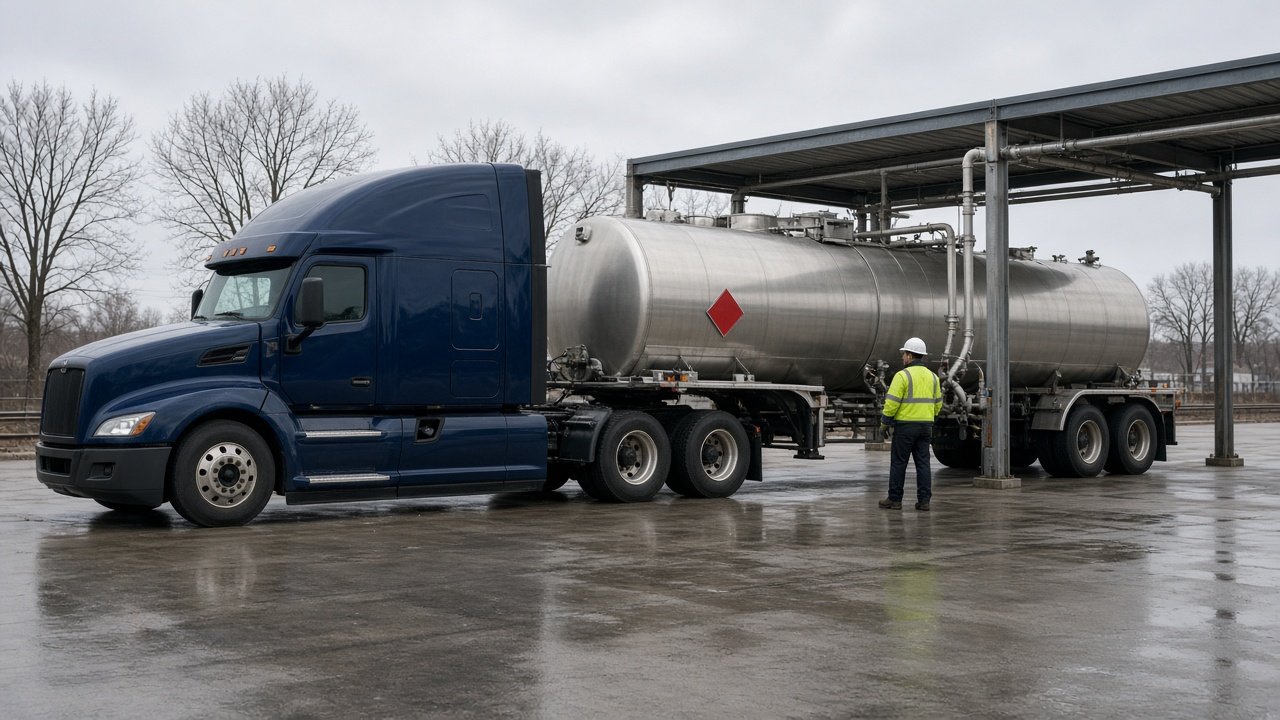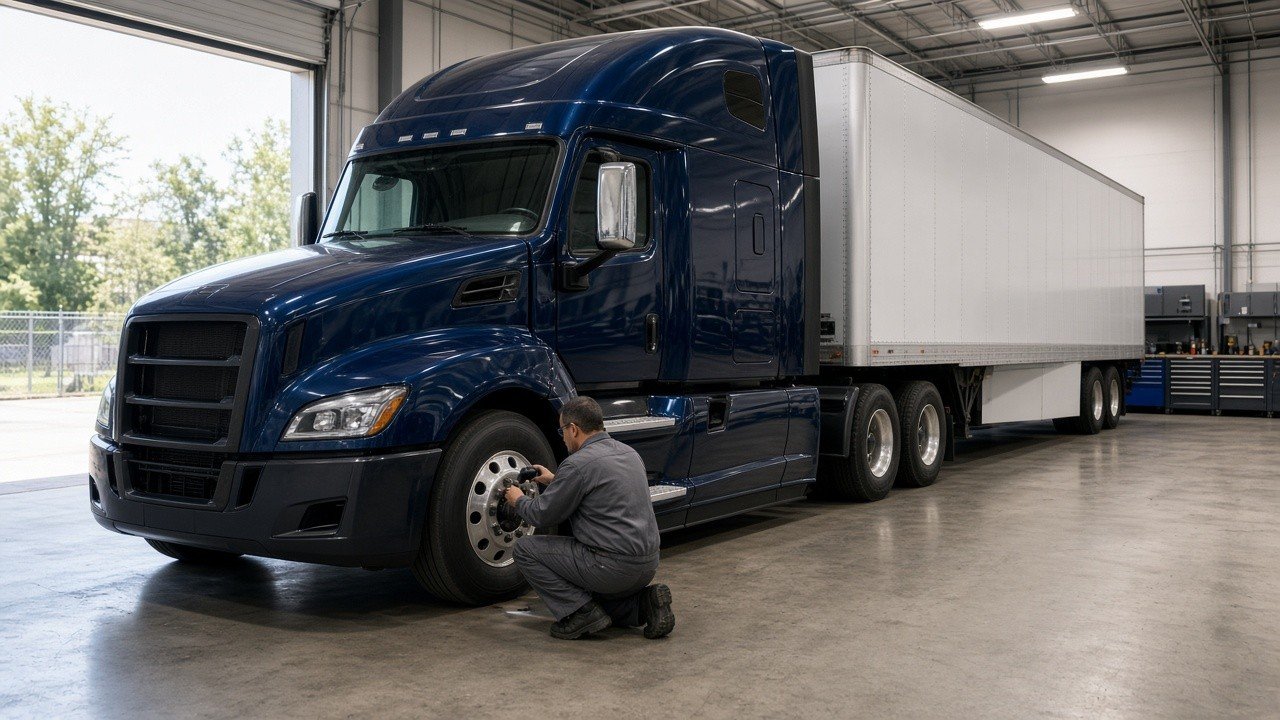
An annual DOT inspection is the federal periodic inspection every tractor, trailer and converter dolly must pass at least once every 12 months under 49 CFR 396.17, with proof (the inspection report or a sticker or decal) on each vehicle. As a CDL-A driver you usually don't pay for it or book it, because that's the motor carrier's job. But you are the one who has to show the proof at roadside, so you need to know where the sticker is, what it must say, and when it runs out. Here is what the rule actually requires as of November 2026.
What is an annual DOT inspection?
It's a full mechanical inspection of a commercial motor vehicle against the minimum standards in Appendix A to Part 396. It is not the same thing as a roadside inspection by an officer, and it is not your daily pre-trip. Think of it as the yearly checkup the carrier must document, on top of the inspections you do every day.
The rule treats each unit in a combination as its own vehicle. For a tractor-semitrailer, the tractor and the trailer each need their own passed inspection. For doubles, that includes the second trailer and the converter dolly.
Does the trailer need an annual DOT inspection too?
Yes. This is the part drivers miss most. A drop-and-hook trailer that sat in a yard for months still needs a periodic inspection within the last 12 months, and the proof has to be on that trailer. When you hook a trailer you've never pulled before, check its sticker the same way you check its lights, tires and air lines. If you're doing a lot of drop-and-hook freight, it's a 30-second habit that can save you a write-up.
What does the annual DOT inspection check?
Appendix A lists the minimum items. As of November 2026 they include:
- Brake system (service and parking brakes, air system, drums, linings, adjustment, ABS)
- Coupling devices (fifth wheel, kingpin, pintle hooks, safety chains)
- Exhaust and fuel systems
- All required lighting devices and reflectors
- Safe loading
- Steering mechanism
- Suspension and frame
- Tires, wheels and rims
- Windshield glazing and wipers (power units)
- Rear impact guard (trailers)
If that list looks like your daily vehicle inspection report, it should. The DVIR rule in 396.11 covers many of the same parts. The difference is depth: the annual inspection is done by a qualified inspector, often with the truck over a pit or on a lift.
What must the annual inspection sticker say?
Under 396.17(c), the proof on the vehicle can be the full inspection report or a sticker or decal based on it. A sticker must show:
- The date of inspection (FMCSA guidance says month and year is enough)
- The name and address of the carrier or other entity that keeps the inspection report
- Information that identifies the vehicle, if the vehicle isn't clearly marked
- A certification that the vehicle passed an inspection under 396.17
Two details from FMCSA's official guidance matter here. First, a "next inspection due" date does not replace the actual inspection date. Second, the rule doesn't say where the sticker goes. It's the driver's responsibility to know where it is, make sure it's readable and current, and produce it when asked.
Who can do an annual DOT inspection?
The carrier can inspect its own equipment or use a commercial garage, truck stop shop, fleet leasing company or similar business as its agent. Either way, the inspector must be qualified under 396.19: they must understand the Part 393 and Appendix A standards and have finished a federal or state training program or hold a state certificate, or have at least one year of combined training or experience as a commercial vehicle mechanic or inspector. Anyone inspecting brakes must also meet the brake inspector rules in 396.25.
Some states run their own mandatory periodic inspection programs. Under 396.23, where FMCSA has found a state program as effective as the federal rule, vehicles in that program meet the requirement through it. A passed state periodic inspection counts for 12 months starting from the last day of the month it was done.
The inspector writes a report naming the inspector, carrier, date, vehicle and components checked, with any failed items. Under 396.21, the responsible party keeps it for 14 months, where the vehicle is housed or maintained.
Hypothetical example: is my trailer's sticker still good?
Hypothetical: It's November 19, 2026. You hook a dry van in a shipper's yard. The sticker on the nose reads "Inspected 12/2025." Twelve months back from today is November 2025, so a December 2025 inspection falls inside the window. You're good. Now say the sticker reads "Inspected 10/2025." That's more than 12 months ago. The trailer is overdue, and you should call dispatch before you pull it.
The simple math: today's month and year, minus 12 months. If the inspection date is older than that, flag it. The safe habit is to treat a sticker as due in the same month one year later and get it redone before then.
What happens if the annual inspection is expired at roadside?
If an officer can't find valid proof, the vehicle can be written up under 396.17(c). Roadside violations are recorded in FMCSA's data and flow into the carrier's CSA scores in the Vehicle Maintenance category. They also land on the inspection report that follows you in your PSP record. See our guide to how CSA points work for CDL-A drivers and our overview of DOT inspection levels for what officers check at each level. Under 396.17(h), the carrier, not the driver, faces the federal penalty for failing to do the inspection, but it's your inspection report and your delay at the scale.
If you get a violation you believe is wrong, for example the sticker was there and readable, you can challenge it through DataQs. Our article on challenging an inspection violation walks through it.
Owner-operators: who handles the annual DOT inspection?
The rule puts the duty on the motor carrier controlling the vehicle. If you run under your own authority, that's you: book it, keep the report for 14 months, and keep proof on the truck and every trailer you own. If you're leased on, your lease should say who arranges and pays for it, so read that clause before you sign. Our guide to owner-operator lease agreements covers what else to check. Either way, put the due date for each unit on your calendar a month early so a shop visit doesn't cost you a load.
Common mistakes with annual DOT inspections
- Only checking the tractor. Every trailer and dolly needs its own current proof.
- Reading the "next due" date as the inspection date. The rule requires the actual inspection date.
- Not knowing where the sticker is. Find it on every unit you're assigned, before you're at the scale.
- A faded or peeling sticker. If you can't read it, neither can the officer. Ask for a copy of the report.
- Treating the annual as a substitute for your pre-trip. A truck can pass in March and have a bad brake chamber in November. See why a real pre-trip still matters.
Frequently asked questions
How often is a DOT annual inspection required?
At least once every 12 months for each tractor, trailer and converter dolly, under 49 CFR 396.17.
Do I have to carry the full inspection report?
No. A sticker or decal with the required information is enough. If the report itself is used as proof, it must be on the vehicle and you must be able to produce it.
Can a truck stop shop do my annual DOT inspection?
Yes, as long as the business has suitable facilities and a qualified inspector under 396.19 does the work.
Does a CVSA decal replace the annual inspection?
No. A CVSA decal from a roadside Level I or V inspection is separate and lasts up to three months. It doesn't replace the 396.17 periodic inspection.
Running equipment from a carrier that keeps its paperwork straight makes your day easier. If you're thinking about a change, browse current CDL-A jobs or take our carrier match quiz, and use our truck stop finder when you need a shop on the road.
Know a CDL-A driver who's tired of running with shaky equipment? Refer them to us and earn $500. Refer a driver here.
Free for CDL-A drivers: get our Job Offer Checklist — 23 questions to ask any carrier about pay, miles and home time before you sign. Download the free checklist →
Know a CDL-A driver looking for work? Refer them and earn $500 when they complete 30 days on the road. Refer a driver →
CDL Transportation Group | CDL-A OTR Driver Recruiting