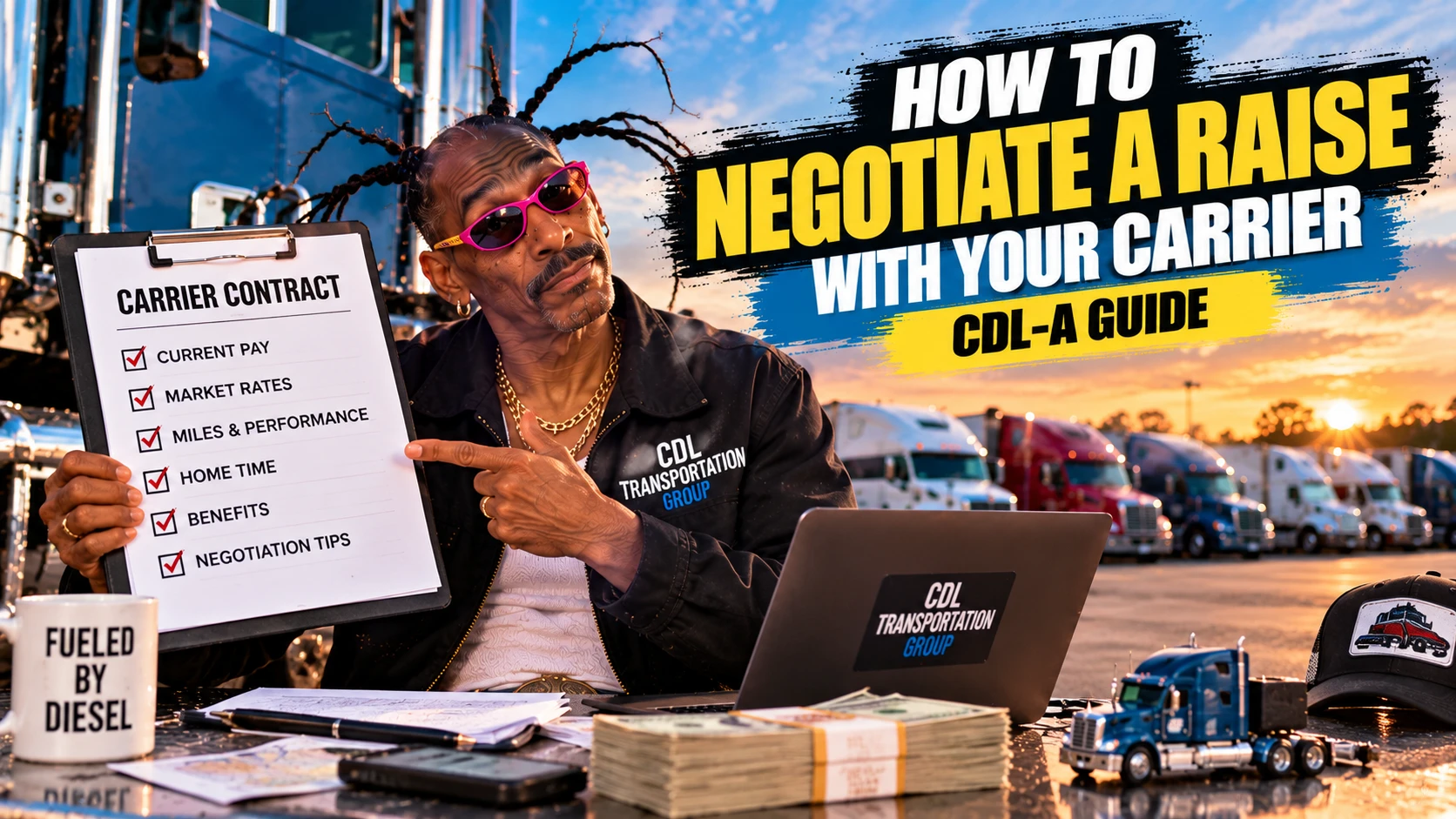
To negotiate a raise as a CDL-A driver, show up with your own numbers (safe miles, on-time record, average weekly gross), ask for a specific cents-per-mile increase, and get the answer in writing. Raises go to drivers who make the request clear, documented and easy to approve. They rarely go to drivers who just say "I deserve more." Below is a step-by-step plan, with a worked example of what a raise is really worth.
When is the best time to ask for a raise?
Timing matters almost as much as the pitch. Good moments to ask:
- After a milestone. One year, two years or 500,000 safe miles with the carrier. Many carriers have pay steps tied to tenure, so check whether you are already due one.
- After a clean stretch. No at-fault accidents, no service failures, clean roadside inspections.
- When you take on something harder. A new endorsement, a tougher lane, a dedicated account or training new drivers.
- When the market moves. If other carriers are advertising higher pay for your lane, that is leverage. Check what others are posting on our jobs page.
Avoid asking right after a service failure, a disputed claim or a bad inspection. Fix that first.
How do you find out what you are worth?
Do not guess. Build a short list of comparable offers for your equipment type, lane and experience:
- Pull three to five current job postings for the same job type (OTR dry van, regional reefer, flatbed and so on). Write down base cents per mile, stop pay, detention, layover and bonus terms.
- Look at the national picture on the Bureau of Labor Statistics page for heavy and tractor-trailer drivers. It is useful for context, but it is an all-driver average and will not match your lane.
- Read our guide on what a fair CDL-A pay-per-mile rate looks like and compare it to your own settlement statements.
- Use the job match quiz to see what your profile qualifies for elsewhere.
Pay postings change often. Treat anything you collect as accurate only for the week you collected it.
What should you bring to the conversation?
Bring a one-page summary. Everything on it should come from your own records:
- Total miles and years with the company
- Safety record: accidents, inspections, violations (ideally none)
- On-time delivery and pickup record, if your carrier tracks it
- Your average weekly gross over the last 12 months, taken from your pay stubs
- Anything extra you do: hazmat, tanker or doubles endorsements, trainer duties, difficult freight, extra-short-notice loads
- The market comparison you built above
Only list things you can prove. If you are not sure of a number, leave it off.
Who do you ask, and how?
Ask your driver manager or fleet manager first. They usually know what they can approve and what has to go up the chain. Request a short, scheduled conversation rather than catching them mid-dispatch. Many drivers email first: "I would like 15 minutes this week to talk about my pay. When works?" That puts the topic on the calendar and gives them time to check what is possible.
In the meeting, be direct and calm:
"I have been here two years with no at-fault accidents and I am hitting my delivery times. Comparable jobs are paying more. I would like to move from my current rate to a specific number per mile. What can we do?"
Name a number. Stay quiet after you ask and let them respond.
What should you ask for besides a higher base rate?
Carriers often have limited room on base pay but more room elsewhere. If the base rate is a hard no, ask about:
- Higher detention or layover pay (see our guide on detention, layover and breakdown pay)
- Stop pay or extra-stop pay
- A better lane, a more consistent dedicated account or newer equipment
- A guaranteed home-time schedule, in writing
- A retention or safety bonus, with the full terms visible (see sign-on bonuses, clawbacks and vesting)
A worked example: what is a raise really worth?
This is a hypothetical example, not a promise of what any carrier will pay. Say you drive 2,400 paid miles a week for 50 weeks a year, which is 120,000 paid miles.
- A 3 cent per mile raise: 120,000 x $0.03 = $3,600 a year before taxes.
- A 5 cent per mile raise: 120,000 x $0.05 = $6,000 a year before taxes.
- Now say the carrier says no to cents per mile but offers $250 more detention pay per month: $250 x 12 = $3,000 a year, but only if you actually get detained that often.
The lesson: a small number per mile adds up fast, and perks that depend on circumstances are worth less than they sound. Do the math before you accept a substitute.
What if the answer is no?
A no is information, not an insult. Ask three follow-ups:
- "What would I need to do to get this raise?" Get specific goals.
- "When can we revisit this?" Get a date, not "later."
- "Can you put that in an email?" A written follow-up keeps everyone honest.
If there is no path to more money and your market research shows you are well below comparable jobs, it may be time to look around. Read how to switch trucking companies and questions to ask a recruiter before leaving your carrier before you resign. Vet any new carrier on the FMCSA SAFER system first.
Common mistakes when asking for a raise
- Making it personal. "My rent went up" is real, but it is not a business reason. Lead with your performance and the market.
- Threatening to quit unless you mean it. If they call your bluff and you stay, you lose credibility.
- Asking by text in the middle of a trip. Schedule a real conversation.
- Not knowing your current numbers. Compare actual settlement statements, not what you remember.
- Accepting a verbal promise. Pay changes should be in writing, with an effective date.
- Ignoring the fine print. A higher headline rate with fewer paid miles, or new deductions, can leave you with less.
- Comparing only cents per mile. Home time, stop pay, detention and deadhead policy change what you really take home.
Frequently asked questions
How much of a raise should a CDL-A driver ask for?
There is no universal number. Anchor your request to current comparable postings for your lane and equipment, and ask for a specific amount. Small increases per mile are often easier to approve than large jumps.
Can I negotiate pay at a big carrier with a fixed pay scale?
Sometimes the scale itself is fixed, but you may still be able to move up a step, switch to a better-paying account or change job types. Ask what is flexible.
How often can I ask?
Once a year is reasonable, or sooner if your duties change or you earn a new endorsement.
Should I mention a competing offer?
Only if it is real and you would be willing to take it. Be honest and specific, and do not exaggerate.
Does a raise change my deductions or taxes?
Higher pay is taxed like your other earnings. This is general information. Ask a qualified professional about your situation.
Pay rates, bonuses and market conditions change often. The information here is general and accurate as of October 2026. Check your own pay documents and agreements before acting. Also see our free driver resources.
Photo: Schilli, CC BY-SA 4.0, via Wikimedia Commons.
Free for CDL-A drivers: get our Job Offer Checklist — 23 questions to ask any carrier about pay, miles and home time before you sign. Download the free checklist →
Know a CDL-A driver looking for work? Refer them and earn $500 when they complete 30 days on the road. Refer a driver →
CDL Transportation Group | CDL-A OTR Driver Recruiting