Most carriers blame the driver shortage when applications dry up, but a lot of the problem sits in the ad itself. Truck driver job ads that say "competitive pay, great home time, late-model equipment" give an experienced CDL-A driver nothing to compare, so they scroll to the next post. If your recruiting spend is going up while completed applications stay flat, rewriting your postings is the cheapest fix you have.
This guide walks through what to put in a CDL-A posting, in what order, and what to cut, using recent pay-transparency and driver-feedback data.
Why the ad matters more in 2026
The applicant pool is not getting bigger. Conversion Interactive Agency and People. Data. Analytics. reported in their Q1 2026 Driver Recruiting & Retention report that fewer job seekers are entering the market and that search demand for terms like "CDL jobs" and "truck driver jobs" fell year over year, while 23% of drivers say they use AI tools to explore opportunities. Fewer searches and more AI-summarized results mean each posting has to state the facts clearly enough to be picked up, compared and trusted.
Pay disclosure is also now the norm. Indeed's Hiring Lab found that 59% of U.S. job postings included salary information as of May 2025, and that postings with employer-provided salaries received 3.8 times more applications. Conversion Interactive Agency, citing Indeed research, notes that ads without pay details see a 65% drop-off in click-throughs and applications. If your ad is in the minority that hides pay, it is losing on the first screen.
Lead with weekly pay, not just cents per mile
Put pay in the first three lines. Conversion Interactive Agency recommends using weekly, monthly or annual figures instead of cents-per-mile alone, because drivers can picture a paycheck more easily than a rate. A practical format:
- Rate: your CPM range by experience level
- Typical weekly gross: a realistic range based on the miles your drivers actually run
- Annual range: what a full-year driver on that lane really earned last year
Worked example (assumed numbers, for illustration only): if a lane averages 2,500 paid miles per week at $0.60 per mile, that is $1,500 gross per week before accessorials. Use your own payroll data, not best-case weeks. Publishing a number your drivers rarely hit gets you applicants who quit in the first month.
Give context so drivers can benchmark you. The BLS lists the median annual wage for heavy and tractor-trailer truck drivers at $58,640 in May 2025. If your annual range is clearly above that, say so plainly. If it is not, lead with what is strong about the job, such as home time, consistent miles or the freight.
Be careful with the assumption that showing a number always helps. A 2025 field experiment published by IZA found that disclosing wages did not change average application volume. It made applicants more sensitive to pay: better-paying vacancies drew more applicants and lower-paying ones drew fewer. Transparent pay rewards competitive offers, so check your rate against the market before you post it.
Sell consistency: miles, home time and equipment
Drivers care about predictable income more than a headline rate. In the same Q1 2026 report, miles consistency made up 64.2% of compensation-related driver feedback, and equipment was the top frustration overall at 34.4% of feedback. Your ad should answer those worries directly:
- Miles: average weekly miles over the last quarter, and how you handle slow weeks (a weekly minimum or guarantee, if you offer one)
- Home time: the exact schedule, such as "out 10–14 days, home 3 days", not "regular home time"
- Equipment: average truck age, transmission type, APU or inverter, and how quickly breakdowns get fixed
- Freight and lanes: dry van, reefer or flatbed; touch or no-touch; the main regions or lanes
Specific, checkable details also filter out drivers who would not fit, which saves your recruiters time on calls that go nowhere.
Write a title drivers actually search
Job boards and AI search tools match on titles. Use a clear format: CDL-A [route type] [equipment] Driver – [main benefit], for example "CDL-A OTR Dry Van Company Driver – Home Every 2 Weeks". Avoid all caps, exclamation marks and internal job codes. Put the main keyword ("CDL-A truck driver", "OTR company driver") in the title and again in the first sentence of the description.
State requirements honestly and keep the application short
List your actual hiring criteria: minimum months of verifiable experience, MVR and violation limits, endorsements and age. Drivers who don't qualify will skip the ad instead of filling your pipeline, and drivers who do qualify will apply knowing they have a real shot. Then make the next step easy: a short mobile-friendly interest form, a phone number that a recruiter answers, and a clear note on how fast you call back. The full DOT application can come after the first conversation.
Check pay transparency laws before posting OTR jobs
OTR jobs often run through several states, and a growing number of them require pay information in job postings. Examples include California, New York, Illinois, New Jersey (since June 1, 2025) and Virginia, whose 2026 law requires a good-faith wage or salary range in every public and internal posting and sets civil penalties of up to $1,000 for a first violation and up to $5,000 for later ones. Coverage thresholds, benefit-disclosure rules and how each law treats remote or multi-state work differ. Conversion Interactive Agency notes that some laws also apply to postings aimed at residents of those states. Have counsel review your template once, then use a compliant pay range in every ad by default. That is simpler than tracking which board reaches which state.
A quick audit for your current ads
- Is pay (rate plus a realistic weekly range) in the first three lines?
- Does the ad state average weekly miles and an exact home-time schedule?
- Does it describe the truck you will actually assign?
- Does the title follow the "CDL-A + route + equipment + benefit" format?
- Are hiring requirements listed plainly?
- Can a driver show interest from a phone in under two minutes?
- Has the pay range been checked against state posting laws?
Key takeaways
- Postings with pay get far more applications. Indeed reports 3.8 times more when employers list salary.
- Show weekly and annual earnings based on real payroll data, not just CPM or best-case weeks.
- Answer the two biggest driver concerns, consistent miles and reliable equipment, with specific facts.
- Use searchable, plain titles and keep the first application step short and mobile-friendly.
- Treat pay ranges as standard in every ad, since more states now require them.
When your team can't keep up
A strong posting is only the start. Someone still has to refresh ads, answer leads within minutes, screen MVRs and PSP reports, and keep candidates engaged until orientation. If your dispatchers and safety staff are covering recruiting on top of their own jobs, handing the work to a dedicated recruiting partner can keep seats filled without adding headcount.
Know a CDL-A driver who deserves a better seat? Send them our way: Refer a driver.
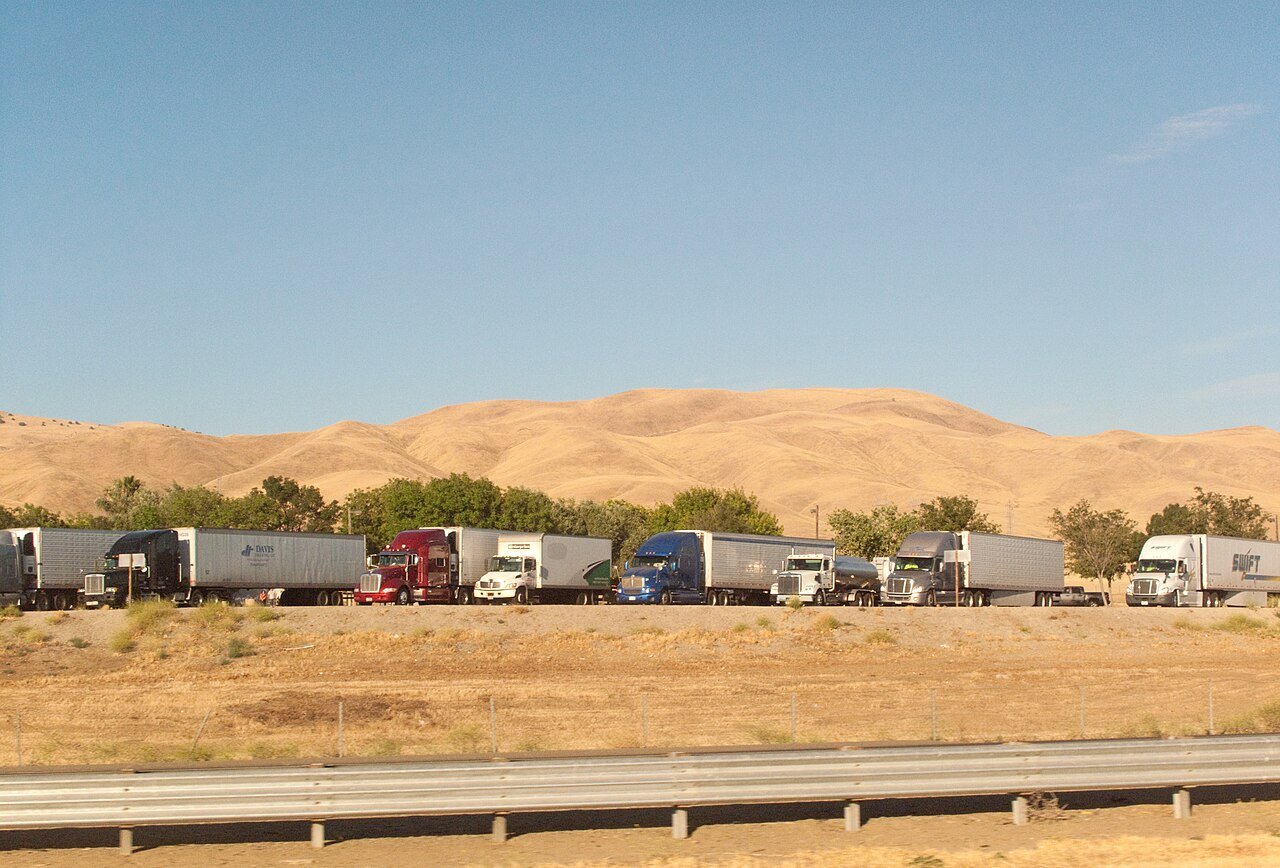
Photo: ErgoSum88, Public domain, via Wikimedia Commons.
Need CDL-A Drivers? We Recruit Them for You.
CDL Transportation Group finds, qualifies, and delivers CDL-A OTR company drivers all the way to your orientation. No retainers, no setup fees, and no ad spend on you — you pay $2,000 per seated driver, split into two $1,000 payments, backed by a replacement guarantee.
Tell us how many drivers you need →
CDL Transportation Group | CDL-A OTR Driver Recruiting