Every carrier eventually asks the same budget question: should you keep truck driver recruiting in-house or outsource it? The answer is not about which model sounds cheaper. It depends on how many drivers you hire each year, how fast your team gets applicants to orientation, and what each week of an empty seat costs you. Getting it wrong is expensive right now. Driver cost per hire rose 41% year over year in the third quarter of 2026, according to Conversion Interactive Agency and People. Data. Analytics.
This guide breaks down the real cost of in-house vs outsourced truck driver recruiting, walks through a worked example for a small fleet, and lists what to check before you sign with any outside recruiter.
What In-House Truck Driver Recruiting Really Costs
Most fleets underestimate their own recruiting cost because they only count job-board invoices. A full in-house number has four parts:
- Recruiter pay and benefits. The Bureau of Labor Statistics puts the median annual wage for human resources specialists at $75,940 (May 2025), and that category includes recruitment specialists. Wages are only part of the bill: for full-time private-industry workers, wages and salaries made up 68.5% of total employer compensation costs in June 2026, with benefits covering the rest.
- Advertising. Job boards, social ads and sponsored listings. This line keeps rising as more carriers chase the same experienced drivers.
- Tools. Applicant tracking system, texting platform, background and MVR services, phone lines.
- Manager time. Every hour your safety director or owner spends calling applicants back is an hour not spent on safety, customers or dispatch.
Using the BLS figures, one recruiter at the median wage works out to roughly $110,900 a year fully loaded ($75,940 ÷ 0.685). That is an estimate, not a quote: your local wage, benefits package and the recruiter's experience will move it up or down.
Worked Example: A 30-Truck Fleet
Here is a simple model. The fleet size, ad budget and software cost below are assumptions for illustration; swap in your own numbers.
- Fleet: 30 trucks (assumed).
- Turnover: 44.2%, the industry-average driver turnover rate ATRI reported for 2025. That means about 13 drivers to replace in a year, before any growth.
- One full-time recruiter: about $110,900 fully loaded (BLS-based estimate above).
- Ad spend: $1,500 per month, or $18,000 a year (assumed).
- Recruiting software and screening tools: $3,000 a year (assumed).
Total: about $131,900 a year. Divided by 13 hires, that is roughly $10,100 per hire, before drug tests, orientation pay and travel. If the same recruiter could seat 40 drivers a year, the cost drops to about $3,300 per hire. The lesson: in-house recruiting gets cheap only at volume. A small fleet paying a full-time salary to fill a dozen seats a year is paying for a lot of idle capacity, or pulling that recruiter into other HR and dispatch work where recruiting slips.
Count the Empty-Seat Cost, Not Just the Fee
The cheapest recruiting model on paper can be the most expensive one if it is slow. While a seat sits empty, the truck payment and insurance still come due. ATRI's 2025 data shows truck and trailer lease or purchase payments of $0.404 per mile and insurance premiums of $0.106 per mile, with trucks averaging 85,991 miles for the year.
Converted to a weekly figure, that is roughly $670 in equipment payments and $175 in insurance per truck per week, about $840 in total. This is a rough estimate because ATRI reports these costs per mile, while in real life they are mostly fixed whether the truck moves or not. It also leaves out the bigger number: the revenue that truck would have earned. If one model fills a seat three weeks faster than the other (an assumed gap), it saves around $2,500 in fixed costs per opening before you count a single lost load.
When Each Model Makes Sense
In-house tends to win when:
- You hire enough drivers each year to keep a recruiter fully busy.
- You recruit in a tight local hiring area where personal relationships with CDL schools and drivers matter.
- You already have a fast process: same-day callbacks, quick background checks and orientation dates every week.
Outsourcing tends to win when:
- Your hiring volume is uneven, such as a few drivers in one quarter and a dozen when you add a customer.
- Recruiting is a side job for your safety manager, dispatcher or owner.
- You need to fill seats quickly and cannot wait months to hire, train and ramp a new recruiter.
Many fleets run a hybrid model: keep one person in-house to own the process, the driver relationship and the final hiring decision, and use an outside partner to bring qualified candidates when volume spikes.
What to Check Before You Outsource Recruiting
If you go outside, the agreement matters more than the pitch. Ask for these in writing:
- Pay on results, not activity. Paying for leads or applications shifts all the risk to you. Prefer fees tied to drivers who actually show up and stay.
- A clear guarantee. What happens if a driver quits in the first weeks? Get the replacement terms and time window spelled out.
- Your hiring standards, enforced. Give the recruiter your written minimums for experience, MVR, accident history and home location. Vague job descriptions bring in applicants who do not fit, a point CDLjobs.com's president made in Transport Topics' coverage of the Q3 report.
- Compliance stays with you. An outside recruiter can collect documents, but your company still has to keep a driver qualification file for each driver (49 CFR 391.51) and run the pre-employment Clearinghouse query (49 CFR 382.701) before the driver operates a CMV. Agree on who gathers what, and when.
- Speed commitments. How fast will they contact new applicants, and how quickly can they get a qualified driver to orientation?
- Honest job details. Pay, miles, home time and equipment must match what drivers will actually experience. Overpromising fills orientation and then empties your trucks.
Compare Both Models With the Same Scorecard
Whichever route you choose, measure it the same way so the comparison is fair:
- Cost per seated driver: all recruiting spend divided by drivers who completed orientation.
- Orientation show rate: drivers who arrived divided by drivers scheduled.
- Days to seat: from first contact to completed orientation.
- 90-day retention: a cheap hire who quits in week five is not cheap.
Retention deserves extra weight right now. The same Q3 report found 46% of surveyed carriers raised driver pay in the past 90 days, and compensation was the top concern among drivers at 26.6%. Drivers have options, so recruiting that sets accurate expectations protects your retention numbers.
Key Takeaways
- A full-time in-house recruiter costs roughly $110,900 a year fully loaded, based on BLS median wage and benefit-share data.
- In-house recruiting is cost-effective mainly at steady, high hiring volume; small fleets often pay for idle capacity.
- Add the empty-seat cost to every comparison: equipment payments and insurance run about $840 per truck per week by our estimate from ATRI data.
- If you outsource, pay for seated, retained drivers, get a written guarantee and keep compliance ownership clear.
- Judge both models on cost per seated driver, show rate, days to seat and 90-day retention.
If Recruiting Is Stretching Your Team Thin
If your recruiter is also your safety manager, or the owner is returning applicant calls at night, run the numbers above with your own data. When the math shows you are paying for slow hiring and empty seats, handing the sourcing and qualifying work to a partner that only gets paid when a driver is seated lets your team focus on keeping the drivers you already have.
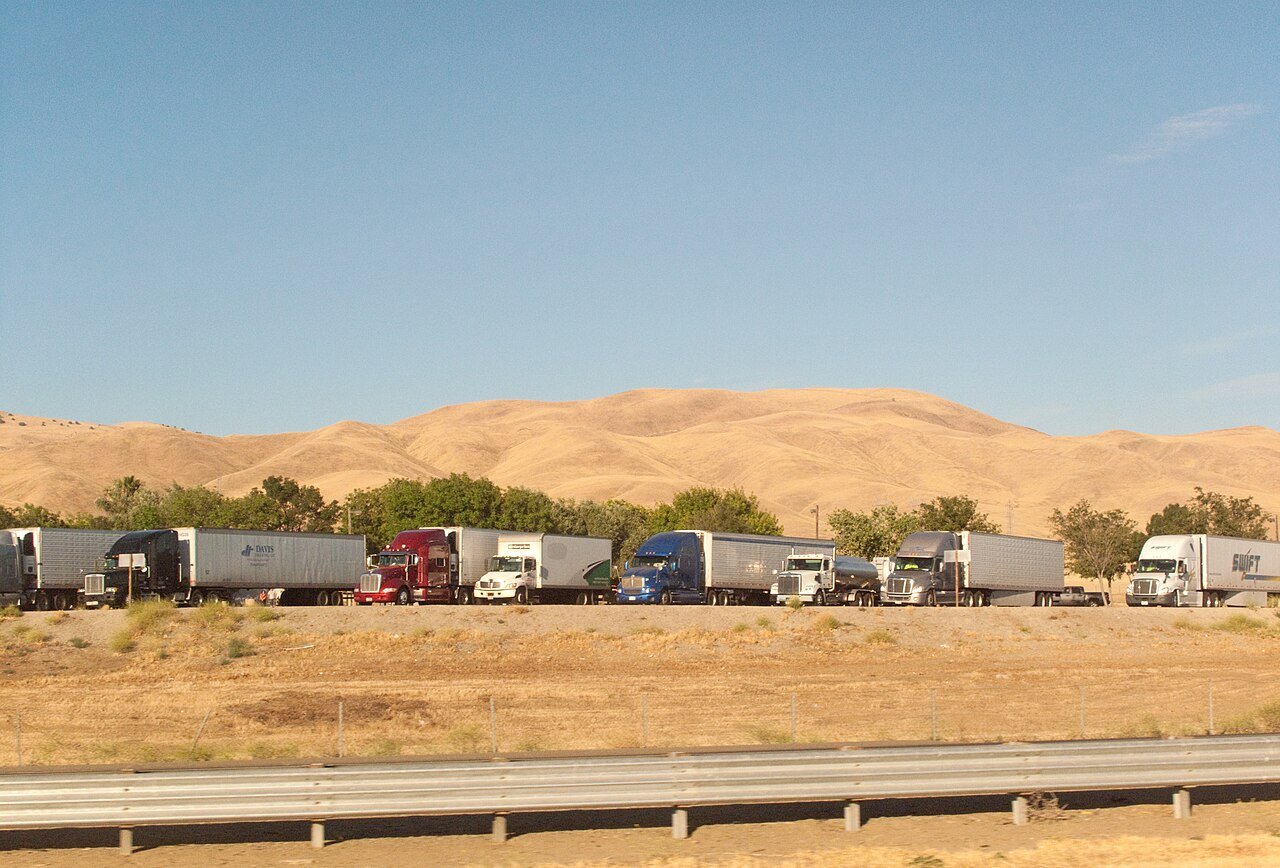
Photo: Downtowngal, CC BY-SA 3.0, via Wikimedia Commons.
Know a CDL-A driver ready for a better seat? Send them our way: Refer a driver.
Need CDL-A Drivers? We Recruit Them for You.
CDL Transportation Group finds, qualifies, and delivers CDL-A OTR company drivers all the way to your orientation. No retainers, no setup fees, and no ad spend on you — you pay $2,000 per seated driver, split into two $1,000 payments, backed by a replacement guarantee.
Tell us how many drivers you need →
CDL Transportation Group | CDL-A OTR Driver Recruiting


