CDL school closures are now big enough to change how many new drivers reach your recruiters in 2027. Since late 2025, FMCSA has pulled thousands of entry-level training providers off its registry, and large carriers are already reporting smaller classes at the schools that are left. If new CDL graduates make up a meaningful share of your hires, you need to rethink your pipeline now, before you have empty trucks to show for it.
What changed: the training registry cleanup in numbers
Since February 2022, anyone getting a Class A CDL for the first time has had to finish entry-level driver training (ELDT) with a provider listed on FMCSA's Training Provider Registry. For years, getting listed mostly meant self-certifying. According to a Hanson Bridgett legal analysis, the registry had grown to about 16,000 providers by late 2025. In December 2025, FMCSA removed nearly 3,000 of them and put another 4,500 on notice. More removals followed in 2026.
The totals are now large:
- Transport Topics reported that as of October 5, 2026, FMCSA had closed 9,970 training school locations, leaving just over 31,000 active locations, with nearly 800 schools still under review.
- At a late-October industry summit, FMCSA Chief Safety Officer Steve Dowling said more than 10,000 providers had been removed since December 2025, according to FreightWaves.
- Separately, on August 31 the agency issued emergency removals for about 110 schools whose graduates were linked to more than 5,000 English-language proficiency violations (FreightWaves).
Not every removed location was a working school. Some were inactive listings, and Transport Topics notes that the removal list includes both voluntary and involuntary deletions. Still, the direction is clear: fewer places are training new drivers, and the ones still operating are under much closer watch.
Fewer graduates are coming through the door
The effect on supply shows up in what carriers are saying. On Werner's October earnings call, CEO Derek Leathers said his company's schools and others across the country have seen enrollments drop 20% to 30% on average this year (Trucking Dive). Schneider CEO Jim Filter pointed out that roughly 50,000 long-haul drivers entered the market in 2021 and 2022, many with less than a week of training, while current programs run five to six weeks at a higher cost (CCJ).
This is happening while the overall driver pool is already shrinking. The National Transportation Institute says the for-hire driver population fell more than 5% in 2025 and another 1% in early 2026 (NTI). Put those together and you get a smaller pool of experienced drivers and a smaller flow of new ones feeding it.
For a small or mid-size fleet, that matters most if you rely on recent graduates to fill seats the big carriers' academies don't fill. Those large fleets train and keep many of their own graduates, which leaves fewer new drivers available on the open market.
What a school's removal means for drivers already on your roster
Many carriers are worried about drivers they already employ who trained at a school that has since been removed. Hanson Bridgett's analysis explains the basic rule: training finished before a provider was removed generally stays valid. FMCSA can only invalidate it case by case, where it finds fraud or criminal conduct the trainee knowingly took part in. A valid CDL from a removed school does not, by itself, make the driver unqualified.
The same analysis warns that civil liability is a separate question. The registry is public, so after a crash a plaintiff's attorney can easily find out where your driver trained. Its suggested approach is to assess each affected driver individually and document it in the driver qualification file, rather than ignoring the issue or banning everyone from a given school. Talk to your own counsel about how this applies to your fleet, but don't leave it unaddressed.
Add a training-provider check to your hiring process
This step is cheap and takes a few minutes per applicant. For every driver who got their CDL after February 2022:
- Get a copy of the ELDT completion record, or at least the provider name and completion date.
- Look up the provider on the Training Provider Registry and confirm it was listed on the date the training was completed. Then check its current status.
- Save a dated record of that lookup in the driver qualification file.
- Treat a notice of proposed removal differently from an emergency removal. Per Hanson Bridgett, a proposed removal often comes down to a fixable paperwork problem and the school's training remains valid, while an emergency removal is a much stronger warning sign that calls for a closer look at the driver's skills.
Pair the check with a real road test and close supervision during the first weeks. Remember that ELDT sets no minimum classroom or behind-the-wheel hours. Graduates have to score at least 80% on the theory assessment and show proficiency behind the wheel (Hanson Bridgett), so the quality of graduates can vary a lot from one school to the next.
Rebalance where your new hires come from
If fewer new graduates are coming, spread your sourcing across more channels:
- Partner with a few strong schools. Pick two or three established programs within a reasonable distance, confirm their registry status every quarter, and get to know their instructors. A school that sends you graduates who stick around is worth more than a long list of loose contacts.
- Put more effort into experienced drivers who aren't actively looking. NTI notes that the safest experienced drivers are usually already employed, so reaching them takes steady outreach, referrals and a simple application process, not just job postings (NTI).
- Consider drivers with 6 to 18 months of experience. They already have their first year behind them, and many are ready to leave a starter job. Your insurance requirements will set the limit here, so check with your agent before you widen your hiring criteria.
- Protect the seats you've already filled. ATRI's 2026 operational costs report put industry-average turnover at 44.2% in 2025. Every driver you keep is one fewer you need to find in a tighter pipeline.
Plan 2027 with longer lead times
Here is a simple way to test your plan. Assume (hypothetical numbers, not data) that your fleet hires 4 new graduates a month from local schools, and those schools' class sizes drop 25%, in the range of the 20% to 30% enrollment decline Werner described. If your share of graduates stays the same, you would get about 3 new graduates a month, or roughly 12 fewer hires over a year. You would need to fill those 12 seats from experienced drivers, better retention or new sources. Run the same calculation with your own hiring numbers and your own schools.
Then adjust your timeline. If it used to take three weeks to fill a seat with a new graduate, plan on it taking longer, and start recruiting for 2027 growth or replacement trucks earlier than you normally would.
Key takeaways
- FMCSA has removed roughly 10,000 training provider locations since late 2025, and nearly 800 schools are still under review.
- Large carriers report school enrollments down 20% to 30%, while the overall for-hire driver pool keeps shrinking.
- Training completed before a school's removal generally remains valid, but document an individual review of affected drivers.
- Check every post-2022 hire's training provider on the registry and save the result in the DQ file.
- Spread your sourcing across vetted school partners, experienced drivers who aren't actively looking, drivers with 6 to 18 months of experience, and stronger retention.
When your team can't cover every channel
Running registry checks, building school relationships and reaching experienced drivers who aren't job hunting all take recruiter hours that many smaller fleets don't have. If your team is already stretched just keeping up with applications, bringing in an outside recruiting partner to source and qualify CDL-A company drivers can keep your trucks moving while you focus on keeping the drivers you hire.
Have a CDL-A driver in mind who'd be a good fit for a solid carrier? Send them our way: Refer a driver.
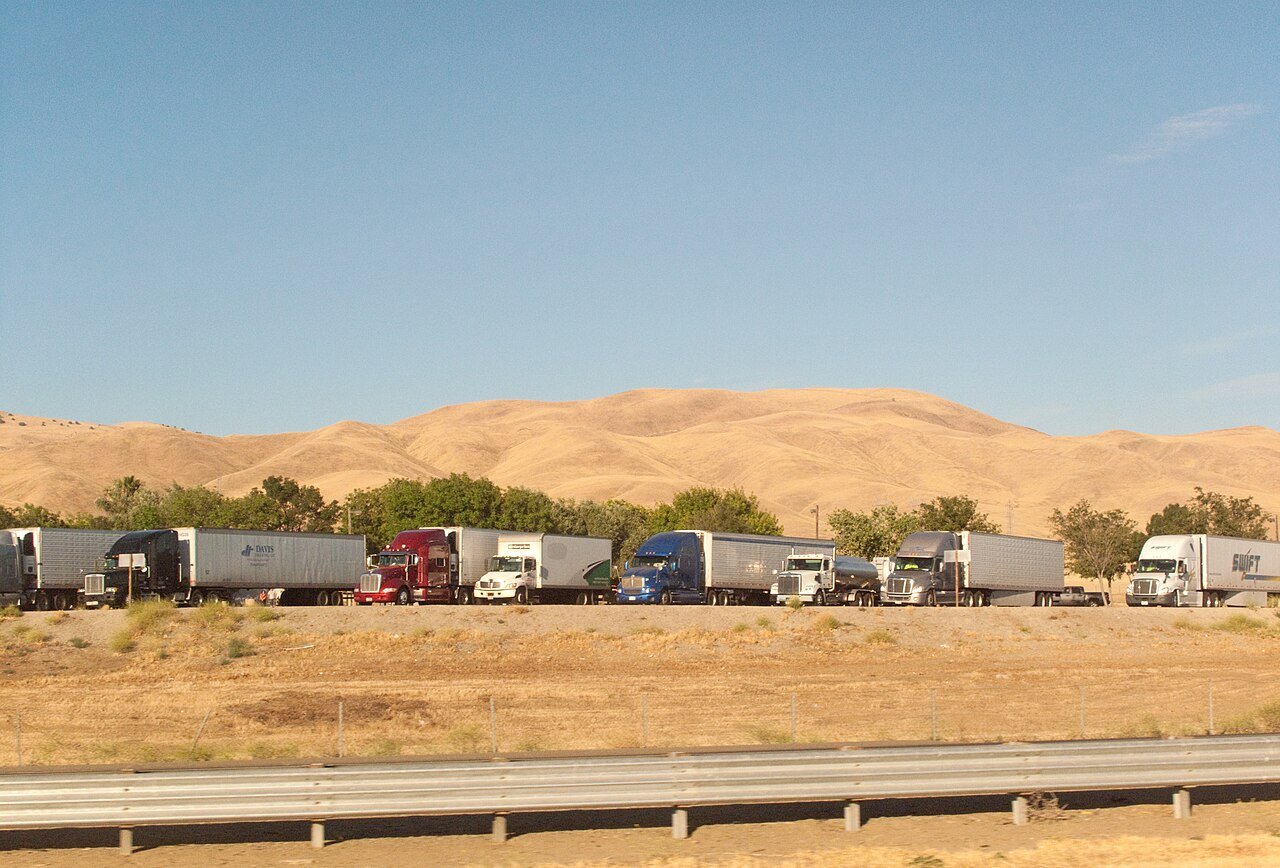
Photo: Lucylonghauler, CC BY-SA 3.0, via Wikimedia Commons.
Need CDL-A Drivers? We Recruit Them for You.
CDL Transportation Group finds, qualifies, and delivers CDL-A OTR company drivers all the way to your orientation. No retainers, no setup fees, and no ad spend on you — you pay $2,000 per seated driver, split into two $1,000 payments, backed by a replacement guarantee.
Tell us how many drivers you need →
CDL Transportation Group | CDL-A OTR Driver Recruiting