Your truck driver cost per hire is probably climbing, and it is not because your recruiters got worse. The Q3 2026 Driver Recruiting & Retention Data Download from Conversion Interactive Agency and People. Data. Analytics. found that driver cost per hire rose 41% year over year and 29% from January through September 2026 (The Trucker). If your recruiting budget for 2027 is a copy of 2026's, you will either seat fewer drivers or overspend without noticing. This article breaks down what is pushing the number up, what it means for a small or mid-size fleet, and how to keep your own cost per seated driver under control.
Why truck driver cost per hire jumped in 2026
Three forces are stacking on top of each other.
- A smaller qualified pool. The National Transportation Institute reports that the for-hire driver population declined more than 5% in 2025 and another 1% in early 2026, citing English-language proficiency enforcement, non-domiciled CDL rules, an aging workforce, the Clearinghouse and limited new-entrant growth (NTI Q4 outlook).
- Higher barriers to entry. Schneider's CEO told analysts that roughly 50,000 long-haul drivers entered the market in 2021 and 2022, many after very short training, while today's standards call for five to six weeks of training at higher cost (CCJ). Fewer cheap, fast entrants means more carriers chasing the same experienced drivers.
- Big carriers are spending heavily. Werner's CEO said elevated recruiting and advertising spend will continue into Q4 and probably Q1 2027, and J.B. Hunt said it put an additional $25 million into driver-related spending in the third quarter (FleetOwner). When the largest fleets bid up ad inventory and sign-on incentives, everyone's cost per lead rises.
Pay is moving too. The same Conversion/PDA research found that 46% of surveyed carriers raised driver pay within the past 90 days, and compensation was drivers' top concern at 26.6%, followed by equipment at 24.9% and operations at 19.4% (Transport Topics).
What a 41% increase looks like on your books
Industry reports rarely publish a single dollar figure for cost per hire, and yours depends on how you count it. So here is a worked example with assumed numbers — replace them with your own:
- Assumption: last year your all-in cost per seated driver (job-board and social ads, recruiter time, background checks, drug screen, orientation travel and lodging) was $4,000.
- Assumption: you seat 25 drivers a year to cover growth and turnover.
If your cost moved in line with the 41% industry increase, $4,000 becomes $5,640 per hire. Across 25 hires, that is $100,000 last year versus $141,000 now — an extra $41,000 for the same headcount. And that figure only counts drivers who actually stay. If (another assumption) one in four new hires quits before day 90, you are paying to seat roughly 33 drivers to keep 25.
The point is not the exact number. It is that cost per hire and early turnover multiply each other, so a fleet that fixes only one of them still leaks money.
Don't try to win a bidding war you can't afford
A 20-truck fleet cannot outspend a FleetOwner 500 carrier on ads. Even the big players say money alone does not fix it: Schneider's CEO said pay raises are targeted where returns justify them and that "you can't just throw money on it," pointing instead to freight selection, how drivers are treated and faster response times (CCJ). That is good news for smaller fleets, because those levers are cheaper than ad spend:
- Be specific in your job ads. CDLjobs.com's president told Transport Topics that more applications don't fix a mismatch between the job and the applicants, and that ads should state realistic earnings, home time, operating area, equipment and minimum qualifications (Transport Topics). Fewer, better-matched applicants lower cost per hire faster than more clicks.
- Respond the same day. Drivers who are already employed have little patience for slow follow-up or complicated applications, according to NTI (NTI). Every day a good lead waits is a day another carrier can call first.
- Lead with what you can prove. Your home-time schedule, your average weekly miles, your equipment age, your dispatcher-to-driver ratio. Those are the exact concerns at the top of drivers' lists.
Recruit employed drivers, not just job seekers
NTI points out that the most experienced, safest drivers are usually already working and not browsing job boards, so fleets that only advertise where active job seekers look end up fighting every competitor for the same small group (NTI). Practical ways to reach passive drivers:
- Run a real referral program. Your current drivers know who is unhappy at other carriers. Pay referral bonuses in stages tied to the new hire's retention so the incentive rewards quality, not just bodies.
- Stay visible between hiring pushes. Keep a steady, low-budget presence (driver stories, photos of your equipment, honest posts about lanes and home time) rather than spiking ads only when trucks are empty.
- Keep a warm list. Drivers who said "not now" six months ago are cheaper to re-contact than a brand-new lead. Log them and check in quarterly.
- Reconnect with good former drivers. Someone who left on good terms already knows your operation and needs less onboarding.
Price your 2027 recruiting budget against real pay benchmarks
ATRI's latest operational cost study puts average driver wages at $0.818 per mile and driver benefits at $0.210 per mile for 2025 — together the largest single cost line for for-hire carriers (ATRI, Operational Costs of Trucking 2026). NTI adds that some fleets have announced solo OTR starting rates in the 70-cent-per-mile range, but warns that a big percentage raise can still leave a fleet merely matching what drivers earn elsewhere (NTI).
Before you budget for more ads, check whether your offer is competitive for your region and freight type. If it isn't, extra ad spend just buys more applicants who say no. If it is, spend on speed and follow-through, not volume.
Protect every driver you seat
When each hire costs more, retention is the cheapest recruiting you can buy. Conversion's president put it plainly: carriers can't afford to hire the same way they did a year ago, and the focus has to shift toward efficiency across the pipeline and post-hire retention (Transport Topics). For a small fleet, that usually means:
- A named contact for every new driver during the first 90 days, with scheduled check-ins at week one, week four and week twelve.
- Delivering exactly the miles, home time and equipment promised during recruiting. NTI notes that pay guarantees for new hires are getting renewed attention for this reason (NTI).
- Tracking cost per hire and 90-day retention by source, then cutting the channels that bring drivers who don't stay.
Key takeaways
- Driver cost per hire rose 41% year over year in Q3 2026, driven by a shrinking qualified pool and heavy recruiting spend by large carriers.
- Run the math on your own fleet: cost per hire and early turnover multiply each other.
- Smaller fleets win on specificity, speed and honesty, not on matching big-carrier ad budgets.
- Reach employed drivers through referrals, steady visibility and warm lists.
- Benchmark pay before raising ad spend, and protect every new hire through the first 90 days.
When your team can't keep pace
If your recruiters are already stretched between phones, paperwork and orientation scheduling, adding passive-candidate outreach and same-day follow-up may simply not fit. That is where outsourcing part of the pipeline makes sense — especially when you pay only for drivers who actually seat, so rising ad costs stop landing on your books.
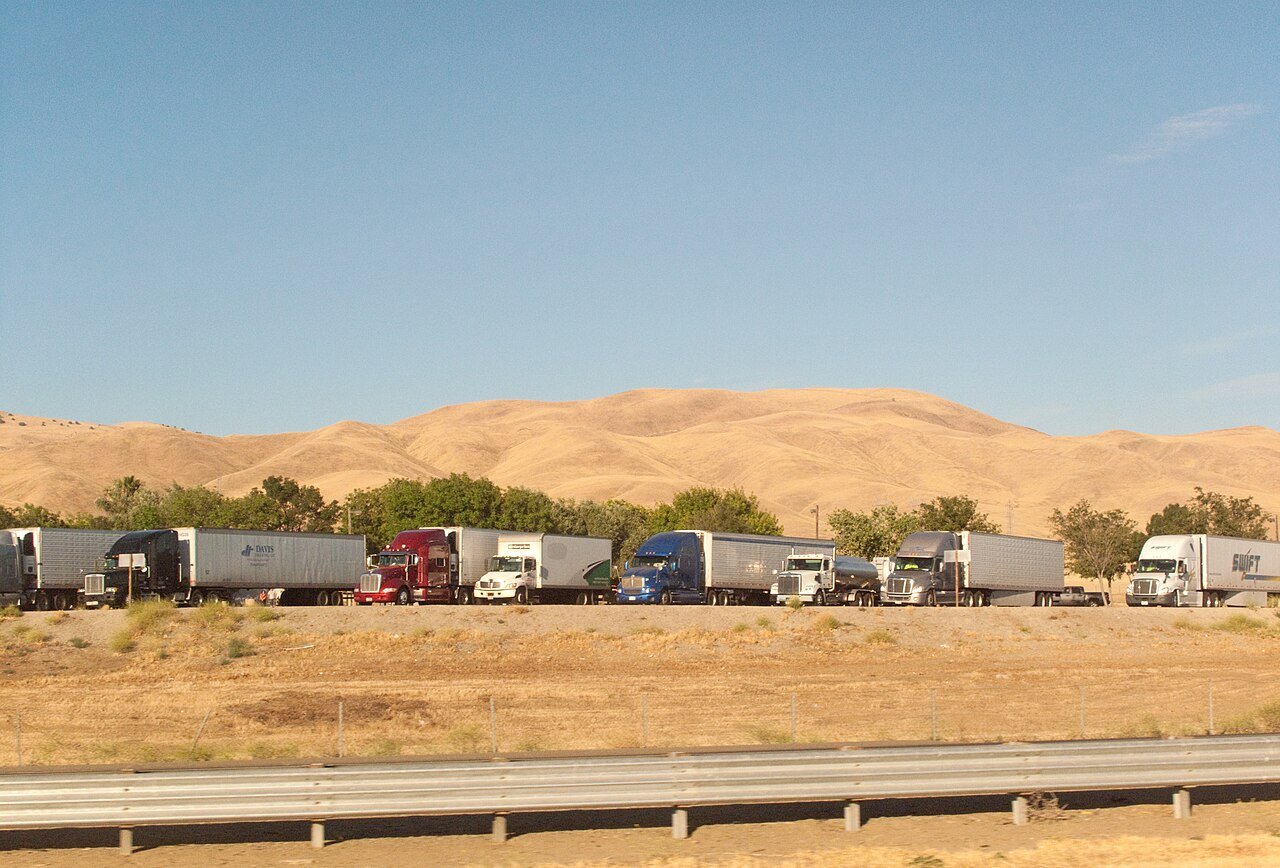
Photo: Oregon Department of Transportation, CC BY 2.0, via Wikimedia Commons.
Know a CDL-A driver who deserves a better seat? Send them our way: Refer a driver.
Need CDL-A Drivers? We Recruit Them for You.
CDL Transportation Group finds, qualifies, and delivers CDL-A OTR company drivers all the way to your orientation. No retainers, no setup fees, and no ad spend on you — you pay $2,000 per seated driver, split into two $1,000 payments, backed by a replacement guarantee.
Tell us how many drivers you need →
CDL Transportation Group | CDL-A OTR Driver Recruiting