Random drug testing for truck drivers is one of the few compliance programs that touches every seat in your fleet, every month, whether you hired that driver last week or ten years ago. When your roster turns over quickly, the random pool is often the first thing to drift out of compliance: new hires get added late, departed drivers linger on the list, and the year-end math comes up short. Here is how to run a random program that holds up in an audit while you keep hiring.
What the 2026 random testing rules require
For 2026, FMCSA kept the minimum annual random rates at 50% for controlled substances and 10% for alcohol. The rate has not changed since 2020, when it doubled from 25% after the industry's reported positive rate reached 1% (Land Line). Under 49 CFR 382.305, those percentages apply to the average number of driver positions over the year, not to the headcount on any single day.
The same section sets the ground rules your program has to follow:
- Selections must use a scientifically valid method, such as a computer-based random number generator tied to an employee ID.
- Every driver in the pool must have an equal chance of selection each time a draw happens.
- Each selected driver must be tested within that selection period.
- Tests must be unannounced and spread reasonably across the calendar year.
- A notified driver must go to the collection site immediately.
How turnover changes your random testing math
Because the requirement is based on an average, the regulation tells you how to calculate it: add up the covered drivers eligible in each random testing period, then divide by the number of periods. Fleets that test more often than monthly only need to run this calculation once a month.
A worked example, using assumed numbers for illustration only: say your fleet tests monthly and your eligible driver count across the twelve months adds up to 264 (some months you had 20 drivers, others 24 after a hiring push). Your average is 264 ÷ 12 = 22 driver positions. At 50%, you owe at least 11 random drug tests for the year; at 10%, you owe at least 2.2, which in practice means 3 alcohol tests so you don't fall below the minimum. If you set your annual target in January based on 18 drivers and never adjusted it, you would end the year short.
Practical fix: recalculate your average each month and compare tests completed against a pro-rated target. If you fall behind in the spring, catching up gradually over the following months fits the "spread reasonably" rule much better than a December testing spree.
Get new hires into the pool on day one, and departures out
The regulation says all covered drivers must be in the random pool and only covered drivers may be in it. For a carrier that hires steadily, this is a process problem rather than a legal one. Build two triggers into your onboarding and termination checklists:
- Add on hire. Once a driver has a verified negative pre-employment result (required before any safety-sensitive work under 49 CFR 382.301) and is cleared to drive, the person who sets up payroll should notify your program manager or consortium that same day.
- Remove on separation. When a driver quits or is let go, remove them before the next draw. A pool padded with former employees inflates your count and wastes selections on people you can't test.
Once a quarter, reconcile the pool roster against payroll and your driver qualification files. Any gap you find yourself is far cheaper than one an auditor finds.
Small fleets: consortium membership and timing traps
Under 49 CFR 382.103(b), an employer whose only driver is himself or herself must be in a random pool of at least two covered employees, and FMCSA directs owner-operators to join a consortium for this. Fleets with more than one covered driver may run their own program.
Very small pools carry a hidden risk. FMCSA's implementation guidelines point out that a fleet needing only a few tests can't simply finish them early in the year, because drivers would then know they're safe for the remaining months. Small stand-alone programs therefore tend to test above the minimum rates. Joining a consortium pool spreads selections across many employers and removes most of that problem. It also takes the selection out of your hands, which helps when a driver suspects a test was targeted.
Your C/TPA works for you, but the liability stays with you
Most carriers outsource random selections to a consortium/third-party administrator (C/TPA). FMCSA is explicit that the employer remains responsible for the program's compliance, and 382.305 requires you to confirm that your service agent is testing at the correct rate and that only covered employees are in the pool. A short checklist for your next review:
- Request your fleet's selection and completion reports every quarter, not just at year-end.
- Confirm the pool roster matches your current driver list.
- Get a written agreement that spells out who handles notifications, collections and recordkeeping. FMCSA doesn't require a written contract, but it notes that one makes good business sense.
- Make sure you can answer the annual Management Information System (MIS) data request if FMCSA selects you. Land Line reports that failing to report can cost up to $1,000 per day.
Notifications, refusals and what the data shows
How you notify drivers matters as much as how you select them. OTR drivers are often hundreds of miles from the terminal, so set a written procedure: dispatch confirms the driver can safely stop, a collection site near the route is booked, and the time of notification is logged. Coach dispatchers to give no advance hints, since the test has to stay unannounced.
Refusals deserve attention during onboarding. Analysis of FMCSA Clearinghouse data through February 1, 2026 found that refusals made up about 15% of drug violations since 2020. Refusals include leaving the collection site early or failing to provide a specimen without a valid medical reason, and they carry the same removal-from-duty consequences as a positive result. Explaining this plainly at orientation prevents avoidable violations among drivers who are simply confused about the process.
The bigger picture also affects hiring. FMCSA's Clearinghouse reports more than 50,000 violations per year, and as of October 1, 2026 nearly 80% of drivers in prohibited status had not started the return-to-duty process. The same analysis found that marijuana was identified 32,951 times in 2025, more than all other substances combined. A visible random program is one more signal to applicants that your fleet is serious about safety, and the drivers you most want to hire usually see that as a plus.
Key takeaways
- 2026 minimum random rates for FMCSA-regulated drivers are 50% for drugs and 10% for alcohol, unchanged since 2020.
- Rates apply to your average driver positions, so recalculate monthly when turnover moves your headcount.
- Add drivers to the pool as soon as they're cleared to drive and remove them as soon as they leave. Reconcile against payroll every quarter.
- Owner-operators must be in a pool of two or more, and very small fleets benefit from consortium pools.
- Your C/TPA handles the mechanics, but compliance is still your responsibility, so review their reports regularly.
- Train drivers on what counts as a refusal. It carries the same consequences as a positive test.
Keeping compliance and hiring moving together
Every new driver you seat sets off a chain of compliance steps: pre-employment testing, Clearinghouse queries, DQ file setup and entry into the random pool. If your safety team is also screening applicants and chasing leads, something usually slips. Handing the sourcing and qualifying work to a dedicated recruiting partner frees your safety staff to keep the testing program clean while new drivers keep arriving at orientation.
Know a CDL-A driver with a clean record who's ready for a new seat? Refer them to us here.
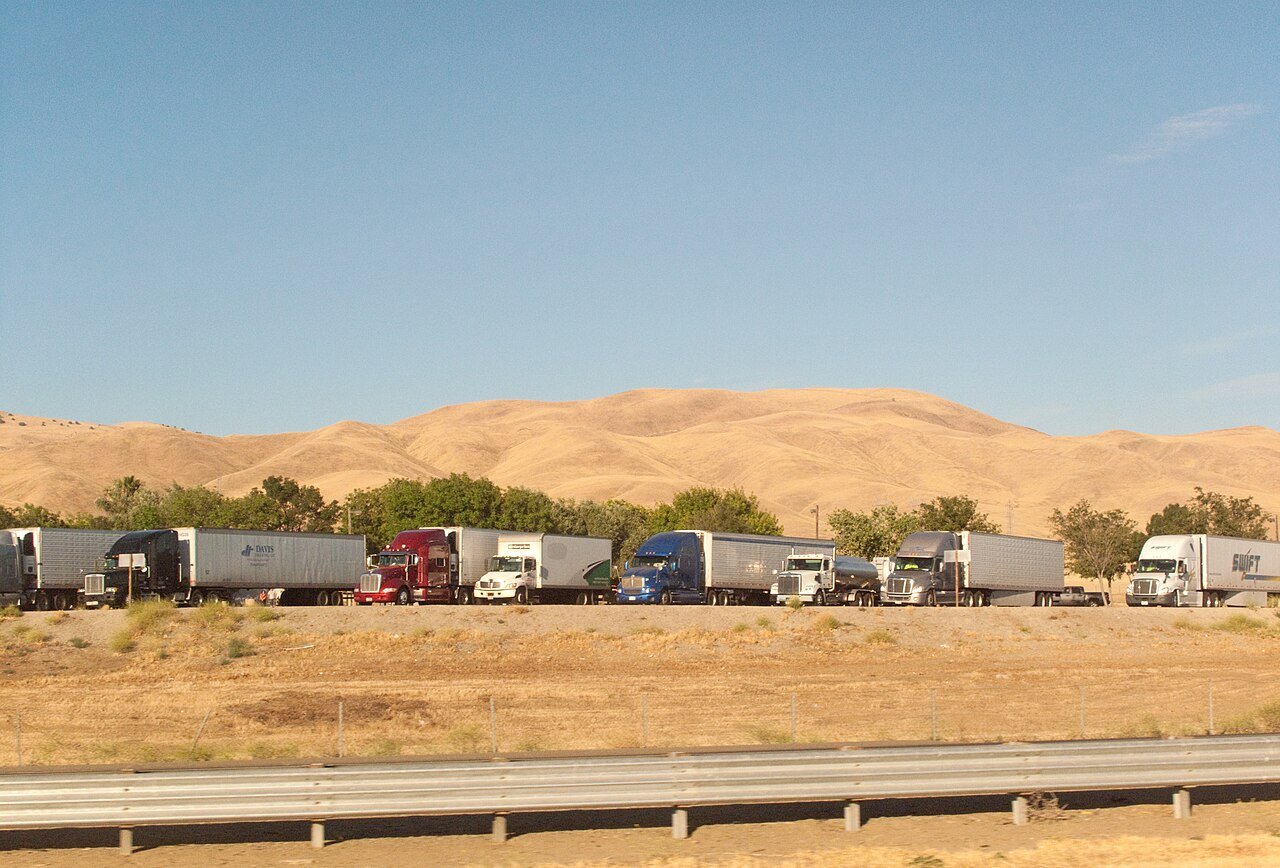
Photo: Joost J. Bakker, CC BY 2.0, via Wikimedia Commons.
Need CDL-A Drivers? We Recruit Them for You.
CDL Transportation Group finds, qualifies, and delivers CDL-A OTR company drivers all the way to your orientation. No retainers, no setup fees, and no ad spend on you — you pay $2,000 per seated driver, split into two $1,000 payments, backed by a replacement guarantee.
Tell us how many drivers you need →
CDL Transportation Group | CDL-A OTR Driver Recruiting