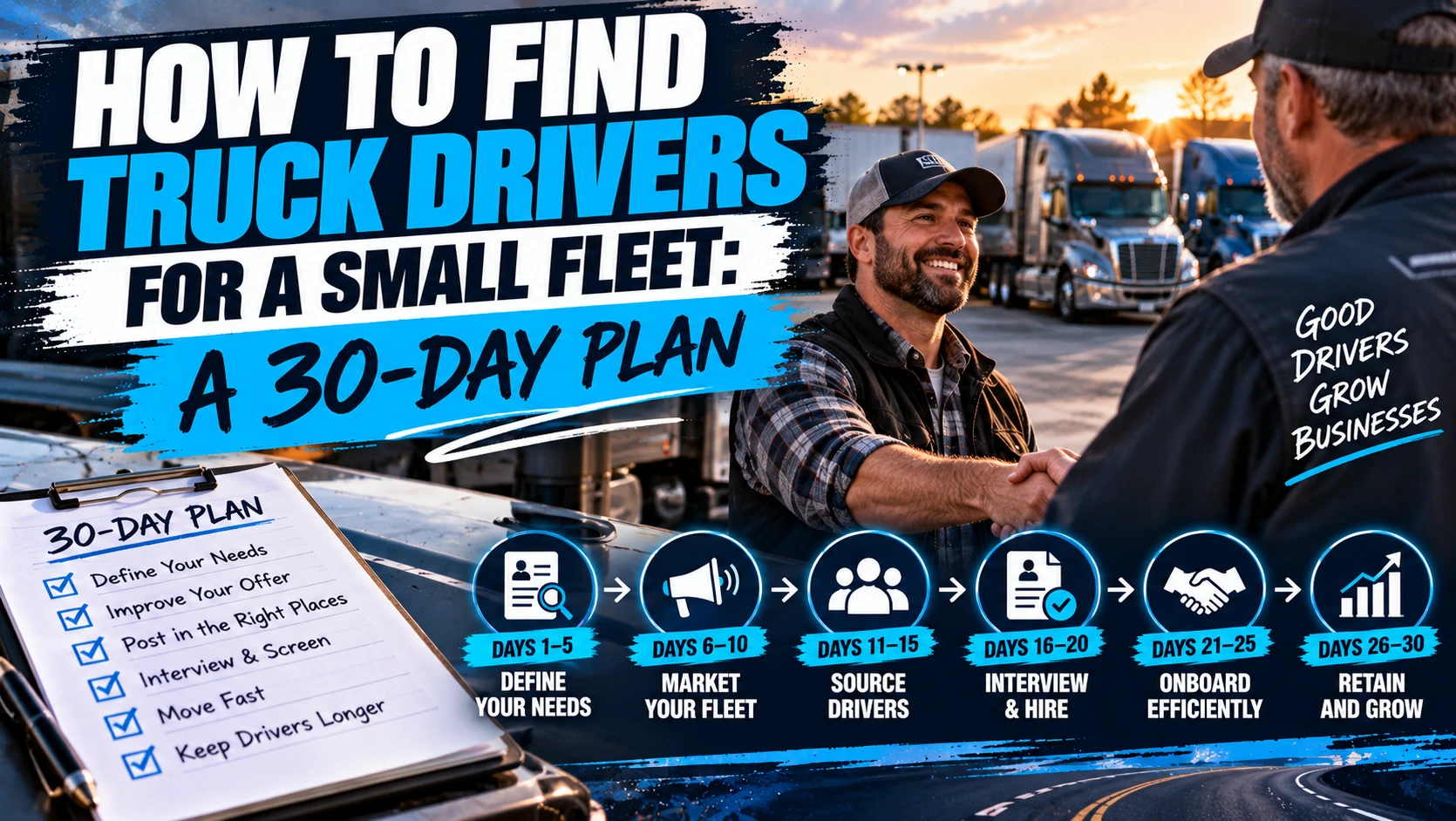
If you are trying to figure out how to find truck drivers for a small fleet, you are in the majority. According to ATA's industry data, citing FMCSA figures from June 2025, about 91.5 percent of the nearly 580,000 active motor carriers in the US run 10 or fewer trucks. Most of those owners don't have a recruiting department. They have a phone, a dispatcher and a truck that has been parked for two weeks. This 30-day plan shows you how to find more CDL-A drivers with the team you already have.
Why finding truck drivers is a numbers game
The Bureau of Labor Statistics counts about 2.2 million heavy and tractor-trailer drivers and projects around 214,500 openings every year, mostly from drivers who leave the occupation or move to other jobs. Every carrier in your lane is working from the same pool, and the best drivers are usually already employed. That is why a one-off job post rarely fills a seat. A repeatable weekly routine does.
Week 1: Fix your offer and your job ad before you spend a dollar
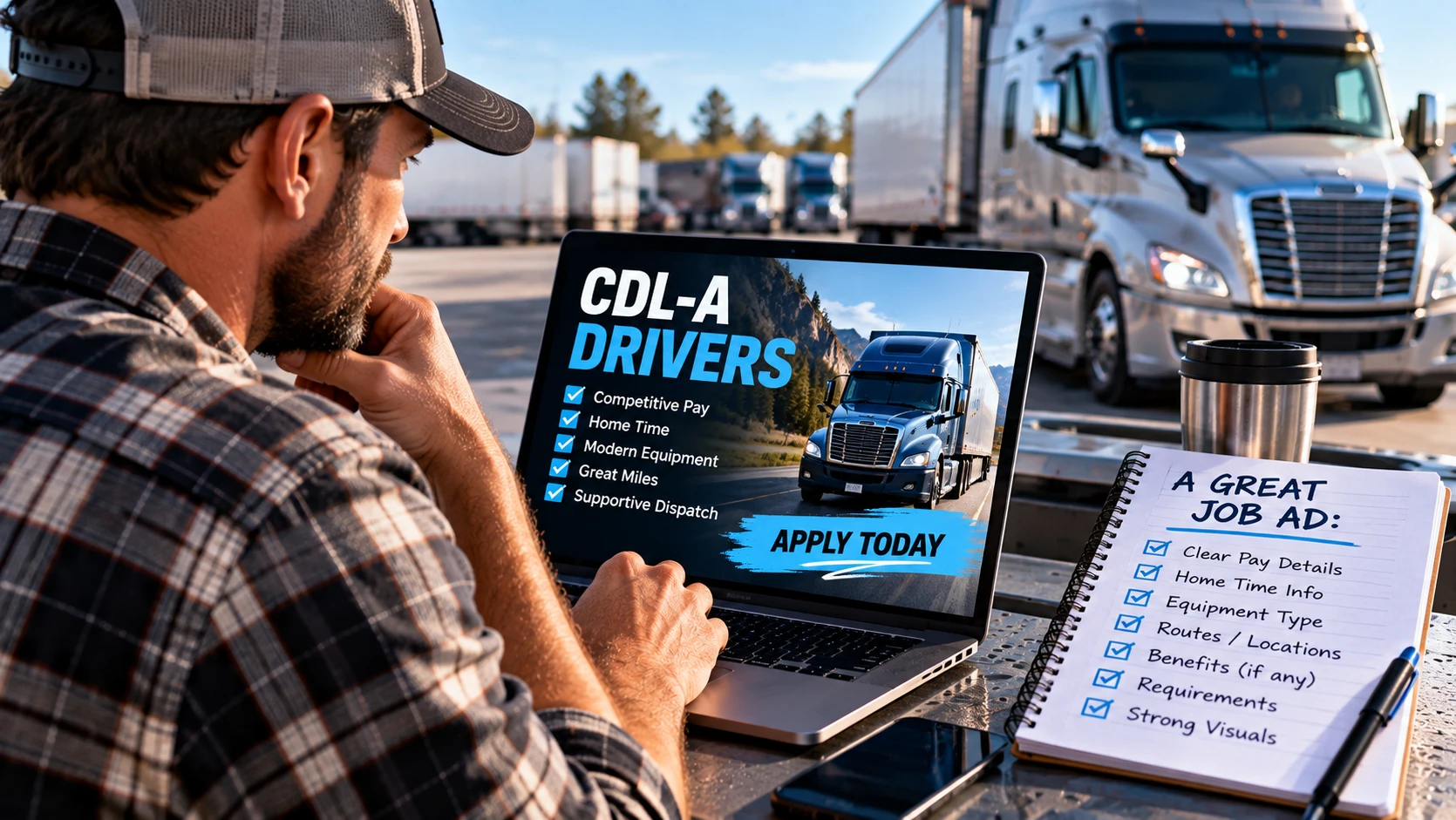
Drivers compare offers in minutes, so start with what they see. Write down your pay rate, typical weekly miles, home-time pattern, equipment age and any sign-on or referral bonus. Then put those facts at the top of your ad, in plain words. Our guide on how to write a truck driver job ad that gets applicants walks through the structure. Also shorten your application. If a driver needs more than a few minutes and a laptop to apply, you lose the ones who apply from a truck stop on their phone.
- One clear driver profile per ad (for example, 2+ years OTR, dry van, weekly pay)
- Mobile-friendly application with name, phone and CDL state as the only required fields
- A named person and a phone number that gets answered
Week 2: Turn on three channels and track each one
Don't try ten channels at once. Pick three and measure them. Good starting points for small fleets are a paid job board listing, a Facebook or Indeed ad aimed at your region, and a referral program for your current drivers. Our post on six recruiting channels that work covers what each does best. Whatever you choose, tag every applicant with the source. After 30 days you want to know your cost per seated driver by channel, not just cost per lead, because cheap leads that never show up are not cheap.
Week 3: Call back fast and qualify early
Speed decides who gets the driver. A driver who applied to three carriers will usually talk to the first one that calls. Set a rule: every new application gets a call within 15 minutes during business hours and a text if there is no answer. On that first call, check the basics that would otherwise kill the hire later: CDL class and endorsements, recent violations, accident history and whether the driver can actually get to your orientation. Running checks in parallel instead of one after another keeps momentum, as we explain in our guide to hiring truck drivers fast.
Week 4: Protect the hire between yes and orientation
Many fleets do the hard work to land a yes, then lose the driver in the gap before orientation. Confirm travel details in writing, call the driver two days before, and tell them exactly who will meet them and what the first week looks like. We cover this in detail in our post on orientation no-shows. Then keep checking in during the first weeks. A seated driver who quits in month one costs you the whole search again.
Use your best recruiters: your current drivers
Drivers know other drivers. A referral program is often the cheapest source of qualified applicants for a small fleet, as long as it is simple and pays out on time. Pay a bonus in two parts, for example after the new driver starts and again after a set number of weeks, so it rewards referrals who stay. Announce it on the dash, in the group chat and at every pay settlement, and pay it immediately when it is earned.
Three mistakes that keep small fleets short on drivers
First, posting once and waiting. Job listings go stale, so refresh yours weekly and rerun your best-performing ad. Second, hiding the pay. Ads that say "great pay" tell a driver nothing, and they scroll on to the carrier that lists a number. Third, treating recruiting as a side task that happens when the truck is already empty. Block the same 30 to 60 minutes every day for applicant calls, and recruiting becomes a habit rather than a scramble.
Key takeaways
- Most US carriers are small fleets, so build a recruiting routine that one person can run in under an hour a day.
- Fix your offer and job ad first. Lead with pay, miles and home time.
- Run three channels, tag every applicant by source and judge each by cost per seated driver.
- Call every applicant back within 15 minutes and qualify the basics early.
- Protect the gap between the offer and orientation with clear, repeated contact.
- Pay referral bonuses in stages and pay them on time.
When you'd rather not run this yourself
This plan works, but it takes steady attention, and an owner who is also dispatching, handling safety and chasing invoices often can't give it that. If you'd rather have a specialist find, qualify and deliver CDL-A drivers to your orientation while you run your trucks, outsourcing the recruiting on a pay-per-seated-driver basis is worth a look.
Need CDL-A Drivers? We Recruit Them for You.
CDL Transportation Group finds, qualifies, and delivers CDL-A OTR company drivers all the way to your orientation. No retainers, no setup fees, and no ad spend on you — you pay $2,000 per seated driver, split into two $1,000 payments, backed by a replacement guarantee.
Tell us how many drivers you need →
CDL Transportation Group | CDL-A OTR Driver Recruiting