English language proficiency for truck drivers is no longer a box your recruiters tick and forget. Since June 2025, a driver who can't handle an inspector's questions or read highway signs in English can be parked on the spot, and your load sits until you get a qualified driver to it. If you're hiring CDL-A drivers right now, an ELP check belongs in your screening process before anyone gets an orientation date.
What changed, and how big it is
The rule itself is old. 49 CFR 391.11(b)(2) has long required a driver to read and speak English well enough to talk with the public, understand highway signs, respond to official questions and fill out reports. What changed is enforcement. Transport Topics reported that ATA's vice president of safety policy described "next to no" ELP out-of-service violations between 2016 and 2024; that ended in June 2025, when inspectors began placing non-proficient drivers out of service. The same report put the pace at roughly 2,000 drivers sidelined per month.
The totals have kept climbing. In August 2026, FreightWaves reported that DOT counted more than 26,000 drivers placed out of service for ELP and that FMCSA had proposed making the out-of-service standard permanent in the regulations. By early November, DOT's reported figure had reached 33,000, according to CDLWire's summary of the Operation Highway Shield results, which also notes the department didn't publish a detailed breakdown of how that number was calculated. Enforcement also comes in waves: one 48-hour Arkansas operation in late October produced 1,724 inspections and 183 ELP violations, per the same report.
What an ELP out-of-service order means for your operation
An ELP violation parks the driver, not the truck. The load still has to move, so you have to get a qualified driver to the truck, often hundreds of miles from your terminal. That means recovery cost, a late delivery and a driver you now have to deal with.
The bigger risk is what happens next. Under the federal penalty schedule in 49 CFR Part 386, Appendix A, a carrier that requires or permits a driver to operate while under an out-of-service order faces a penalty of up to $23,647 per violation. A dispatcher who tells a parked driver to "just get it to the next stop" creates exactly that exposure.
There's one narrow exception. Drivers operating only inside the U.S.-Mexico border commercial zones are generally cited but not placed out of service, and FMCSA's proposed rule would keep that distinction. If you run OTR lanes, plan as if every stop outside those zones can result in an out-of-service order.
How roadside inspectors test proficiency
Your screening should mirror what happens at the roadside. As Transport Topics described it, the evaluation has two parts: an interview about the driver's routine job duties, then a test of whether the driver can identify or interpret common road signs. FMCSA's inspectors work from a written roadside ELP policy (MC-SEE-2026-0002, revised April 16, 2026), and the agency's earlier enforcement FAQs said a driver who fails the interview doesn't move on to the sign test.
Carriers have pointed out that the interview has no standardized scoring, and Transport Topics quoted the Texas Trucking Association saying some drivers passed in one state and failed in another. That inconsistency is a reason to set your own bar a bit higher than the bare minimum, not lower.
Build an ELP check into your hiring process
FMCSA has published guidance on exactly this. Its FAQ on assessing ELP during driver qualification says that because 391.11(a) bars you from letting an unqualified person drive, you should assess ELP as part of qualifying the driver. The recommended approach:
- Interview in English, no aids. A manager asks questions and the driver answers in English. FMCSA says interpreters, cue cards, I-Speak cards and phone translation apps shouldn't be used, because they can hide a gap.
- Use job-based questions. FMCSA suggests asking about the origin and destination of a recent or planned trip, time on duty and the logbook, the information on the driver's license, the contents of shipping papers, and vehicle equipment subject to inspection.
- Test sign recognition. Pick signs from the MUTCD plus examples of dynamic message signs and ask the driver to explain them. FMCSA says the explanation can be in any language the manager understands.
- Then continue normally. Once the ELP portion is done, the rest of the interview can be in another language if that suits both of you.
Practically, that means a short structured step (we'd estimate about 10 minutes, though that's an assumption, not a measured figure) on your phone screen or at orientation intake. Write the questions and the sign set down so every recruiter runs the same check, and note the result and the date in the driver's file. FMCSA's guidance isn't legally binding on its own, but a documented, consistent process shows you took the qualification requirement seriously.
Run it early so you don't pay for failed hires
The worst place to find an ELP problem is after you've paid for a bus ticket, a hotel and several days of orientation. Move the check as early as you can:
- First call: your recruiter's opening questions about the driver's last load and lanes already double as a light ELP read. Ask them to flag anyone who struggles.
- Formal screen: run the full interview and sign test before you book travel. A short video call works well for the sign portion.
- Orientation: confirm it again with a safety team member, since this is the last checkpoint before dispatch.
Apply the same check to every applicant, whatever their background or where they got their CDL. That keeps the process fair, consistent and easier to defend.
Watch your current roster too
ELP isn't only a hiring issue. Pull your roadside inspection history and look for any 391.11(b)(2) citations; codes 391.11B2Q and 391.11B2S are the out-of-service versions, while 391.11B2Z is the border-zone code, as Carrierintel's summary of FMCSA inspection data explains. Make sure dispatchers know an out-of-service order means the driver stops, period, and that the next call goes to safety, not to the customer. If you think a citation is wrong, Transport Topics notes that carriers can contest it through FMCSA's DataQs system.
If a current driver is borderline, consider job-specific English training before they run into an inspector. Some fleets and vendors now offer trucking-focused language programs, according to the same Transport Topics report.
Key takeaways
- ELP has been a driver out-of-service violation since June 2025, and DOT reported about 33,000 drivers sidelined as of November 2026.
- Allowing a driver to keep driving under an out-of-service order can cost a carrier up to $23,647 per violation.
- Follow FMCSA's recommended screen: an English interview on job topics with no translation aids, plus a road-sign test.
- Run the check before you book orientation travel, document it, and apply it to every applicant the same way.
- Review your inspection history and train dispatch on what an out-of-service order requires.
When your recruiters are already stretched
Adding a structured ELP screen on top of MVRs, PSP reports, Clearinghouse queries and travel booking takes recruiter time many small fleets don't have. If your team can't run a consistent screen on every applicant, it may make sense to have a recruiting partner handle sourcing and qualifying so the drivers who reach your orientation are ready to go.
Have a CDL-A driver in mind who'd be a good fit somewhere new? Point them our way: Refer a driver.
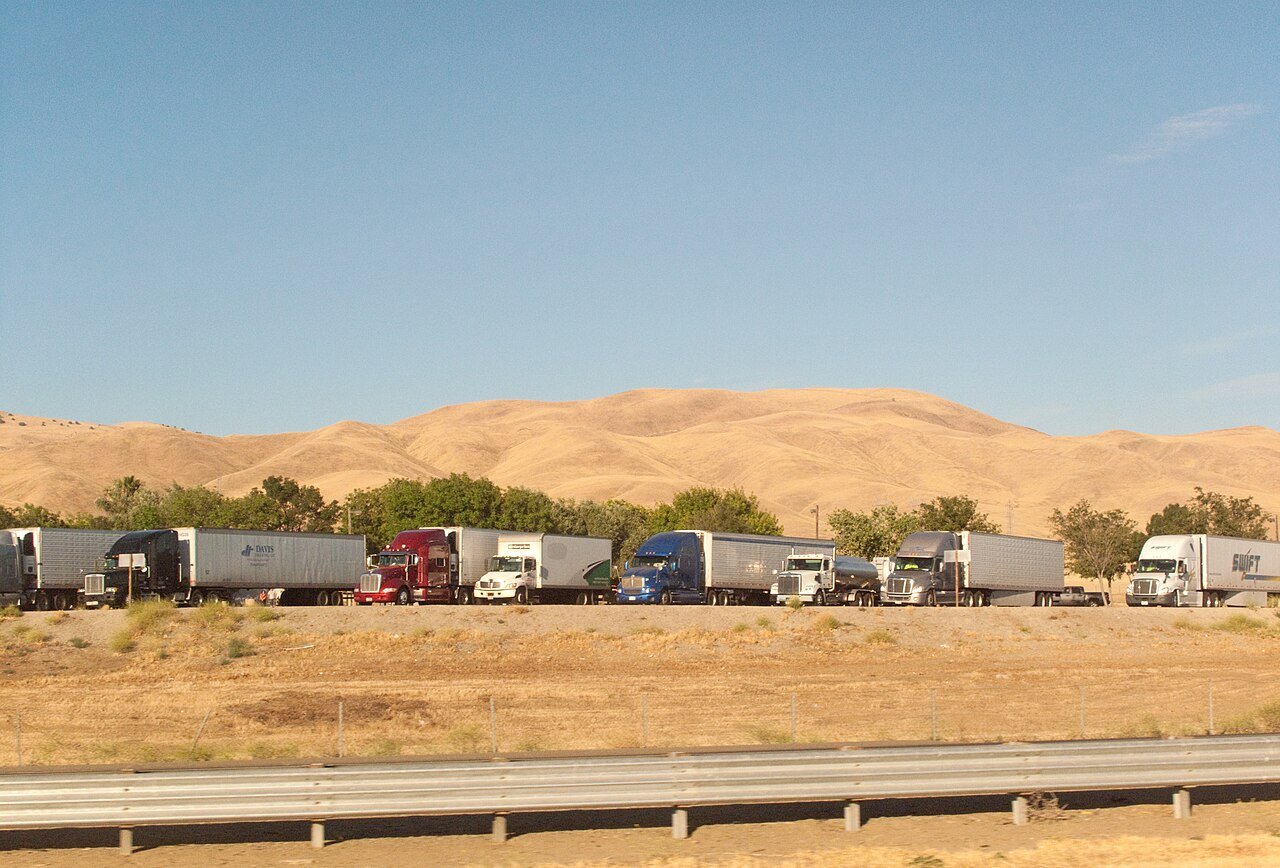
Photo: Michael Rivera, CC0, via Wikimedia Commons.
Need CDL-A Drivers? We Recruit Them for You.
CDL Transportation Group finds, qualifies, and delivers CDL-A OTR company drivers all the way to your orientation. No retainers, no setup fees, and no ad spend on you — you pay $2,000 per seated driver, split into two $1,000 payments, backed by a replacement guarantee.
Tell us how many drivers you need →
CDL Transportation Group | CDL-A OTR Driver Recruiting