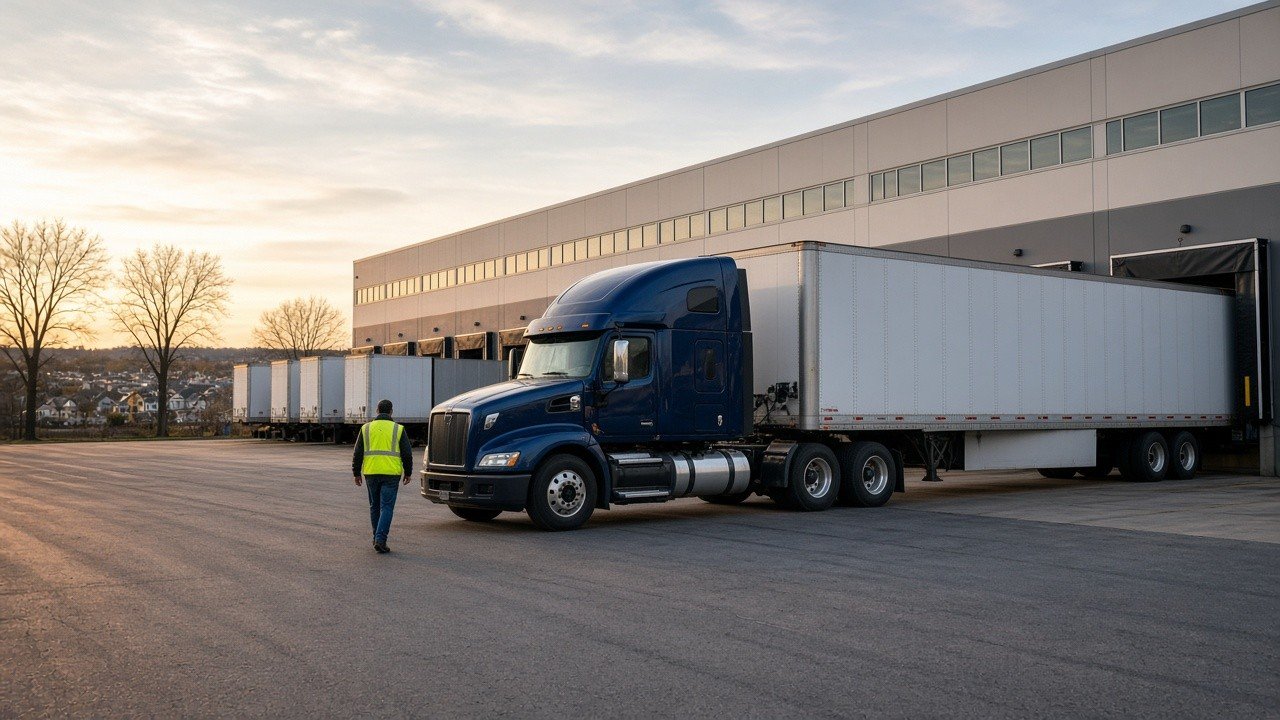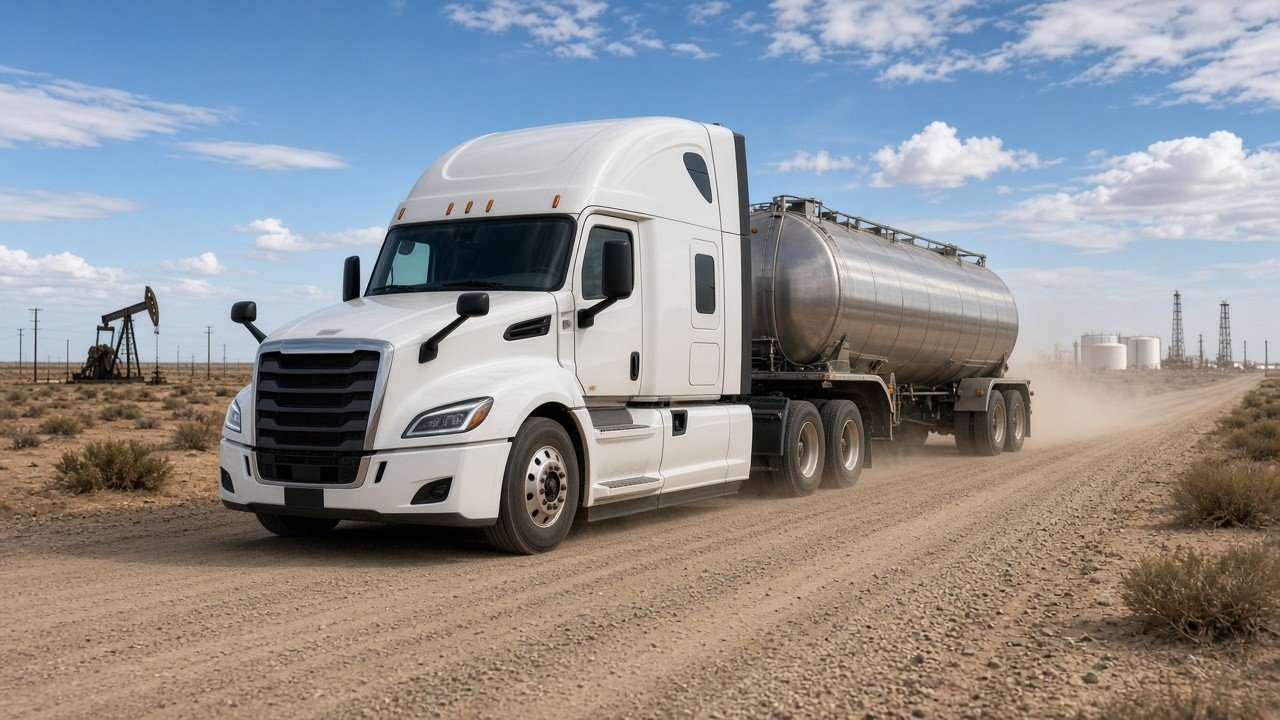
Oilfield trucking jobs are CDL-A jobs hauling for the oil and natural gas industry: frac sand, produced and fresh water, crude oil, pipe, rig equipment and chemicals to and from well sites. As of November 2026, job listings in basins like the Permian commonly ask for a Class A CDL, 2–3 years of tractor-trailer experience, a clean MVR and often tanker or hazmat endorsements, with pay usually as a percentage of the load or hourly and rotations such as 3 weeks on, 1 week off. The big difference from OTR freight is the hours-of-service rules: some oilfield drivers can use a 24-hour restart and, in specific cases, log well-site waiting time as off duty under 49 CFR 395.1(d).
Searches for "oilfield trucking jobs" are surging this month. Here is what an experienced driver should understand before taking one.
What do oilfield trucking jobs actually involve?
Most oilfield CDL-A work falls into a few lanes:
- Frac sand hauling with pneumatic tankers, hoppers or belly dumps from in-basin mines to well pads. Short, high-turn runs, often paid per load.
- Water hauling and vacuum trucks moving fresh water to drilling sites and produced water away from them. Often needs a tanker endorsement; some jobs also want hazmat.
- Crude oil hauling from tank batteries to pipelines or terminals. Tanker endorsement is standard, and you may gauge and sample tanks yourself.
- Pipe, rig-up and equipment hauling on flatbeds, step decks and lowboys, including oversize loads and pipe stringing for pipelines.
You will spend a lot of time on caliche and dirt lease roads, at remote pads with little parking or food, and around heavy equipment. This is regional or local work, not coast-to-coast miles.
How do the oilfield hours-of-service rules work?
The normal property-carrying limits still apply: 11 hours driving, the 14-hour window and the 60/70-hour limits in 49 CFR 395.3. The oilfield exception in 395.1(d) adds two things, and each has strict conditions.
The 24-hour restart (395.1(d)(1))
If your truck is used exclusively to transport oilfield equipment (including stringing and picking up pipeline pipe) or to service field operations of the oil and natural gas industry, any 8-consecutive-day period can end with an off-duty period of 24 or more consecutive hours. In plain terms, you can reset your 70-hour clock with 24 hours off instead of the usual 34-hour restart. "Exclusively" matters: if the same truck also pulls general freight, the exception doesn't fit.
Waiting time at the well site (395.1(d)(2))
Only specially trained drivers of vehicles specially constructed to service oil wells can treat waiting time at a natural gas or oil well site as off duty. That waiting time is logged as off duty with a remark or a separate "waiting time" line, and it does not count toward the 14-hour window. These drivers can't use the 150 air-mile short-haul exception. A standard tractor pulling a sand or water trailer is generally not a "specially constructed" well-servicing vehicle, so don't assume this applies to you. Ask the carrier, in writing, which provision they use and why.
Hypothetical example: 24-hour vs 34-hour restart
Hypothetical: A sand hauler on an exclusively oilfield truck hits 68 of 70 hours on Friday at 6 p.m. With the oilfield exception, a 24-hour break means a fresh 70 hours on Saturday at 6 p.m. Under a standard 34-hour restart, the reset would come Sunday at 4 a.m. That's 10 more hours of available duty time per reset, which is why oilfield schedules can feel relentless. Use it to plan real rest, not just more loads. Our guide to the 34-hour restart explains the standard rule.
What endorsements and training do oilfield trucking jobs require?
- Class A CDL and a current DOT medical card, plus a clean enough MVR and PSP report to meet the carrier's insurance.
- Tanker (N) endorsement for water and crude; hazmat (H) or the combined X for some crude, fuel and chemical loads. See how to add hazmat, tanker and doubles endorsements.
- Site safety training. Many operators require hydrogen sulfide (H2S) awareness and a basic oilfield safety orientation before you can enter a lease. Carriers often arrange this; ask who pays.
- Personal protective equipment such as flame-resistant clothing, hard hat, safety glasses, steel toes and often a personal H2S monitor.
The OSHA oil and gas extraction page lists vehicle accidents, struck-by incidents, fires and explosions, and chemical exposure among the main hazards in the field. Take the training seriously.
How are oilfield truck drivers paid?
As of November 2026, listings we reviewed mostly pay a percentage of the load (often higher for night or weekend shifts), hourly for water and vacuum work, or per load for owner-operators. Some advertise weekly minimums "when work is available." Earnings swing with rig and frac activity, which follows oil prices; the monthly EIA Short-Term Energy Outlook is one public way to follow oil price and production forecasts. We won't quote a typical paycheck because it varies too much by basin, shift and equipment. Get a sample settlement before you sign.
Is oilfield trucking a good fit for an experienced CDL-A driver?
Pros: regional work, often home on rotation, heavy demand in active basins, and skills (tanker, off-road, heavy haul) that pay elsewhere too.
Cons: long shifts, rough roads that punish equipment and your back, remote sites, safety hazards, and boom-and-bust cycles. When oil prices drop, loads can dry up fast, and percentage pay drops with them.
Common mistakes drivers make with oilfield jobs
- Assuming the waiting-time rule applies. Most haulers don't qualify. Logging waiting time as off duty when you don't qualify is a log violation.
- Using the 24-hour restart on a mixed-use truck. The truck must be used exclusively for oilfield work.
- Not asking about slow weeks. Ask what a driver earned in the slowest month last year and whether the minimum guarantee has conditions.
- Skipping the carrier check. Look up the carrier's safety record and out-of-service rates first. Here's how to vet a carrier on FMCSA SAFER.
- Ignoring housing. Rotations far from home may mean man camps, hotels or sleeping in the truck. Know who pays.
Frequently asked questions
Do I need oilfield experience to get an oilfield trucking job?
Not always. Many listings want 2–3 years of tractor-trailer experience and treat oilfield experience as a plus, then provide site safety training.
Can every oilfield driver use the 24-hour restart?
No. Under 395.1(d)(1), the truck must be used exclusively for transporting oilfield equipment or servicing oil and gas field operations.
Is well-site waiting time always off duty?
No. Only specially trained drivers of vehicles specially constructed to service oil wells may log it as off duty, with remarks or a waiting-time line.
Which endorsements help most?
Tanker is the most common ask for water and crude work; hazmat opens more crude and chemical loads.
Comparing oilfield work with other options? Browse CDL-A jobs, take our job match quiz, or check diesel prices before you head to the patch. For equipment trade-offs, see dry van vs reefer vs flatbed vs tanker.
Know a CDL-A driver eyeing the oilfield or a better spot anywhere? Refer them to us and earn $500. Refer a driver here.
Free for CDL-A drivers: get our Job Offer Checklist — 23 questions to ask any carrier about pay, miles and home time before you sign. Download the free checklist →
Know a CDL-A driver looking for work? Refer them and earn $500 when they complete 30 days on the road. Refer a driver →
CDL Transportation Group | CDL-A OTR Driver Recruiting