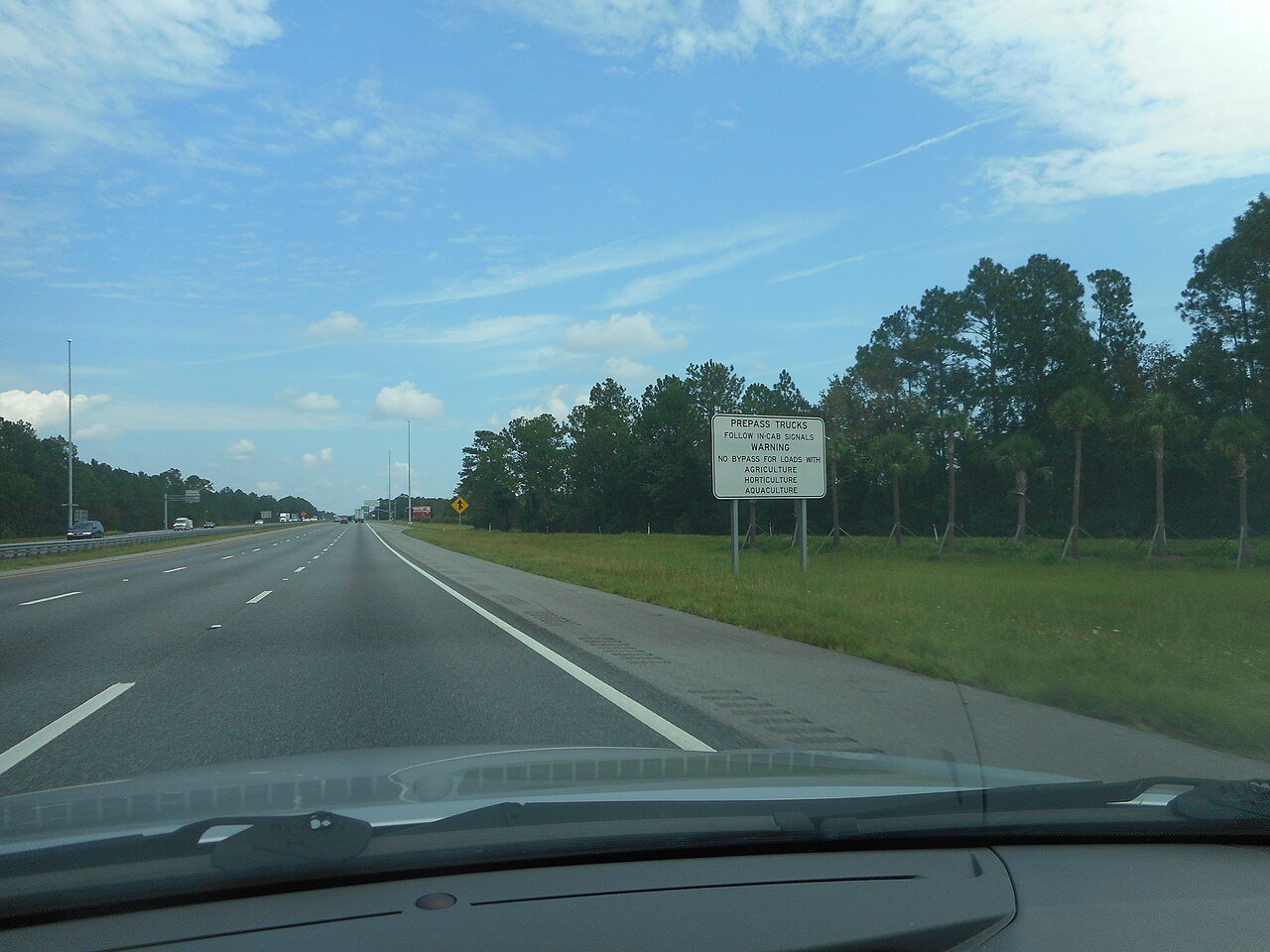
Since the summer of 2025, failing an English-proficiency check at the roadside has meant getting parked. Now FMCSA wants to write that into the federal rulebook permanently, and the window to tell the agency what you think closes on October 9, 2026. Here's what the proposal actually says, what the enforcement numbers show, and what it means for you.
What FMCSA Is Proposing
On August 10, 2026, FMCSA published a notice of proposed rulemaking in the Federal Register titled "English Language Proficiency; Out of Service Criteria" (Docket FMCSA-2026-0826). The change itself is short. It would:
- Add the English-language rule, 49 CFR 391.11(b)(2), to the official definition of an out-of-service order in sections 390.5 and 390.5T.
- Add a new paragraph to section 391.11 saying a driver who violates the English requirement must be placed out of service immediately.
- Carve out one limited exception for drivers working only inside the U.S.-Mexico border commercial zones (more on that below).
The proposal grants a petition the Commercial Vehicle Safety Alliance (CVSA) filed in October 2025. FMCSA says it doesn't create any new requirement for drivers. It locks in how inspectors already enforce the rule.
The Rule Isn't New. The Penalty Is.
The English requirement is older than the interstate highway system. According to the Federal Register notice, the Interstate Commerce Commission first required interstate drivers to read and speak English in 1936. Today the rule says you must be able to speak and read English well enough to talk with the public, understand highway signs and signals, answer questions from officials, and fill out reports and records.
What changed over the years was how the rule was enforced:
- 2015–2016: CVSA dropped the English rule from its out-of-service criteria, and a 2016 FMCSA policy told federal inspectors to write the violation but not park the driver.
- April 28, 2025: Executive Order 14286 directed FMCSA to reverse that policy.
- June 25, 2025: CVSA put English-proficiency violations back into its out-of-service criteria, so federal and state inspectors started parking drivers again.
- April 2026: FMCSA updated its guidance to narrow the border-zone exception, and CVSA adopted that update.
The CVSA criteria are guidance. States follow them, but they can change. FMCSA's stated reason for the rulemaking is that once the out-of-service penalty is in the federal regulations, every state that takes Motor Carrier Safety Assistance Program money has to adopt a matching law, whatever CVSA does later.
The Numbers Behind the Crackdown
FMCSA's own data in the proposal shows how sharply enforcement changed. Between January 2025 and June 24, 2025, inspectors wrote 7,812 English-proficiency violations nationwide, and just 33 of them led to out-of-service orders. From June 25, 2025, through March 19, 2026, inspectors wrote 60,399 violations, and 19,045 of them ended with the driver placed out of service.
All of those out-of-service orders happened outside the border commercial zones. The rest of the violations were written inside the zones, where drivers were cited but not parked. Land Line reports that more than 26,000 truck drivers have now been removed from the road since the stepped-up enforcement began.
The Border-Zone Exception, Explained
This is the part of the proposal that actually changes anything. Right now, a driver inspected inside a U.S.-Mexico border commercial zone gets cited for an English violation but isn't parked. Under the proposal, inspectors would look at the driver's current trip, using bills of lading, dispatch records, interchange receipts and the driver's own statements. If that trip takes the driver into the U.S. beyond the commercial zone, the driver goes out of service.
FMCSA estimates this would put about 9,000 more drivers a year out of service inside the border zones, costing carriers about $14.4 million a year. That figure assumes $800 a day in downtime and two days to get a replacement driver to the truck. For drivers who run only short hauls inside the zone, nothing changes: they'd still be cited, but not parked.
How Roadside Checks Work Today
Under current FMCSA enforcement guidance, inspectors use a two-step approach. First comes an interview in English during the inspection, with questions such as where you're coming from, where you're headed and what you're hauling. If the interview raises doubts, the second step checks whether you can recognize highway traffic signs. FMCSA's rule text lists what counts: talking with the public, understanding signs, answering officials and completing records.
One detail matters for hearing-impaired drivers. FMCSA guidance from 2014, which the proposal says is still in effect, treats drivers who hold a hearing exemption and can read and write English as meeting the requirement.
What People Are Saying
FMCSA Administrator Derek Barrs defended the proposal on safety grounds, saying that when a driver can't read signs like "Steep Grade" or "Runaway Truck Ramp," people die. The Owner-Operator Independent Drivers Association (OOIDA) filed the 2025 petition that helped push CVSA to bring back out-of-service orders. According to Land Line, more than 1,700 comments had been filed on the docket by September 22, and many of the drivers who commented support tougher enforcement.
The proposal also leaves some questions open. FMCSA itself is asking for comment on whether its border-zone estimate is too high or too low, how long a parked driver typically stays out of service, and what delays really cost carriers.
What This Means for You
- If you're a solid English speaker, nothing changes day to day. But expect the English check to stay a routine part of roadside inspections.
- If English is your second language, practice explaining your trip, your load, your hours and your paperwork out loud. Learn the standard warning and regulatory signs by sight and by name. Being out of service means lost miles, a stranded load and a mark on your record.
- If you're a new CDL student, treat English as part of your training. FMCSA points out that carriers are responsible for making sure a driver is qualified before dispatch, so expect English to be part of hiring conversations.
- If you run near the Mexican border, carry trip paperwork that clearly shows where your trip ends. Under the proposal, your paperwork decides whether the exception applies to you.
- If you want a say, you can comment directly at Regulations.gov under Docket FMCSA-2026-0826 until October 9, 2026. Comments are public and are posted with your name, so keep them factual.
This is a proposal, not a final rule. FMCSA has to review the comments before it issues a final version, and the details could still change. For the exact legal language, read the full notice in the Federal Register.
Know the signs, know your paperwork, and you'll be back on the road after an inspection without trouble.
Photo: DanTD, CC BY-SA 4.0, via Wikimedia Commons.
Free for CDL-A drivers: get our Job Offer Checklist — 23 questions to ask any carrier about pay, miles and home time before you sign. Download the free checklist →
CDL Transportation Group | CDL-A OTR Driver Recruiting