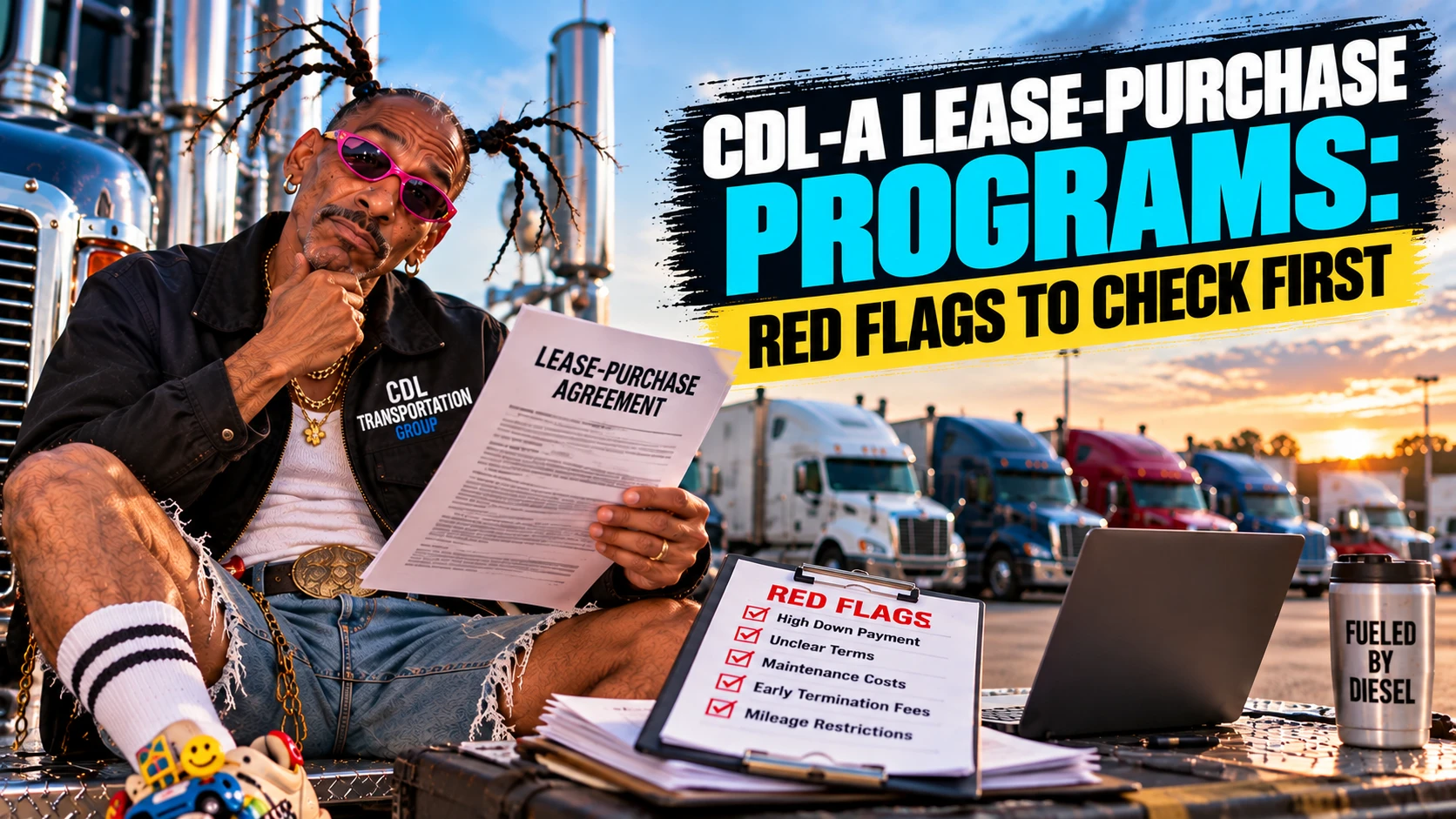
A lease-purchase program is a deal where a carrier leases you a truck and the lease payments come out of your settlement, with the promise that you own the truck at the end. Before you sign one, check five things: who holds the debt, what the total cost is, what happens if you quit early, how much goes into escrow, and whether the lease spells out every charge-back in writing. Federal rules already require some of this, and a federal task force has called the worst versions of these deals predatory. Here is how to read one as an experienced CDL-A driver.
What is a lease-purchase program, and why is it different from buying a truck?
With a normal truck loan, a lender finances the truck and you choose who you haul for. With a carrier lease-purchase, the carrier (or a company tied to it) is both your lender and the one giving you loads. That means one company controls your work, your pay and your debt. If dispatch slows down or the truck breaks, the payment is still due.
The federal rules for equipment leases are in 49 CFR Part 376, the Truth-in-Leasing regulations. They cover the lease between an authorized carrier and the owner of the equipment. Whether a particular lease-purchase deal falls under those rules depends on how it is structured, so read your own paperwork and ask a qualified professional if you are unsure.
What does the federal task force say about lease-purchase deals?
FMCSA's Truck Leasing Task Force sent its recommendations to Congress and the Department of Transportation and Department of Labor in January 2025. According to FMCSA's published package, the task force reached a consensus that arrangements where a motor carrier controls the driver's work, compensation and debts should be prohibited. If those programs stay legal, it recommended clear disclosures before signing, including how many drivers actually completed the program and acquired a truck. It also proposed keeping the debt separate from the work, so a carrier or its affiliate does not hold the driver's debt.
These are recommendations. As of October 2026 we have not confirmed that they have become a final rule, so lease-purchase deals are still being offered. Treat the report as a list of what experts consider risky.
What are the red flags before you sign?
- You can only haul for the lessor. If leaving the carrier means giving up the truck, you owe the debt with no income to pay it.
- The carrier is also the lender. One company controls your loads and your payments.
- No total cost on paper. You should be able to see the weekly payment, the number of payments, any balloon payment and the total you will pay.
- A large escrow or maintenance fund with vague rules on what it covers and when you get it back.
- Charge-backs you cannot verify. Fuel, tolls, insurance, tires and repairs should all be itemized with receipts.
- Pressure to sign today or a refusal to give you a copy to take home and review.
- Penalties for returning the truck that wipe out what you already paid.
- Vague answers about how many drivers finish. If the carrier cannot say how many drivers have actually taken title, that tells you something.
What does the federal lease rule require in writing?
For leases covered by Part 376, 49 CFR 376.12 says the lease must be written and signed by both parties, and it must state the compensation before any trip. Among other things, as of October 2026 it also requires:
- A list of the items the carrier pays first and deducts from your pay (charge-backs), with the method used to calculate each one, and supporting documents on request.
- No requirement that you buy or rent products or services from the carrier, unless the terms are stated in the lease.
- Escrow terms: the amount, what it can be used for, how it is accounted for, quarterly interest at no less than the 91-day Treasury bill rate, and return of the funds within 45 days after the lease ends.
- Payment within 15 days after the carrier gets the required delivery documents.
- Insurance terms, including who provides which coverage and any charge-back amounts.
- A copy of the signed lease for you.
If your lease leaves these out, ask why before you sign.
What does a lease-purchase cost? A hypothetical example
This is a hypothetical example to show the math, not a real offer or typical numbers.
- Truck payment: $450 per week for 208 weeks (four years) = $93,600
- Balloon or buyout at the end: $5,000
- Required maintenance fund: $0.05 per mile on 2,500 miles per week = $125 per week, or $26,000 over 208 weeks
- Total you pay toward the truck and fund: $93,600 + $5,000 + $26,000 = $124,600
Now compare that with the truck's actual market value, and with what a bank or independent dealer would charge for similar financing. If the total is far above what a comparable used truck costs, you are paying for the convenience of getting in with little money down. Also ask what happens to the maintenance fund if you do not finish the term. Get the answer in writing.
Then run your weekly numbers using our driver tools: gross settlement, minus fuel, insurance, the truck payment, maintenance and taxes. Ask whether you would still clear a livable amount in a slow month.
What questions should you ask the carrier?
- What is the total I will pay from day one to title, in dollars?
- Who owns the debt, and can it be sold or transferred?
- If I leave or am terminated, what do I owe and what do I get back?
- How many drivers started this program and how many finished and took title in the last few years?
- Is the truck's condition and mileage documented, and may I get an independent inspection?
- Can I haul for other carriers or brokers while I make payments?
- What are all the charge-backs, and will I get receipts?
- Can I take the contract home for a few days?
Our guide on questions to ask a recruiter and the checklist for reading a CDL-A job offer work for these conversations too.
What are the common mistakes?
- Comparing only the weekly payment. The total cost and the end-of-term conditions matter more.
- Assuming you are building equity. Until title transfers, check whether you own anything.
- Ignoring slow weeks. A fixed payment during a layover or breakdown can erase your pay. See our post on detention, layover and breakdown pay.
- Skipping the carrier check. Look the company up on FMCSA SAFER and read the authority and safety record first.
- Relying on verbal promises. If it is not in the signed lease, it does not count.
- Not saving records. Keep every settlement, receipt and message.
Are there alternatives to a carrier lease-purchase?
Yes. You can stay a company driver while you build savings, get quotes from banks, credit unions and independent truck dealers, or buy a used truck with a pre-purchase inspection. If you do go owner-operator, plan for insurance, maintenance, taxes and downtime, and read our post on investment strategies for owner-operators. You can also browse company-driver openings on our jobs page while you decide.
Frequently asked questions
Is a lease-purchase program illegal?
Not currently as far as we have confirmed. A federal task force recommended banning the most controlling versions, but as of October 2026 we have not confirmed any final federal ban.
Do I own the truck while I am making payments?
That depends on the contract. Many programs transfer title only at the end, so read who holds title and what happens if you stop paying.
Can I get my escrow back?
For leases covered by 49 CFR 376.12, the lease must say how escrow is used and returned, and funds are to be returned within 45 days after the lease ends. Check your own contract for any deductions.
Should I have a lawyer review it?
If the contract is long or the amounts are large, it is worth having a qualified attorney or accountant look it over before you sign.
Where can I report a problem?
The task force recommended that FMCSA promote its driver coercion hotline and complaint process. Check the FMCSA website for current reporting options.
This is general information — ask a qualified professional about your situation.
Photo: Thomas Schilling, CC BY-SA 4.0, via Wikimedia Commons.
Free for CDL-A drivers: get our Job Offer Checklist — 23 questions to ask any carrier about pay, miles and home time before you sign. Download the free checklist →
Know a CDL-A driver looking for work? Refer them and earn $500 when they complete 30 days on the road. Refer a driver →
CDL Transportation Group | CDL-A OTR Driver Recruiting