Every winter, carriers seat drivers who have never chained a tractor, never crossed a mountain pass in snow, and never had to decide on their own when to park. If your hiring process treats winter driving for new truck drivers as something they will figure out on the road, you are taking on crash risk, fines and early quits in the same season freight gets harder to run. This guide covers what the rules actually require and how to build winter readiness into hiring and onboarding.
Why winter hires need a different plan
Weather is not a niche safety issue. Federal Highway Administration figures based on NHTSA data put weather-related crashes at roughly 745,000 a year, about 12% of all crashes, from 2019 to 2023. Of those, around 18% happened in freezing precipitation such as snow, sleet or freezing rain, and the same FHWA page notes that heavy snow can cut average freeway speeds by 5% to 40%.
For a carrier, the practical problem is that driving experience is not the same as winter experience. A driver with two years running the Southeast and Texas can be safe, productive and still have no idea how to install chains in the dark on a shoulder. When you hire in November, December and January, that gap shows up in your first week, not in your annual safety review.
Know the federal rules that apply in bad weather
Three federal provisions matter most when you put a new driver into winter lanes:
- Hazardous conditions (49 CFR 392.14). The rule requires extreme caution and reduced speed when snow, ice, sleet or fog affect visibility or traction, and it says operation must stop when conditions become too dangerous and not resume until the truck can be operated safely.
- Coercion (49 CFR 390.6). A carrier and its agents may not coerce a driver to operate in violation of the federal safety rules, and drivers can file a written complaint. A dispatcher who pushes a new hire to keep rolling through a storm to make an appointment is exactly the scenario this rule covers.
- Adverse driving conditions. Property-carrying drivers may extend the 11-hour driving limit and the 14-hour window by up to 2 hours when they encounter adverse driving conditions. New drivers often do not know this exists, or they assume it is a blanket weather excuse. Explain how and when your fleet expects it to be used and logged.
Put these three rules into writing in a one-page winter policy, and have every new hire sign it at orientation. It protects the driver and it documents that your company backs a shutdown decision.
Know the state chain laws on your lanes
State rules are where new drivers get surprised. Two examples from the West:
Colorado. Under the state's CMV chain law, which took effect Sept. 1, 2024, commercial vehicles of 16,001 lbs. or more must, when the law is in effect, have chains or approved traction devices on at least four drive tires, and clip-on chains and tire cables are not accepted for CMVs. The Colorado freight fact sheet lists a $100 fine plus surcharge for not carrying chains on covered corridors from Sept. 1 to May 31, up to $500 plus surcharge for not complying with winter restrictions, and $1,000 plus surcharge if a truck gets stuck and blocks the road. CDOT reported more than 1,300 Must Carry citations in the 2024-2025 chain season and 130 designated chain stations statewide.
California. Caltrans uses three chain requirement levels (R-1, R-2 and R-3), sets a 25 or 30 mph speed limit when chains are required, and tells drivers they can be cited by the CHP for not chaining up when signs require it. Drivers usually get about a mile between the "Chains Required" sign and the checkpoint.
If your network touches the Rockies, the Sierra, the Pacific Northwest or the Northeast, build a short list of the chain and traction rules for the states you actually run, and update it every fall. Do not rely on a driver's memory of a CDL school slide.
Screen for winter experience during hiring
You do not have to reject drivers without snow miles, but you do need to know who they are before dispatch does. Add a few questions to your phone screen and application review:
- Which states and regions have you driven in during December through March?
- Have you installed tractor chains yourself? How many times, and on what equipment?
- Have you ever shut down for weather? Who made the call and how did dispatch respond?
- Any weather-related incidents, slide-offs or tows in the last three years?
Then use the answers. Flag low-winter-experience hires so planners avoid sending them over a mountain pass solo in their first weeks, or pair them with a driver mentor for their first winter loads. Be honest in your job ads and recruiter calls about whether your lanes include chain states; a driver who is surprised by winter mountain freight may not stay long.
Make chain-up training part of orientation
A slide deck is not training. If your trucks run chain states, put a hands-on session in orientation:
- Show the driver where chains are stored on your trucks and confirm every unit going west has the correct set before dispatch.
- Have each driver install and remove chains on a drive tire in the yard, with gloves, a headlamp and the tools they will actually carry.
- Walk through how to find chain station locations and state road-condition sources such as CDOT's COtrip and Caltrans QuickMap.
- Cover safe chain-up spots: fully off the traveled lane, never in a traffic lane, as Caltrans instructs.
- Explain who pays for chain installers or fines, and how to log the time.
Thirty to sixty minutes in the yard costs far less than one tow, one blocked-lane citation or one driver who quits after a bad night on a pass. (That time estimate is our assumption; adjust it to your equipment and trainers.)
Give dispatch and drivers the same playbook
Winter policy fails when drivers and dispatchers hear different messages. Set clear expectations on both sides:
- The driver decides when to park for weather. Dispatch can share forecasts and road reports, but the 392.14 decision belongs to the person behind the wheel.
- Customers get notified early. Make it the planner's job, not the driver's, to call the receiver when a shutdown will move an appointment.
- No penalty for a safe shutdown. If your pay plan or scorecard punishes a late load caused by weather, new drivers will learn to push through. Review those metrics before the season starts.
- Check in after the first storm. A short call from a driver manager after a new hire's first winter shutdown tells you a lot about whether they will stay.
Key takeaways
- Weather is linked to about 12% of US crashes, and freezing precipitation alone accounts for around 18% of weather-related crashes, according to FHWA.
- Federal rules require reduced speed in hazardous conditions, allow up to 2 extra hours of driving in adverse conditions, and prohibit coercing drivers to break safety rules.
- State chain laws, such as Colorado's CMV chain law and California's R-1 to R-3 levels, carry real fines and change every season. Brief new hires on the states you actually run.
- Screen for winter experience during hiring and route low-experience drivers carefully in their first weeks.
- Make chain-up training hands-on, and make sure dispatch backs every safe weather shutdown.
When you need winter-ready drivers in the seat
Winter is when empty seats hurt most and when good screening matters most. If your recruiting team is stretched thin trying to find, qualify and get new drivers to orientation before the next storm, bringing in outside recruiting help can let your own staff focus on training and keeping the drivers you already have.
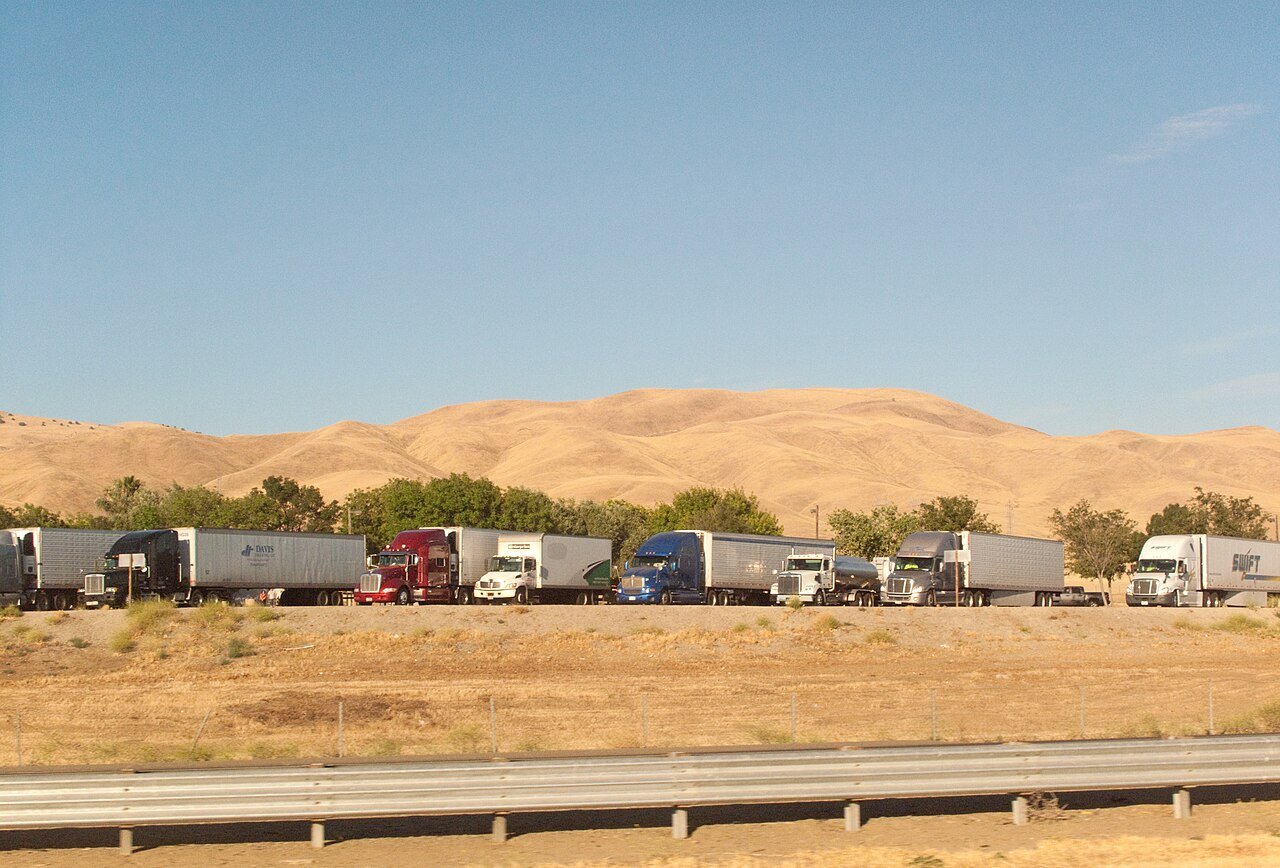
Photo: Janusz Sobolewski, CC BY 2.0, via Wikimedia Commons.
Know a CDL-A driver ready for a steadier seat this winter? Send them our way: Refer a driver.
Need CDL-A Drivers? We Recruit Them for You.
CDL Transportation Group finds, qualifies, and delivers CDL-A OTR company drivers all the way to your orientation. No retainers, no setup fees, and no ad spend on you — you pay $2,000 per seated driver, split into two $1,000 payments, backed by a replacement guarantee.
Tell us how many drivers you need →
CDL Transportation Group | CDL-A OTR Driver Recruiting