Every driver you seat brings his or her history into your trucks, your CSA scores and your next insurance renewal. Most fleets set truck driver hiring criteria by habit ("two years experience, clean MVR") without asking which parts of a record actually predict a crash. Research from the American Transportation Research Institute gives you a better way to decide, and it lets you stay strict where it matters and flexible where it does not.
What the crash data actually shows
ATRI's 2022 Crash Predictor update analyzed more than 580,000 truck driver records and found over 25 violations and convictions that raise the odds of a future crash. Five of them more than doubled the likelihood. According to the full report, the strongest predictors were:
- A failure to yield right-of-way violation: 141% higher likelihood of a future crash
- A failure to use or improper signal conviction: 116%
- A past crash: 113%
- A reckless driving violation: 104%
- A failure to obey traffic sign conviction: 85%
Lane discipline shows up again and again. In the same table, a failure to keep in proper lane conviction raised crash likelihood 78%, and an improper or erratic lane change conviction 77%. Further down the list, a false or no log book violation came in at 49%, an hours-of-service violation at 47%, a following-too-close violation at 44% and any out-of-service violation at 29%. Any moving violation raised the odds 43%, and any conviction 46%.
The takeaway for your hiring criteria: not every mark on a record carries the same weight. A driver with a single minor speeding ticket and a driver with a failure-to-yield violation plus a lane-change conviction are not the same risk, even if a simple "points" rule treats them alike.
Turn the research into a tiered screening matrix
Instead of a pass/fail rule, build a three-tier matrix your recruiters can apply in minutes:
- Automatic decline: anything that disqualifies a driver under the regulations, a current Clearinghouse prohibited status, and recent reckless driving or failure-to-yield events. These are the behaviors ATRI ties to the biggest jumps in risk.
- Safety review required: a preventable crash, lane-related convictions, an HOS or log falsification violation, or more than one moving violation in your lookback window. These go to your safety manager, who talks to the driver before any offer.
- Standard approval: clean records or a single older minor violation with nothing else behind it.
Write the exact lookback periods into the matrix (for example three years for moving violations, five for crashes) so every recruiter makes the same call. Consistency protects you twice: it keeps quality steady, and it gives you a documented, objective reason for every decline.
Use the right data sources, in the right order
Federal rules already require two checks. Under 49 CFR 391.23, you must pull a motor vehicle record covering the prior three years from each state where the driver held a license, and investigate the driver's safety performance history with DOT-regulated employers over the preceding three years, both within 30 days of the start of employment.
The FMCSA Pre-Employment Screening Program adds roadside data an MVR can miss. A PSP report shows five years of crash history and three years of roadside inspections, and FMCSA says carriers that use PSP to screen new hires lower their crash rate by 8% and their driver out-of-service rate by 17% on average compared with carriers that do not. That matters because many of ATRI's top predictors are violations written at roadside, not only convictions that land on a state record.
A practical order that keeps your pipeline moving: phone screen, then PSP and MVR the same day the driver applies, then employment verification while the driver books orientation. Checking records early means your recruiters stop investing hours in candidates who will never clear safety review.
Know what a bad hire does to your insurance line
Insurance is where loose hiring criteria show up on your P&L. ATRI's latest operational cost data, reported by FleetOwner, puts liability and cargo premiums at about $0.11 per mile in 2025, up 3.9%, with the Northeast highest at $0.12. The same report notes the commercial auto insurance segment has been unprofitable in all but one of the last 10 years, partly because of rising crash costs and litigation. Underwriters respond by looking hard at who you put behind the wheel.
Here is a simple worked example using assumed numbers for illustration only. Assume each truck runs 110,000 miles a year. At $0.11 per mile, that is roughly $12,100 in premium per truck per year. For a 20-truck fleet, that is about $242,000. Assume your renewal rises 10% because of crash frequency tied to a few high-risk hires: that is roughly $24,200 more per year, before any deductible, out-of-service time or claim cost. Plug in your own miles and your own quote; the point is that a handful of risky seats can cost more than the recruiting effort it takes to find safer drivers.
Talk to your insurer before you change criteria
Many policies spell out minimum driver standards such as age, years of verifiable experience and allowed violations. Before you loosen or tighten anything, ask your agent three questions:
- What are the written driver eligibility standards in our current policy, and which ones are hard rules versus case-by-case?
- Will the underwriter approve drivers outside those standards individually if we document a safety review?
- Which violations do they weight most at renewal, and do they match what our matrix flags?
Then line up your matrix with the answers. Hiring a driver your policy excludes can leave you exposed on a claim, which no open seat is worth.
Do not let strict criteria shrink your pool more than necessary
Tight standards and a full fleet can coexist if you are precise. Three habits help:
- Explain your criteria in the job ad. A short line such as "no preventable crashes in three years" filters out poor fits before your recruiters spend time on them.
- Judge patterns, not single events. ATRI's data shows the strongest risk comes from specific behaviors. One old minor ticket on an otherwise clean five-year PSP is not the same as a pattern of lane and signal convictions.
- Re-check after hire. Use your annual review and Clearinghouse queries to confirm the driver you approved is still the driver you have.
Key takeaways
- ATRI found more than 25 violations and convictions that raise future crash risk; failure to yield, improper signaling, a past crash and reckless driving each more than double it.
- Replace a single points rule with a three-tier matrix: automatic decline, safety review and standard approval.
- Pull PSP alongside the MVR required by 49 CFR 391.23; PSP surfaces roadside violations an MVR may not show.
- Insurance premiums average about $0.11 per mile, so a few risky hires can cost a small fleet tens of thousands a year at renewal (see the assumed example above).
- Confirm your criteria match your insurance policy before you approve exceptions.
When your team is short on time
Screening every applicant against a clear matrix, pulling records the same day and talking through safety history takes hours your recruiters may not have, especially when trucks are sitting. If your team cannot keep up with that volume while holding the line on safety, handing the front end of recruiting to a partner that qualifies drivers before they reach you can keep standards high without slowing your hiring.
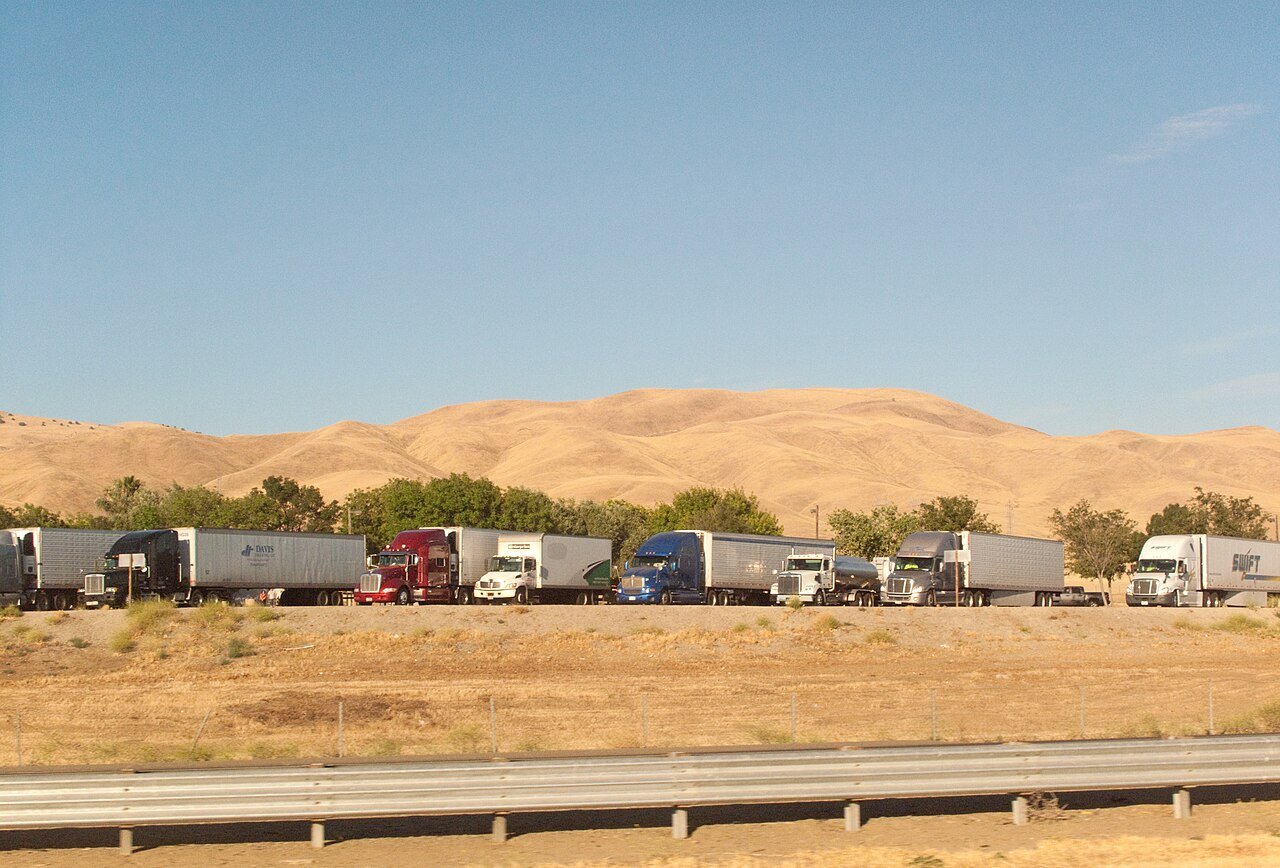
Photo: CBP Photography (Donna Burton), Public domain, via Wikimedia Commons.
Have a CDL-A driver with a clean record who's ready for a change? Introduce them to us: Refer a driver.
Need CDL-A Drivers? We Recruit Them for You.
CDL Transportation Group finds, qualifies, and delivers CDL-A OTR company drivers all the way to your orientation. No retainers, no setup fees, and no ad spend on you — you pay $2,000 per seated driver, split into two $1,000 payments, backed by a replacement guarantee.
Tell us how many drivers you need →
CDL Transportation Group | CDL-A OTR Driver Recruiting