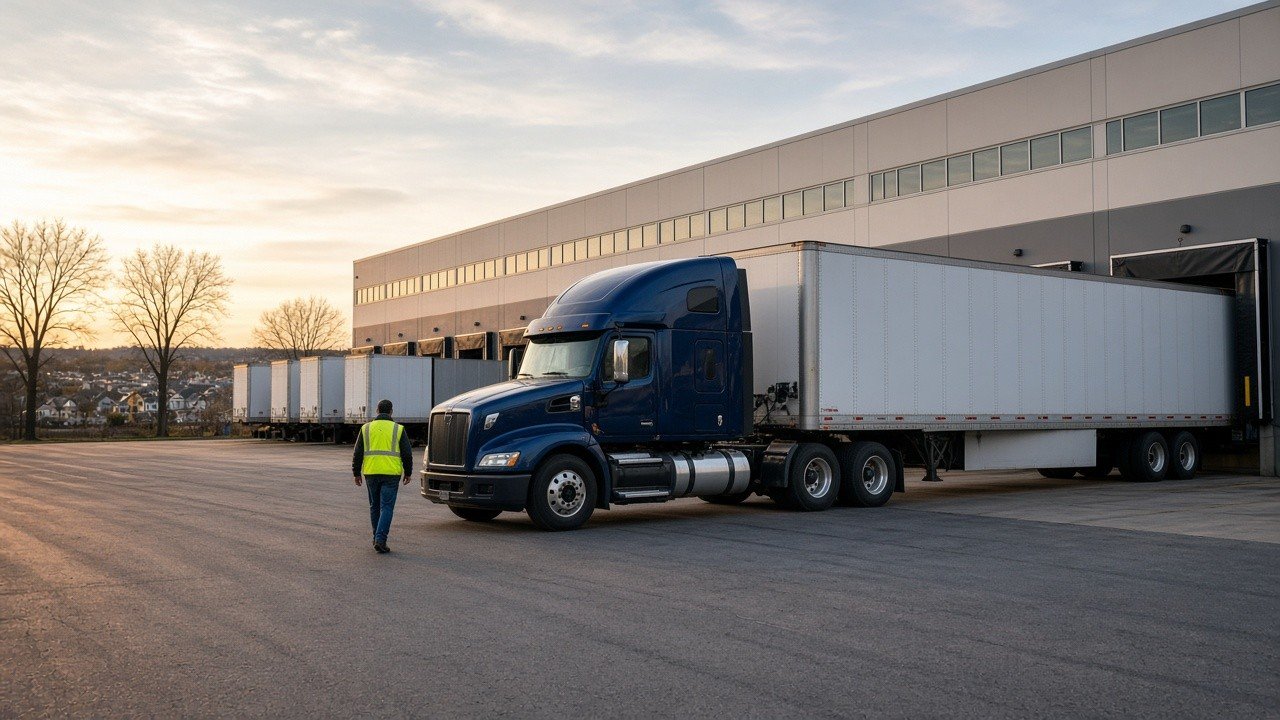
Private fleet truck driver jobs are CDL-A jobs where you haul a company's own freight (for example a grocer, retailer, beverage maker or manufacturer) instead of hauling for paying customers like a for-hire carrier does. As of November 2026, the latest National Private Truck Council survey puts average pay for private fleet drivers in heavy-duty equipment at $91,081 a year, with benefits on top. The trade-off: these jobs are harder to land, often run on tight store or plant schedules, and many involve touch freight or dedicated routes.
Searches for driving jobs at big retail, grocery and beverage companies have been climbing on Google Trends this month. If you're an experienced CDL-A driver weighing a private fleet against your current carrier, here's what actually changes and how to judge an offer.
What is a private fleet in trucking?
FMCSA defines a private motor carrier as a company that hauls its own cargo, usually as part of a business that produces, sells, uses or buys that cargo. A private carrier needs a USDOT number but does not need operating authority (an MC number). A for-hire carrier, by contrast, moves other people's freight for a fee and generally does need interstate operating authority.
For you as a driver, the rules on the road are the same. Hours of service, your medical card, the Drug and Alcohol Clearinghouse, ELDs and roadside inspections all apply whether the trailer belongs to a store chain or a carrier. What changes is who your customer is, how freight flows and how you get paid.
How much do private fleet CDL-A drivers make?
The NPTC 2025 Benchmarking Survey (data from 104 member companies) reports average compensation of $91,081 for private fleet drivers in heavy-duty equipment, and says benefits add about a third more on top of that cost. For comparison, the Bureau of Labor Statistics lists a median annual wage of $58,640 for all heavy and tractor-trailer truck drivers as of May 2025.
Keep two things in mind. The NPTC figure is an average from member fleets, not a promise for any single job. And a high yearly number can come from long weeks. Ask how pay is built: hourly, per mile, per stop, per load, or a mix, plus any incentive pay. The same survey found 74% of fleets offer incentive programs, mostly tied to safety, and about 45% offer sign-on bonuses.
Private fleet vs for-hire carrier: what's different day to day?
- Freight: You haul the same company's product, often from a distribution center to its own stores or plants. Lanes repeat, so routes get familiar fast.
- Home time: Many private fleet jobs are local, regional or dedicated, with daily or weekly home time. Some still run OTR. Ask, don't assume.
- Touch freight: Store delivery jobs can mean pallet jacks, rolling cages, multiple stops and unloading yourself. That work is often paid per stop or per case, but it is physical.
- Tenure: NPTC reports private fleet drivers stay an average of 8.7 years with one company, and annual turnover of 18.4%. That's a sign drivers tend to stay once they're in.
- Hiring bar: Fleets in the survey screened about 15 candidates per hire. Expect stricter requirements on years of experience, MVR, CSA history and sometimes endorsements.
Are private fleet drivers paid overtime?
Often not, even on hourly pay. The Department of Labor's Fact Sheet #19 explains that the Motor Carrier Exemption in section 13(b)(1) of the Fair Labor Standards Act can exempt drivers who work for a motor carrier or a motor private carrier from federal overtime when they drive qualifying vehicles in interstate commerce. Some companies pay overtime anyway, and state law may differ. Ask the recruiter in writing whether hours over 40 are paid at time and a half. This is general information, so ask a qualified professional about your own situation.
Worked example: comparing two offers (hypothetical)
These numbers are made up to show the math, not real offers.
- Offer A, for-hire OTR dry van: 2,400 paid miles a week x $0.62 CPM = $1,488 a week. Over 48 working weeks: $71,424. Home every other weekend.
- Offer B, private fleet regional: $31 an hour x 55 hours = $1,705 a week, no overtime premium. Over 50 working weeks: $85,250. Home 2-3 nights a week, with touch freight at 3 stores a day.
Offer B pays more on paper. But divide by hours: if Offer A averages 60 on-duty hours, it works out to about $24.80 an hour versus $31. Then add the cost of benefits, the unloading, and whether those 55 hours are guaranteed in slow weeks. Run your real numbers through our driver job match before you decide.
How do you get hired at a private fleet?
- Clean up your record first. Pull your MVR, check your FMCSA data and your Clearinghouse status. Private fleets are picky about tickets and preventable accidents.
- Match the work. If the job is store delivery, say so if you've done multi-stop, liftgate, or pallet work. If it's a tanker or hazmat fleet, have the endorsements before you apply.
- Read the whole offer. Use our guide on how to read a CDL-A job offer to check base pay, guaranteed hours, bonuses and home time.
- Ask the right questions. Our list of questions to ask a recruiter works for private fleets too.
Common mistakes when chasing private fleet jobs
- Comparing yearly pay only. A bigger annual number can hide 60-hour weeks with no overtime premium. Compare pay per hour worked.
- Ignoring touch freight. If you have back or knee problems, a store delivery route can wear you down fast.
- Assuming "home daily" means short days. Local and regional runs can still use most of your 14-hour window. See our post on local CDL-A jobs and home-daily pay.
- Quitting before the offer is final. Private fleet hiring can take longer. Don't leave your current seat until you have a written start date.
- Applying everywhere with a weak record. If you're a year away from a ticket dropping off, use that time to build a clean run.
Is a private fleet job right for you?
It tends to fit drivers who want steady lanes, predictable home time and a long-term seat, and who don't mind a structured schedule or some physical work. If you prefer variety, long OTR runs or the freedom of running hard by the mile, a for-hire carrier may still suit you better. Browse current openings on our CDL-A jobs page or see more tools on the driver hub.
Frequently asked questions
Do private fleet drivers follow the same hours-of-service rules?
Yes. A private carrier driving CMVs in interstate commerce follows the same FMCSA safety rules, including hours of service, ELDs and drug and alcohol testing.
Do private fleets hire drivers with less than a year of experience?
Some do, but many ask for more. Fleets in the NPTC survey screened about 15 candidates per hire, so experience and a clean record help a lot.
Is private fleet pay always hourly?
No. Fleets use hourly, mileage, per-stop, per-load or mixed pay. Ask for the full breakdown in writing.
Do private fleet jobs offer sign-on bonuses?
About 45% of fleets in the NPTC 2025 survey offered them. Check the payout schedule and any clawback terms before you sign.
Know a CDL-A driver who'd be a good fit for a steady fleet seat? Refer them to us and earn $500. Refer a driver here.
Free for CDL-A drivers: get our Job Offer Checklist — 23 questions to ask any carrier about pay, miles and home time before you sign. Download the free checklist →
Know a CDL-A driver looking for work? Refer them and earn $500 when they complete 30 days on the road. Refer a driver →
CDL Transportation Group | CDL-A OTR Driver Recruiting