Most carriers learn why a driver quit after the truck is already parked: a two-line text, a returned set of keys, or no call at all. By then the lesson is worth nothing, because the seat is empty and your recruiter is starting over. Truck driver retention improves when you ask the question earlier, while the driver is still on your payroll. That is what a stay interview does, and it costs you a few conversations instead of a seat.
What a stay interview is (and what it is not)
A stay interview is a short, structured one-on-one conversation with a current driver about why they stay and what could make them leave. It is not a performance review, a complaint line or a survey that disappears into an inbox. Think of it as the mirror image of an exit interview: instead of autopsy findings, you get a warning while there is still time to act.
Exit interviews have a built-in weakness for drivers. Many leavers never agree to one, and some simply stop answering the phone. If your only source of feedback is departures, you are collecting data from the drivers you already lost.
The five questions worth asking
HR trainer Richard Finnegan, as reported by J.J. Keller, suggests a simple set of five questions for stay interviews. Adapted for an over-the-road fleet, they look like this:
- What do you look forward to on the road each week? This tells you what to protect: a favorite lane, a dispatcher, a predictable home day.
- What are you learning here? Newer drivers want to feel they are getting better, and veterans want to feel their experience counts.
- Why do you stay? Let them answer in their own words. The answer is rarely what you guessed.
- When did you last think about leaving, and what prompted it? This is the most valuable question. It points to the specific breakdown, such as a short settlement, a missed home-time promise or a truck that kept going into the shop.
- What could we do to make your job better? Ask for one concrete change, not a wish list.
Notice that none of these questions mention pay directly. Drivers will raise it if it matters, and you will learn whether the real issue is the rate or the predictability of the check.
Who should run the conversation
The same J.J. Keller report notes that the interview can be led by a direct supervisor, an HR manager or an outside third party, and that a manager may not get honest answers if the problem involves that manager. For a trucking company, that matters. If a driver's frustration is with dispatch, asking the dispatcher "how is everything going?" will get you "fine."
A practical split for a small or mid-size fleet:
- Have the owner, safety director or operations manager run the interview, not the person who plans the driver's loads.
- Do it by phone while the driver is stopped, or in person during a shop visit. Ten to fifteen minutes is enough.
- Schedule it. A random "got a minute?" call from an unknown number will not produce candid answers.
When to hold them: do not wait for the one-year mark
Many stay-interview guides focus on long-tenured drivers, but your biggest risk sits earlier. Industry material commonly says a large share of driver turnover happens in the first 90 days, and your own records will confirm it: pull the hire dates of the last 20 drivers who left and count how many lasted under three months. If most of them did, start stay conversations earlier than you think you need to.
A workable cadence for a CDL-A over-the-road fleet:
- Day 14: a check-in on the first two weeks. Is the truck what was promised? Did the first settlement match the pay you quoted?
- Day 45: the first real stay interview, using the five questions above.
- Day 90: a follow-up on what you changed since day 45.
- Every 6 months after that: a repeat with each driver, or more often with drivers in key lanes or on your best accounts.
What to do with the answers
The conversation is the easy half. The point of a stay interview is the follow-through, and drivers can tell very quickly whether anyone read their answers. After each conversation:
- Write down the one thing the driver would change, and the date you promised an answer.
- Fix what you can within a week. A repair order moved to the top of the shop's list or a corrected deduction is a cheap, visible win.
- Explain what you cannot fix. "We can't change the lane, but we can guarantee your home day" is better than silence.
- Track patterns. If three of ten drivers name the same dispatcher, the same terminal or the same type of delay, you have a management problem to solve, not ten individual ones.
- Close the loop. Tell the driver what changed because of what they said. That one sentence is what makes the next interview honest.
Be careful about one thing: never promise what you cannot deliver. A broken promise made in a stay interview does more damage than skipping the interview.
A worked example: why a few calls pay for themselves
These numbers are illustrative assumptions, not benchmarks. Say your fleet has 20 drivers, and the owner spends about 15 minutes per interview, twice a year, for 40 conversations or roughly 10 hours in total. Suppose those conversations lead you to keep just one driver you would otherwise have lost. If your own cost to replace a driver is $8,000 once you add up recruiting spend, orientation, lost miles on an empty truck and the new hire's slow ramp-up (use your own figure), then one saved driver covers the owner's time many times over. Run it with your actual numbers: the logic holds even if you keep a single driver a year.
For scale, the ATA has long tracked turnover at large truckload carriers. In late 2019, it reported an annualized rate of 96% for large fleets and 73% for small ones, according to Heavy Duty Trucking. Those figures are several years old and your own number is what matters, but they show how normal churn has become and why an inexpensive habit that cuts even a few exits is worth running.
Common mistakes to avoid
- Making it a form. A questionnaire driven by checkboxes yields polite answers. Keep it conversational.
- Interviewing only your happy drivers. Include the quiet ones and the ones who recently had a service failure or a pay dispute.
- Using the answers against the driver. If a driver admits they thought about leaving and you later give them worse loads, you will never hear the truth again.
- Doing it once. One round of interviews gives you a snapshot. A repeating schedule gives you a trend.
Key takeaways
- A stay interview asks current drivers why they stay and what nearly made them leave. Exit interviews arrive too late.
- Use five open questions and have someone other than the driver's dispatcher run the conversation.
- Start at day 14 and day 45, not at the one-year mark, because early tenure is when most drivers walk.
- Record one action item per driver, give a date, and report back on what changed.
- Spot patterns across drivers: repeated mentions of the same issue are your cheapest source of retention fixes.
When your team does not have time for all of this
Retention work like this takes management hours, and so does keeping your trucks seated while it pays off. If your recruiting and onboarding are already stretched thin, it can help to hand off the sourcing and qualifying side so your people can spend their time on the drivers they already have. Whatever you decide, start with five stay interviews this week. You may be surprised by how much your drivers have been willing to tell you if somebody asked.
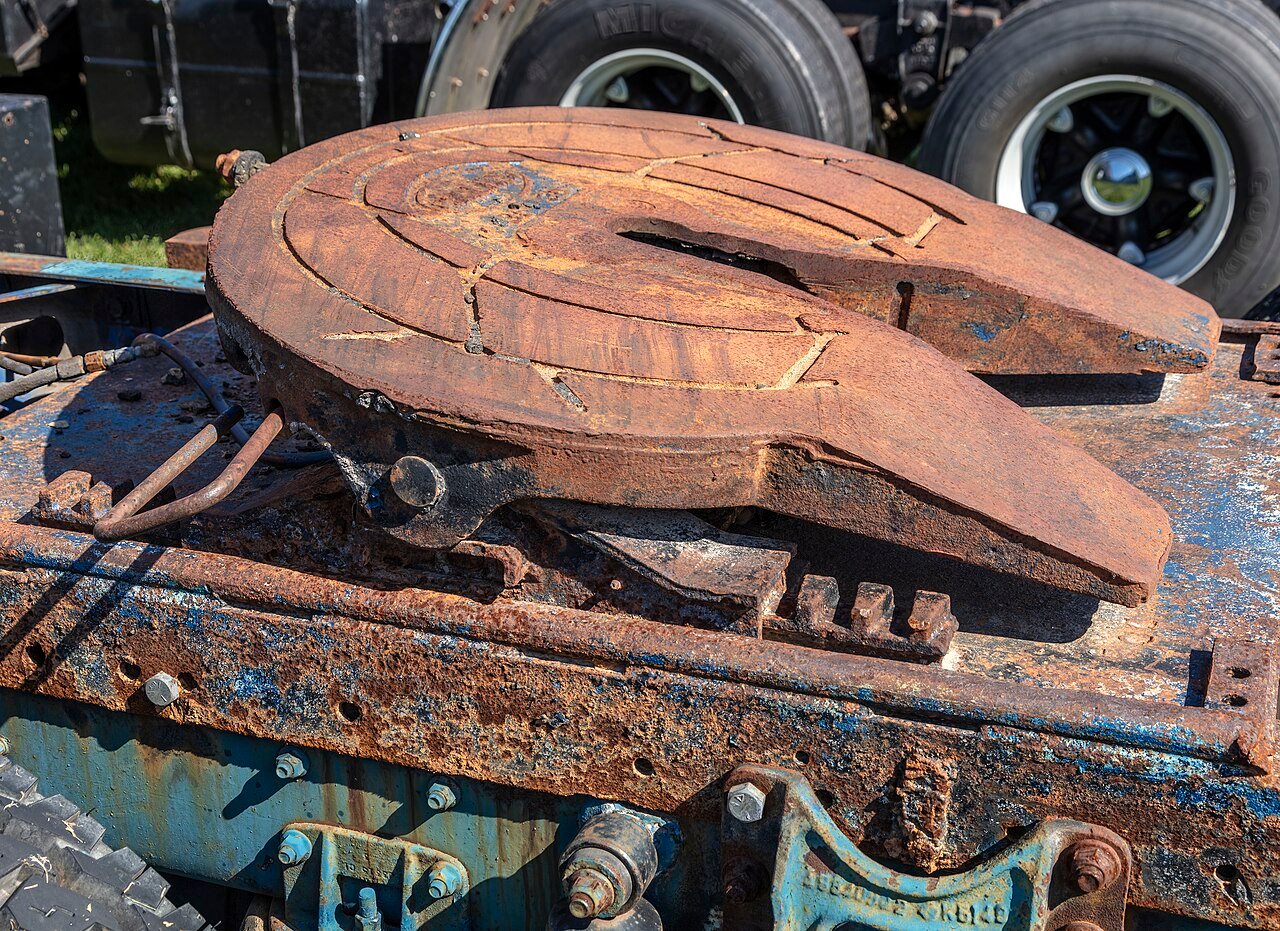
Photo: Shashidhara halady, CC BY-SA 4.0, via Wikimedia Commons.
Need CDL-A Drivers? We Recruit Them for You.
CDL Transportation Group finds, qualifies, and delivers CDL-A OTR company drivers all the way to your orientation. No retainers, no setup fees, and no ad spend on you — you pay $2,000 per seated driver, split into two $1,000 payments, backed by a replacement guarantee.
Tell us how many drivers you need →
CDL Transportation Group | CDL-A OTR Driver Recruiting