The truck driver hiring market in fall 2026 looks nothing like it did a year ago. Spot rates are up more than 30% year over year, yet freight volumes are flat to down. That combination tells you the market tightened because trucks and drivers left, not because shippers suddenly have more freight. For a fleet owner, that changes the math on every empty seat and every recruiting dollar you spend between now and next spring.
Here is what the latest data actually says, and what it means for how you hire CDL-A drivers this quarter.
The market flipped on supply, not demand
The clearest signal comes from the American Trucking Associations. Its For-Hire Truck Tonnage Index fell 0.5% in August to 112.7, was down 1.6% from August 2025, and sits 4.3% below its March peak. ATA chief economist Bob Costello put it plainly: the market has flipped this year because of reduced capacity, not robust demand.
Rates confirm the story. According to DAT's August report, the national dry van spot rate averaged $2.19 per mile, down 20 cents from July but still more than 30% above August 2025. Van contract rates averaged $2.41 per mile. DAT attributed most of the August pullback to normal seasonality and freight that shippers pulled forward earlier in the summer.
For carriers, the takeaway is simple: each loaded mile is worth more than it was a year ago, while the pool of available drivers is shrinking. That raises the cost of an unseated truck and raises the competition for every qualified applicant.
Why the driver pool is getting smaller
Several forces are pulling drivers out of the market at the same time:
- Non-domiciled CDL restrictions. FMCSA's final rule on non-domiciled CDLs took effect in March 2026 and narrows eligibility to a few visa categories. A J.B. Hunt analysis cites the agency's estimate that about 97% of roughly 200,000 non-domiciled CDL holders won't meet the new requirements, with exits spread over the next one to three years.
- English-language proficiency enforcement. The same analysis counts more than 19,000 ELP violations and over 5,000 out-of-service orders between June and September 2025, and estimates annualized removals at about 20,000 drivers.
- Fewer new entrants. The J.B. Hunt piece notes nearly 3,000 of 16,000 entry-level training providers were removed from FMCSA's registry by December 2025, with another 4,500 put on notice. Fewer schools means fewer new CDL holders coming through the pipeline.
The National Transportation Institute, which tracks driver wages, adds that drivers continue to age and training remains below historical levels, so fewer new drivers are replacing the experienced ones who leave. The practical result: the experienced, clean-record OTR driver you want is being recruited by more carriers than last year, and some of the applicants you used to see simply aren't eligible anymore.
Driver pay is moving, starting with OTR
NTI reports that after several flat years, fleets have started raising starting pay, mileage rates, transition bonuses and other incentives, mostly for over-the-road positions, and in some cases only in specific regions where competition for drivers is intense. NTI also notes that freight demand hasn't strengthened enough yet to trigger broad, industry-wide raises. It expects further increases for specialized roles (hazmat, tanker, teams), sign-on bonuses and student driver positions.
What this means for you: if your pay package hasn't been benchmarked since 2024, assume a competitor in your hiring area has already moved. You don't have to match the top of the market, but you need to know where you stand before you spend money on ads.
What to do with your hiring plan this quarter
1. Re-price the cost of an empty seat. With van spot rates above $2 per mile, an idle truck costs more in lost revenue than it did a year ago. As an illustration, assume one of your trucks runs 2,200 loaded miles per week at $2.20 per mile linehaul. That's about $4,840 in weekly revenue that stops the moment the seat is empty, while the truck payment, insurance and permits keep coming. Plug in your own miles and rates; the point is that a faster hire is now worth more money.
2. Audit your applicant funnel for eligibility. Screen for CDL domicile status, English proficiency and Clearinghouse status on the first call, not at orientation. Every applicant who fails at orientation costs you travel, a hotel night, recruiter time and a week of an empty truck. (See our 2026 driver hiring compliance checklist for the details.)
3. Benchmark pay before you raise it. Pull the job ads from the five or ten carriers hiring in your area and compare cents per mile, weekly minimums, home time and detention pay. Drivers compare the whole package. A guaranteed weekly minimum or better home time can sometimes compete with a higher CPM at lower cost.
4. Protect the drivers you already have. In a tight market, your best recruiting move is not losing people. Competitors raising OTR pay will be advertising to your drivers too. Check in with your top performers, fix recurring dispatch and equipment complaints, and make sure your first 90 days are solid. Our 90-day retention plan walks through that step by step.
5. Hire ahead of the curve, not behind it. The supply-side pressures above are expected to play out over the next one to three years, not the next few weeks. If you plan to add trucks or replace drivers in the first half of 2027, start building your pipeline now instead of waiting until the seats are empty.
Mistakes to avoid in a tightening market
- Panic-raising pay across the board. NTI's data shows raises are targeted by role and region. Raise where you're losing candidates, not everywhere at once.
- Loosening qualification standards. A driver who fails a roadside ELP check or has a problem Clearinghouse record costs far more than a week of an empty seat.
- Slow follow-up. When good drivers have more options, the carrier that calls back first usually wins. Leads that sit overnight go to someone else.
- Ignoring the calendar. Holiday season and year-end are hard months to hire. Orientations scheduled for mid-December tend to lose people.
Key takeaways
- The 2026 market tightened because capacity left, not because freight grew: ATA tonnage is down 1.6% year over year while DAT van spot rates are up more than 30%.
- Regulatory changes (non-domiciled CDL rule, ELP enforcement, fewer training providers) are shrinking the eligible driver pool over the next one to three years.
- OTR driver pay is rising in targeted ways; benchmark your package against local competitors before changing it.
- Higher rates make every empty seat more expensive, so speed-to-hire and early eligibility screening matter more than ever.
- Retaining current drivers is the cheapest capacity you can buy.
When your team can't keep up
Running targeted ads, calling leads back within minutes, screening for eligibility, and coordinating orientation travel is a full-time job, and in a tight market it only gets harder. If your team is already stretched keeping trucks moving, outsourcing the recruiting pipeline lets your people focus on dispatch and retention while someone else keeps qualified drivers coming to orientation.
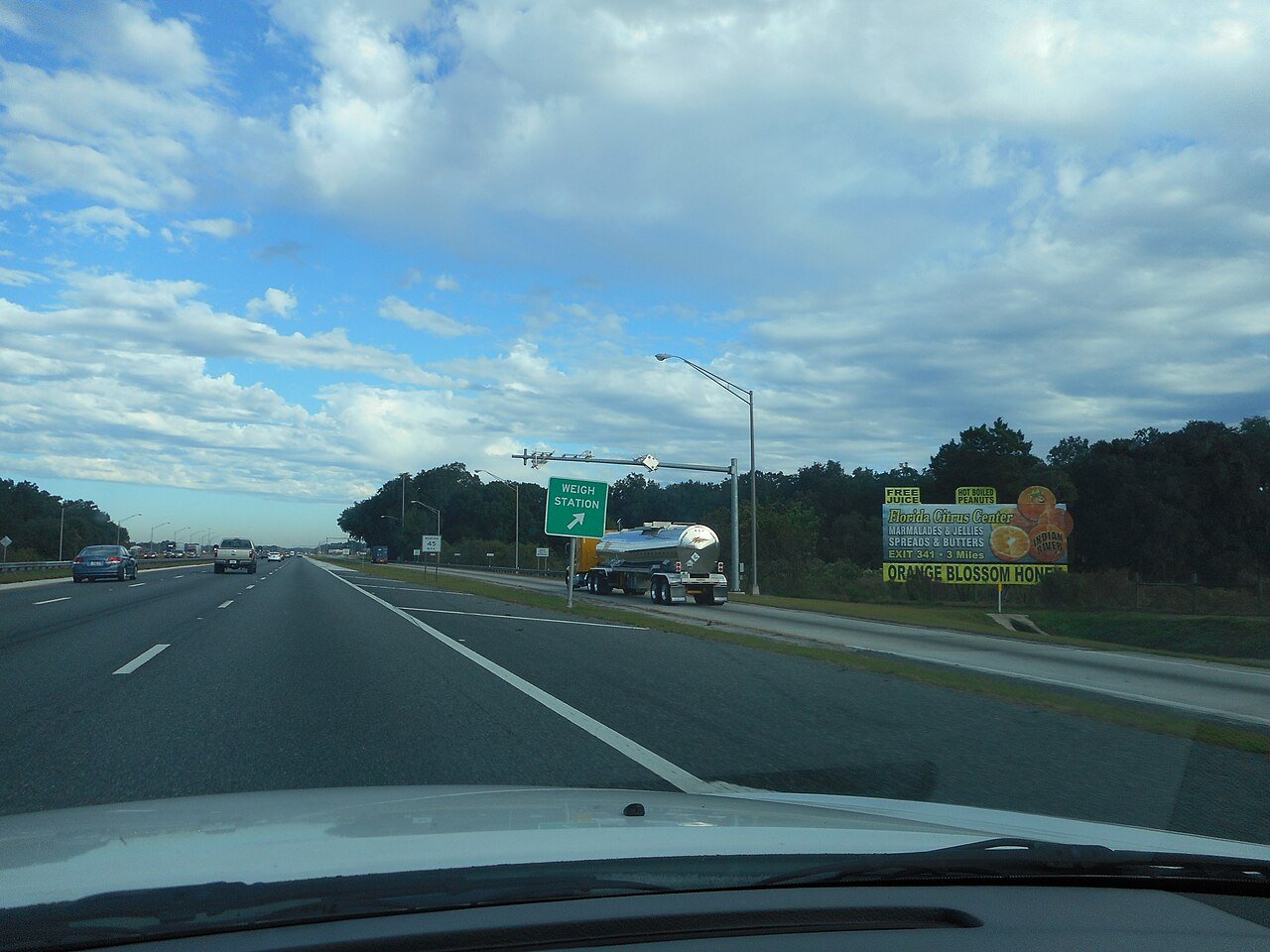
Photo: prayitnophotography, CC BY 2.0, via Wikimedia Commons.
Need CDL-A Drivers? We Recruit Them for You.
CDL Transportation Group finds, qualifies, and delivers CDL-A OTR company drivers all the way to your orientation. No retainers, no setup fees, and no ad spend on you — you pay $2,000 per seated driver, split into two $1,000 payments, backed by a replacement guarantee.
Tell us how many drivers you need →
CDL Transportation Group | CDL-A OTR Driver Recruiting