Truck driver detention rarely shows up as its own line on your P&L, yet it quietly drains revenue, burns hours of service and pushes good drivers out the door. Every unbilled hour at a dock is money you never see, and every driver who spends the weekend stuck at a receiver is a driver who starts browsing job ads. Here is what the latest data says detention costs a carrier, and what you can do about it this quarter.
Dwell time is going the wrong way
According to ATRI's Operational Costs of Trucking: 2026 Update, average dwell time per stop rose to 1 hour 49 minutes in 2025, up from 1 hour 38 minutes in 2024. That is only 11 minutes short of the two-hour mark the industry uses to define detention. In flatbed and refrigerated operations, where live loading is common, the average stop already runs past two hours.
ATRI's dedicated study, Costs and Consequences of Truck Driver Detention, found drivers were detained at 39.3% of stops in 2023, and that spot-market freight was detained more often than contract freight (42.5% vs. 33.8% of stops). ATRI's 2026 update carries those findings forward, adjusting for inflation and longer waits: truckload carriers lost about $5,392 per truck to detention in 2025, and their drivers lost about $962 in income even after detention pay.
The turnover link most fleets underestimate
Detention is not only an operations problem. It is a retention problem. In ATRI's driver survey, 34.6% of drivers said they had left a previous carrier because of excessive or poorly paid detention. Among refrigerated drivers that figure reached 45.2%, and even 22% of drivers with five years or less behind the wheel had already quit a job over it.
The 2026 cost update quantifies the pattern across fleets: on average, each additional 30 minutes of dwell time per stop was associated with a 5.4 percentage point higher turnover rate. For comparison, each extra $5,000 in average annual driver pay was associated with a 2.9 point improvement. In other words, cutting wait time at your worst customers may move turnover as much as a meaningful raise. ATRI is careful to note the fleet-to-fleet variation is large, so treat this as a direction, not a guarantee.
Drivers also tell ATRI how much detention they will tolerate. Truckload drivers said they would look for another job if roughly 39.6% of their stops involved detention, versus a sector average of 32.6% at the time. That is not much headroom.
A worked example for a 20-truck fleet
Use this as a template and swap in your own numbers. The assumptions are illustrative, not industry benchmarks.
- Direct cost: if your trucks match ATRI's 2025 truckload average of $5,392 in unrecovered detention cost per truck, a 20-truck fleet absorbs about $107,840 a year.
- Turnover effect: assume your average dwell time is 30 minutes worse than a comparable fleet. Using ATRI's 5.4 point relationship, that gap could mean about one extra driver (20 x 5.4% = 1.08) leaving each year.
- Replacement cost: assume each departure costs you $8,000 once you add recruiting spend, orientation pay and days the truck sits unseated. Use your own figure here; it varies widely by fleet.
Under those assumptions, detention is a six-figure problem before you count the loads you could not cover. Run the same math with your ELD and TMS data and you will know exactly how much a dwell-time fix is worth.
Bill for it, and actually collect
Most carriers have a detention policy on paper. Far fewer enforce it. ATRI found 94.5% of fleets charge detention fees, but truckload carriers did not bill a median 21% of incidents, and a median 45% of billed truckload detention went unpaid. Meanwhile, carriers raised detention rates by a median of just 3% from 2018 to 2023 while their hourly costs climbed 21.4%.
- Pull dwell time from ELD geofences automatically instead of relying on drivers to call it in while they are already behind schedule.
- Write detention terms into every rate confirmation and contract: free time, hourly rate, and the documentation you will send.
- Review your rate against your current cost per hour. If it has not changed in five years, it is too low.
- Track unbilled and unpaid detention as a monthly KPI by customer and by broker.
Pay drivers fairly for the wait
ATRI reports that 96.9% of surveyed carriers offer driver detention pay, but truckload drivers lost about $5.14 per hour of detention compared with what they would have earned driving ($23 median detention pay vs. about $28.14 average hourly pay). Drivers notice that gap on every settlement.
- Start detention pay at a clear, short threshold and put it in writing in your offer letter.
- Pay it automatically from ELD data. Making drivers fight for it erases the goodwill.
- Show detention as its own line on the settlement so the driver can see it.
Fix the freight, not just the paperwork
The carriers ATRI surveyed pointed to a handful of tactics that actually reduce detention:
- Shift to drop-and-hook wherever volume justifies a trailer pool. No-touch freight is far less exposed to waiting.
- Score your customers. Rank facilities by average dwell time, then renegotiate, reprice or walk away from the worst. Surveyed truckload and reefer carriers said detention would need to reach a median 50% of stops before they would refuse service, which is likely far past the point your drivers start leaving.
- Communicate early. Dispatch should flag delays to the customer in real time and tell the driver what to expect. ATRI notes many shippers do not realize how much detention happens at their docks until shown the data.
- Protect the driver's clock. ATRI found 52% of truckload drivers ran out of on-duty hours at a customer facility at least once in 2023, and 57.8% were late to or canceled a later appointment because of detention. Plan loads with buffer at known slow facilities.
- Watch safety. ATRI's GPS analysis found detained trucks drove 14.6% faster on average. Detention is a CSA and crash-risk issue, not just a cost issue.
The data story is also getting sharper. FMCSA's driver detention research project is collecting 12 months of ELD, telematics and dispatch data from up to 80 carriers and 2,500 drivers to measure how often detention happens and how long it lasts. An earlier FMCSA study found medium-sized carriers were detained about twice as often as large carriers (19% vs. 9% of stops), so fleets without mega-carrier leverage have every reason to track it closely.
Why it matters for hiring right now
In ATRI's Critical Issues in the Trucking Industry 2026 survey, motor carriers ranked the driver shortage third and driver retention sixth among their top concerns, while drivers ranked detention seventh among theirs. When capacity tightens, the fleets that waste the least of their drivers' time will have the easiest time keeping seats full. Mention your detention pay and drop-and-hook freight in job ads; experienced drivers know what those words are worth.
Key takeaways
- Average dwell time hit 1 hour 49 minutes per stop in 2025, and ATRI estimates $5,392 in unrecovered detention cost per truckload truck.
- Each extra 30 minutes of dwell time was associated with 5.4 points higher turnover, so detention is a retention lever.
- Bill every incident, collect what you bill and update a detention rate that has not kept pace with costs.
- Pay drivers automatically and visibly for detention, starting at a clear threshold.
- Score facilities by dwell time, push drop-and-hook and reprice or drop chronic offenders.
Keeping seats full while you fix the docks
Cutting detention takes months of customer conversations and data work, and in the meantime some drivers will still leave. If your team does not have the time to run dock negotiations and a full recruiting pipeline at once, handing off driver recruiting to a specialist can keep trucks moving while your operations staff focuses on the freight.
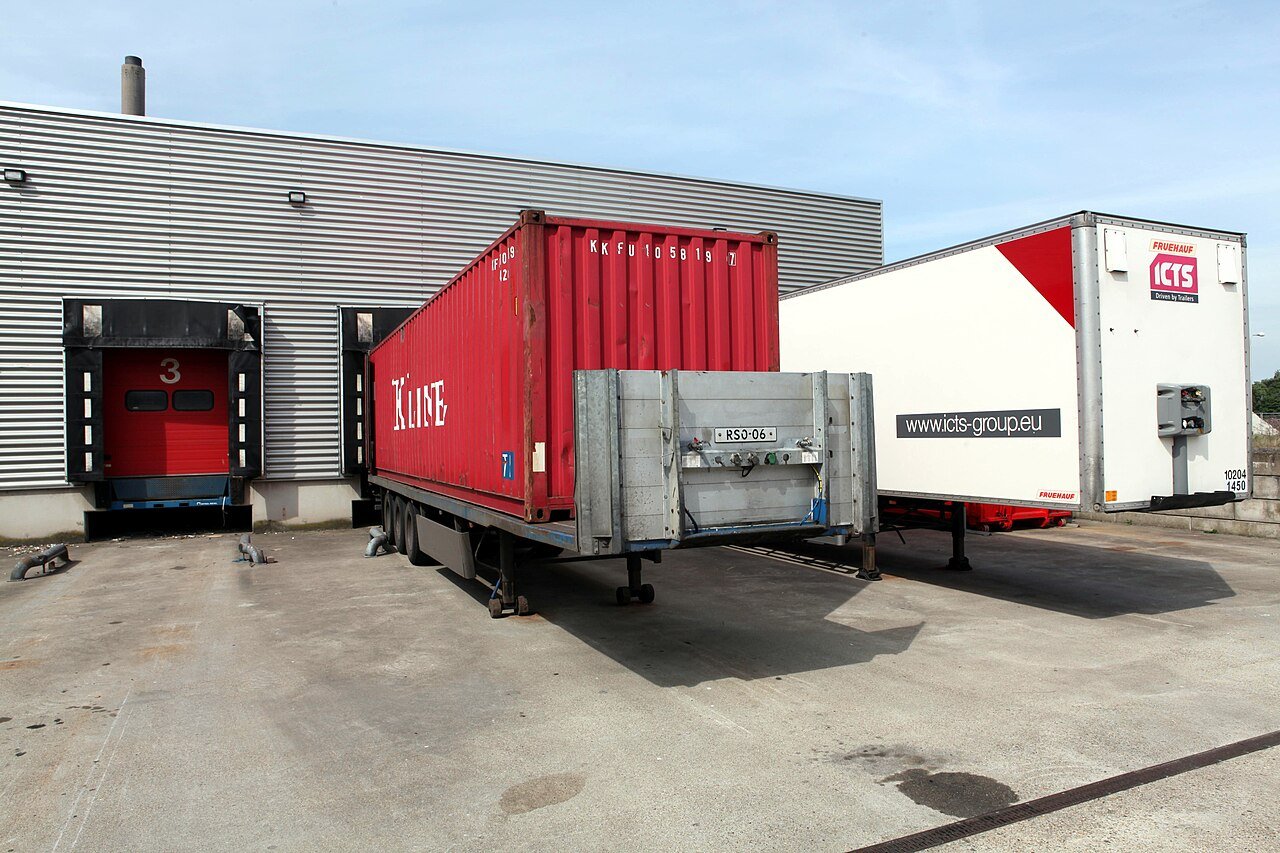
Photo: Joost J. Bakker, CC BY 2.0, via Wikimedia Commons.
Need CDL-A Drivers? We Recruit Them for You.
CDL Transportation Group finds, qualifies, and delivers CDL-A OTR company drivers all the way to your orientation. No retainers, no setup fees, and no ad spend on you — you pay $2,000 per seated driver, split into two $1,000 payments, backed by a replacement guarantee.
Tell us how many drivers you need →
CDL Transportation Group | CDL-A OTR Driver Recruiting