Hiring CDL school graduates is the fastest way for many fleets to widen a shrinking applicant pool, and also the fastest way to burn money if you treat a new graduate like an experienced hire. Since February 2022, anyone getting a first Class A or Class B CDL has had to complete Entry-Level Driver Training (ELDT) first. Here is what that rule does and does not guarantee, and how to build a program that turns graduates into drivers who stay.
What ELDT actually requires (and what it leaves to you)
Under 49 CFR Part 380, Subpart F, drivers applying for a first Class A or B CDL, or upgrading to one, must complete training from a provider listed on FMCSA's Training Provider Registry. That training has two parts: theory (knowledge instruction) and behind-the-wheel training, where the student actually controls the power unit on a range or public road. Observation time does not count. Both parts must be finished within one year of starting the first. Drivers who held a Class A or B CDL before February 7, 2022 are grandfathered, and some groups, including certain military personnel, are exempt.
The key point for a fleet owner: ELDT sets a floor for where a graduate's training came from. It says nothing about whether that person can back into your dock at night, handle a 10-hour shift in winter weather, or still be with you in six months. Treat the certificate as the start of your qualification process, not the end.
Know the economics before you open the door to new graduates
Turnover is the cost that decides whether entry-level hiring pays. According to FreightWaves' coverage of the National Academies study, ATA data show average annualized turnover of 92.7% at large truckload carriers and 77.6% at smaller truckload fleets between 1996 and early 2023. The same report notes that ATA's survey is self-selected, so treat those as directional, not exact. The same article also says ATA reports some carriers reject around 90% of applicants outright because they fail a basic prerequisite.
Here is a simple worked example. These are our assumptions, not industry statistics: you spend $3,500 to recruit, qualify, test and orient a new graduate, and a truck sits partly idle for two weeks during the transition. If that driver quits at week six, you have paid for the whole cycle and gotten six weeks of lower-than-average productivity. Cut early quits in half and run the math to see whether the savings cover a pay premium for the first 90 days. Run your own numbers with your real cost per hire.
Screen for fit, not just for a certificate
Before you hand a new graduate a truck, verify these items and write the results into the driver qualification file:
- Training provider: confirm the school appears on the Training Provider Registry and ask for the training certification.
- Standard checks: MVR, PSP report, a pre-employment Clearinghouse query and the drug test, exactly as for any hire.
- Ask for specifics: how many hours did the applicant drive, on what equipment, on a range or on public roads, manual or automatic?
- Know your insurer's rules: some policies set minimum experience requirements. Confirm what your underwriter allows before you recruit, not after.
- Ask about plans: set honest expectations about OTR life (time away, weekend runs, detention) so the first month holds no unpleasant surprises.
Build a structured first 90 days
A graduate has done the minimum to pass a test. Your job is to cover the gap between the test and a safe, confident driver.
- Pair with a trainer who wants the job. Pay trainers for it and choose them for patience, not just seniority. A bad trainer loses drivers faster than any pay problem.
- Set milestones. For example: week 1 pre-trips and logging, weeks 2 to 3 backing and city driving, week 4 first solo run with a check-in call after each load.
- Give them a lighter lane first. Familiar routes, predictable home time and a dispatcher who knows their experience level.
- Check in on a schedule. Calls at days 3, 14, 30, 60 and 90 catch problems while they are still fixable.
- Be upfront about pay. Show exactly what a typical week's settlement looks like, including deductions.
Consider a staged pay model
Pay is the obvious lever, but structure matters more than size. Many fleets use a stepped scale: a base rate through the first 90 days, then a defined raise at a set mileage or tenure, with the schedule written down. A retention bonus paid at 90 and 180 days rewards the behavior you want. Whatever you pick, put it in writing so a new driver can see what staying is worth.
Track the numbers that tell you if it works
Review entry-level hires as their own group, separate from experienced drivers. Track show-up rate at orientation, percent still employed at 30, 60 and 90 days, accident and incident rate per million miles, and cost per seated driver who reaches day 90. If the 90-day number is poor, fix your onboarding before you hire more graduates.
Key takeaways
- ELDT confirms formal training from a registered provider; it does not confirm skill or fit.
- Verify the provider on the Training Provider Registry and run every standard qualification check.
- Confirm insurer rules on experience before recruiting entry-level drivers.
- A structured 90-day plan with a paid trainer, milestones and scheduled check-ins protects your investment.
- Measure entry-level hires separately so you know their true cost per seated driver.
When your team doesn't have the bandwidth
A graduate program works, but it needs fast callbacks, careful screening and follow-up through orientation, which is a lot for a small recruiting team on top of everything else. If your team doesn't have the time to run all of this, outsourcing the sourcing and qualification step lets your people focus on onboarding and keeping the drivers you seat.
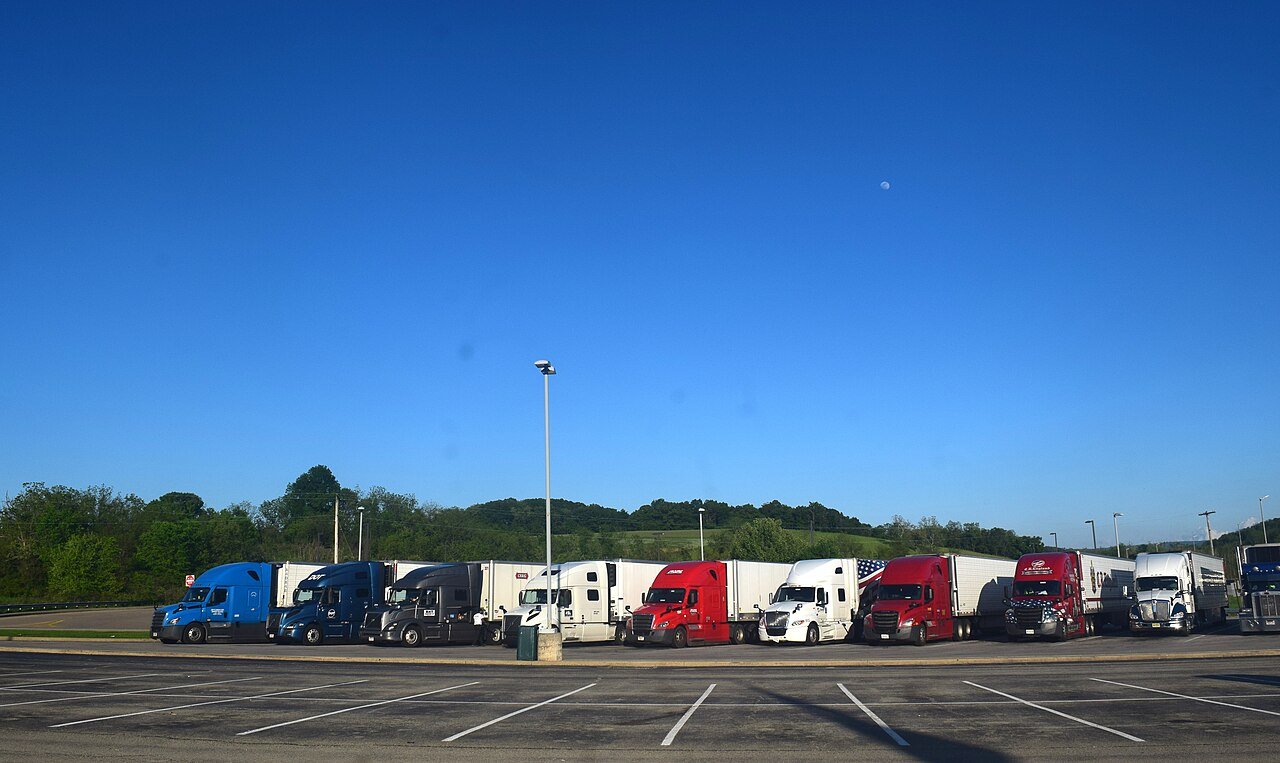
Photo: Winnebaggo, CC0, via Wikimedia Commons.
Need CDL-A Drivers? We Recruit Them for You.
CDL Transportation Group finds, qualifies, and delivers CDL-A OTR company drivers all the way to your orientation. No retainers, no setup fees, and no ad spend on you — you pay $2,000 per seated driver, split into two $1,000 payments, backed by a replacement guarantee.
Tell us how many drivers you need →
CDL Transportation Group | CDL-A OTR Driver Recruiting