Every driver you seat starts adding inspections and crashes to your company's safety record on their first dispatch. A weak hire doesn't just mean one bad driver. Their roadside violations count toward your CSA scores for two years, even after they've left. If you understand how the Safety Measurement System (SMS) treats new hires, you can screen and coach in ways that protect your percentiles and your insurance renewals.
How CSA scores work, in plain terms
FMCSA's SMS groups roadside inspection and crash data into seven BASICs: Unsafe Driving, Crash Indicator, Hours-of-Service Compliance, Vehicle Maintenance, Controlled Substances/Alcohol, Hazardous Materials Compliance and Driver Fitness. Each carrier gets a percentile from 0 to 100, compared with carriers that have a similar number of safety events, and a higher number means worse performance (FMCSA SMS Methodology).
For general freight carriers, FMCSA's intervention thresholds are 65% for Unsafe Driving, HOS Compliance and Crash Indicator, and 80% for Driver Fitness, Controlled Substances/Alcohol and Vehicle Maintenance (FMCSA SMS Help Center). Go over a threshold and you become a candidate for warning letters or an investigation.
Timing matters as much as the violation itself. Violations from the last six months count three times, those six to 12 months old count twice, and those one to two years old count once. After two years they drop out of SMS entirely (FMCSA SMS Help Center).
Here is a simple illustration with assumed numbers. Say a new driver picks up a violation with a severity weight of 5 in their second month. For the next six months it adds 15 weighted points (5 × 3) to that BASIC. From month six to 12 it adds 10, and in year two it adds 5. So whatever goes wrong in a driver's first months weighs most on your scores, and that is also when most new hires are still learning your equipment and lanes.
What a new hire brings with them, and what they don't
Two FMCSA rules shape your hiring risk. First, you don't inherit a driver's history. Only inspections and crashes that happen while the driver runs under your authority go into your SMS. Second, everything that does happen under your authority stays in your data for two years unless it's overturned through DataQs, even if you terminate the driver (FMCSA CSA FAQ).
That gives you a clear hiring rule. A driver's past can't hurt your scores, but it's the best predictor you have of what they'll add to them. CSA doesn't rate individual drivers (FMCSA, Driver Safety Enforcement). You have to read the raw history yourself.
Screen for the violations that predict crashes
Not every item on a driver's record carries the same risk. ATRI's Predicting Truck Crash Involvement: 2022 Update drew on more than 580,000 driver records (ATRI) and found these increases in future crash likelihood:
- Failure to yield right-of-way violation: +141%
- Failure to use / improper signal conviction: +116%
- A past crash: +113%
- Reckless driving violation: +104%
- An HOS violation: +47%
- Any out-of-service violation: +29%
Use this to build a written, tiered hiring standard rather than deciding case by case:
- Disqualifying (your policy): items you won't accept within a set look-back period, for example reckless driving or multiple preventable crashes.
- Review required: single higher-risk items such as a failure-to-yield violation, which need a safety manager's sign-off and a coaching plan.
- Acceptable with coaching: isolated minor items that are older and followed by a clean stretch.
The look-back periods and cutoffs are your call (and your insurer's). What matters is applying them the same way to every applicant. A PSP report shows five years of crashes and three years of roadside inspections and has no score (FMCSA PSP FAQ), so map its line items to your tiers. FMCSA reports that carriers using PSP cut their crash rates by an average of 8% and their driver out-of-service rates by 17% (FMCSA).
Protect your scores in the first 90 days
Because recent violations count triple, your first-90-day plan is also a CSA plan. Practical steps:
- Pre-trip ride-along. Have a trainer watch the new driver's first full pre-trip on your equipment. Lights, tires and brake adjustment are what inspectors check, and they're cheap to fix in the yard.
- ELD and HOS walkthrough. Make sure the driver knows your ELD's edit, annotation and malfunction procedures before they leave, not after a roadside log check.
- Review every inspection report within 24 hours. Clean inspections are worth celebrating. A violation should trigger a short coaching call the same week, while the details are fresh.
- Route easier freight first, if you can. Where your network allows, avoid giving a brand-new driver your tightest appointments and most heavily enforced corridors in week one.
Use DataQs and track scores by driver
A violation or crash that's wrong, or a crash that was not preventable, is worth challenging. A record removed through DataQs comes out of your SMS calculation (FMCSA CSA FAQ). Assign one person to check every new inspection and crash report against the facts each month.
Also break down your SMS data by driver internally. If a handful of drivers produce most of your weighted points, that's a coaching problem, not a fleet-wide one, and it tells your recruiters which applicant profiles have worked out for you.
The CSA methodology change you should prepare for
FMCSA approved a revised SMS methodology on November 20, 2024, but it was still not in effect as of October 2026, and no launch date had been announced (LucidELD). FMCSA's CSA Prioritization Preview says carriers should keep using the current SMS site until the new system launches. Changes that affect hiring:
- Drug and alcohol violations and all operating-while-out-of-service violations move into Unsafe Driving (FMCSA), which carries the stricter 65% threshold for general carriers (LucidELD).
- Vehicle Maintenance splits into two categories, one of which covers defects a driver could reasonably spot on a walk-around (FMCSA). Pre-trip discipline becomes directly visible.
- The Driver Fitness threshold for general carriers rises from 80% to 90% (FMCSA).
Log in to the Prioritization Preview through the FMCSA Portal to see where you'd land under the new method, and adjust your hiring standards and coaching before it goes live.
Key takeaways
- You don't inherit a new driver's past violations, but everything they get under your authority stays in your SMS for two years.
- Violations in the last six months count triple, so the first months after hire matter most.
- Screen against the behaviors ATRI links to future crashes, using a written, tiered standard.
- Coach on pre-trips and HOS in the first 90 days, and review every inspection within a day.
- Challenge incorrect records through DataQs and check the CSA Prioritization Preview now.
When recruiting and safety pull in different directions
Holding a strict safety standard is easier when you have enough qualified applicants that you never feel pushed to seat a risky one just to move a truck. If your team doesn't have time to source, pre-screen and follow up with enough drivers to stay selective, outsourcing the front end of recruiting can let your safety team focus on qualifying and coaching the right hires.
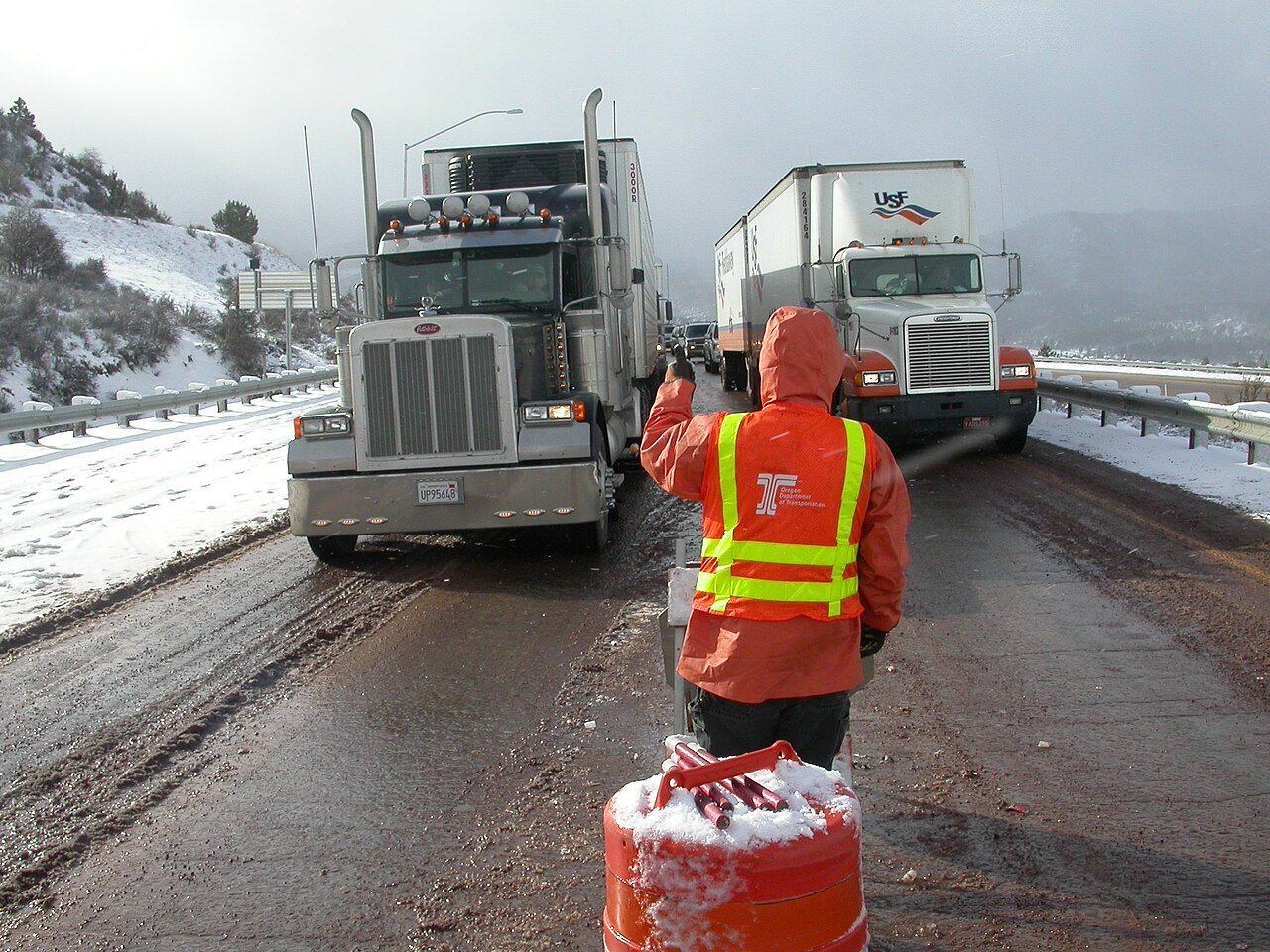
Photo: Oregon Department of Transportation, CC BY 2.0, via Wikimedia Commons.
Need CDL-A Drivers? We Recruit Them for You.
CDL Transportation Group finds, qualifies, and delivers CDL-A OTR company drivers all the way to your orientation. No retainers, no setup fees, and no ad spend on you — you pay $2,000 per seated driver, split into two $1,000 payments, backed by a replacement guarantee.
Tell us how many drivers you need →
CDL Transportation Group | CDL-A OTR Driver Recruiting